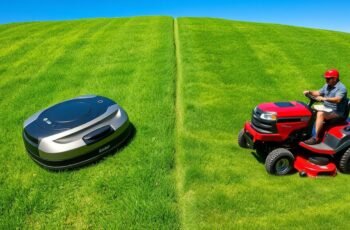
Think of choosing between a robot mower and a garden tractor like selecting between a precision surgical tool and a rugged excavator; each has distinct costs and applications. While initial expenses vary considerably—robot mowers often cost less upfront—long-term costs can shift the balance. To make an informed decision, understanding the nuances of maintenance, lifespan, and operational costs becomes essential. Let’s explore how these factors influence overall value across different lawn sizes and terrains.
Key Takeaways
- Robot mowers typically have lower initial costs but may incur higher electronic replacement expenses over time.
- Garden tractors involve higher upfront costs with more frequent, costly mechanical maintenance and repairs.
- Robot mowers are cost-efficient for small lawns; garden tractors are better for large, rugged terrains.
- Long-term costs favor garden tractors due to their durability and longer lifespan.
- Advanced features in robot mowers increase their price, while garden tractors rely on simpler, less costly technology.
How Do Robot Mower and Garden Tractor Costs Compare Upfront?
When comparing the upfront costs of robot mowers and garden tractors, it’s clear that robot mowers generally have a lower initial purchase price. This cost advantage stems from their reliance on smart technology, which automates mowing functions efficiently without the need for extensive mechanical components. Additionally, robot mowers tend to come from brands with strong reputations for innovation and durability, often offering advanced features like obstacle detection and programmable schedules at a relatively lower entry point. In contrast, garden tractors involve more complex mechanical systems and larger engines, resulting in higher initial costs. While brand reputation influences quality and warranty coverage, the streamlined design of robot mowers makes them more accessible financially upfront, especially for users seeking smarter, budget-friendly solutions.
What Are the Long-Term Maintenance Expenses for Both Options?
When evaluating long-term maintenance, we must consider routine upkeep costs for both robot mowers and garden tractors, along with expenses for replacement parts. Robot mowers typically require less frequent maintenance but may incur higher costs for specialized components, while garden tractors demand regular service and part replacements over time. Analyzing these factors provides a clearer picture of ongoing financial commitments for each option.
Routine Maintenance Costs
Routine maintenance costs for robot mowers and garden tractors differ markedly due to their design and complexity. Robot mowers leverage smart technology, which simplifies user convenience by enabling automated self-maintenance routines like blade sharpening and software updates. These systems typically require less frequent manual intervention, reducing ongoing labor costs. Conversely, garden tractors involve more complex mechanical systems, necessitating regular oil changes, belt replacements, and engine tune-ups, which escalate maintenance expenses over time. The advanced electronics in robot mowers contribute minimally to maintenance costs but demand attention to software and sensor calibration. Overall, robot mowers tend to have lower routine maintenance costs, primarily due to their streamlined design and smart technology integration, making them more cost-effective in the long term with less user effort.
Replacement Parts Expenses
Replacement parts are a significant factor influencing the long-term maintenance expenses of both robot mowers and garden tractors. Robot mowers benefit from advanced smart technology, which can include sensors and electronic components that may require periodic replacement. Battery life is vital; batteries tend to degrade over time, increasing replacement costs. Garden tractors, on the other hand, primarily need engine parts, blades, and belts replaced periodically, with less reliance on electronic components. The following table summarizes key replacement costs:
| Component | Robot Mower | Garden Tractor |
|---|---|---|
| Main Components | Sensors, Battery | Engine parts, Belts |
| Maintenance Frequency | More frequent due to electronics | Less frequent, mechanical focus |
| Cost Impact | Higher for electronics | Higher for parts like blades |
| Technological Reliance | High (smart tech) | Low |
Which Factors Influence the Overall Cost of Robot Mowers?
The overall cost of robot mowers is shaped by a combination of technical features, build quality, and additional functionalities that influence both initial purchase price and long-term maintenance expenses. Smart technology considerably affects cost, as advanced sensors, GPS navigation, and adaptive algorithms enhance efficiency but add to the upfront investment. Safety features, such as obstacle detection, anti-collision systems, and perimeter sensors, also drive costs upward by improving operational security and user confidence. Additionally, high-quality build materials and durability impact longevity, reducing replacement frequency but increasing initial expenditure. Customizable or integrated app controls further elevate costs through enhanced user interface options. Overall, these factors collectively determine the affordability and value proposition of a robot mower, balancing technological sophistication against budget considerations.
How Do Garden Tractors Cost to Operate Over Time?
Over time, the operating costs of garden tractors are driven primarily by fuel consumption, maintenance requirements, and the need for occasional repairs. Higher garden tractor horsepower typically results in increased fuel use, impacting ongoing expenses. Maintenance includes oil changes, blade sharpening, and belt replacements, which vary based on usage intensity. Additionally, repairs for components like transmissions or engines can be costly. Significantly, robotic mower sensors reduce the need for manual oversight, potentially lowering maintenance costs.
| Aspect | Impact on Operating Costs |
|---|---|
| Garden tractor horsepower | Higher horsepower increases fuel and maintenance costs |
| Sensor technology | Reduces manual intervention and repairs |
Are There Hidden Costs When Choosing a Robot Mower or Garden Tractor?
While initial purchase price often dominates budgeting considerations, hidden costs can profoundly influence the overall expense of choosing between a robot mower and a garden tractor. For instance, seasonal planting may require additional equipment or modifications, particularly for garden tractors, which can increase maintenance costs. Pest control is another factor; robot mowers generally require less chemical intervention, but their presence might disturb pest habitats, leading to unforeseen ecological costs. Conversely, garden tractors may entail higher fuel consumption and routine repairs over time, adding to their hidden expenses. Additionally, integration with landscaping features or irrigation systems can incur unexpected costs, especially if equipment needs adaptation for seasonal or pest-related challenges. These factors highlight the importance of evaluating long-term hidden costs beyond initial investment.
Which Option Offers Better Value for Different Lawn Sizes and Types?
When evaluating value, we consider how lawn size compatibility impacts both initial investment and ongoing maintenance costs. Terrain and grass type influence the effectiveness and durability of each option, affecting long-term performance. Ultimately, analyzing these factors helps determine which solution offers better cost efficiency for specific lawn conditions.
Lawn Size Compatibility
Determining which mower type offers better value depends heavily on lawn size and terrain complexity. For smaller lawns (up to 0.5 acres), robot mowers excel due to their precision and integration with smart irrigation systems, supporting ideal landscape design. Larger lawns (over 1 acre), however, favor garden tractors because of their extended runtime and power. Consider these points:
- Robot mowers are ideal for lawns under 0.5 acres with minimal terrain variation.
- Garden tractors better serve lawns exceeding 1 acre, especially with complex landscaping.
- For medium-sized lawns (around 0.5-1 acre), hybrid approaches or modular systems may optimize cost and coverage.
- Compatibility with landscape design tools and smart irrigation enhances efficiency, making tailored solutions more viable.
Ultimately, lawn size dictates the most cost-effective and functional mower choice, emphasizing the importance of integrating landscape planning tools.
Terrain and Grass Type
Considering terrain and grass type is essential when evaluating the value of robot mowers versus garden tractors for different lawn sizes. Robot mowers excel on flat, even terrain and well-maintained grass, leveraging smart technology to optimize mowing patterns and adapt to soil conditions. Their precision navigation minimizes damage on delicate soil or uneven surfaces. Conversely, garden tractors are better suited for rugged or hilly terrain, where their larger wheels and powerful engines handle challenging soil conditions and dense grass more effectively. For lawns with mixed terrain or varying grass types, choosing the appropriate equipment depends on balancing initial costs with terrain adaptability. While robot mowers provide cost-effective, automated solutions on uniform lawns, garden tractors offer durability and performance in complex soil environments.
Long-Term Cost Efficiency
Which option offers greater long-term value—robot mowers or garden tractors—depends heavily on lawn size and maintenance needs. For smaller lawns, robot mowers typically offer better cost efficiency due to lower energy consumption and minimal maintenance. Conversely, larger properties may favor garden tractors, which handle extensive mowing with greater speed and durability. When evaluating long-term value, consider these factors:
- Maintenance costs of gardening tools and replacement parts
- Energy and fuel expenses over time
- Integration with irrigation systems for optimized watering
- Frequency of repairs or upgrades needed for either system
While robot mowers excel in low-maintenance, eco-friendly operation, garden tractors often require more significant upfront investment but can incorporate additional tools for versatile landscaping. Analyzing these aspects helps determine the most cost-effective solution for different lawn sizes and types.
How Do Features and Technology Impact Pricing Differences?
Advancements in features and technology considerably influence the pricing disparities between robot mowers and garden tractors. Smart technology enhances robot mower capabilities, integrating sensors, automation, and connectivity, which increase manufacturing costs but offer improved precision and convenience. Battery life is another critical factor; higher-capacity batteries extend operation time, driving up the price but providing more efficient, uninterrupted mowing. In contrast, garden tractors rely less on advanced electronics, keeping their cost comparatively lower. The integration of smart features in robot mowers results in a premium price point due to sophisticated control systems, adaptive algorithms, and remote access. These technological elements justify higher costs, reflecting the added value of automation, efficiency, and user convenience that modern features deliver.
What Are the Expected Lifespan and Replacement Costs?
Robot mowers typically have a lifespan ranging from 5 to 8 years, depending on usage, maintenance, and build quality, while garden tractors often last 10 to 15 years or more due to their more robust construction. Replacement costs are influenced by factors like battery longevity and warranty coverage.
- Battery replacement is a primary expense for robot mowers, usually needed after 3-5 years, costing 20-30% of the initial purchase price.
- Warranty coverage can considerably reduce repair and replacement costs during the first 2-3 years.
- Maintenance costs for garden tractors are generally lower over time, given their durable components.
- Component replacement beyond warranties can add to long-term costs, especially for parts like belts, blades, and tires.
Understanding these factors helps in estimating the total cost of ownership over the equipment’s lifespan.
Which Cost Factors Should You Prioritize When Making Your Decision?
When evaluating the total cost of ownership, it’s essential to prioritize factors with the most significant financial impact over the equipment’s lifespan. Key considerations include initial purchase price, maintenance expenses, and operational costs. Additionally, aesthetic appeal influences long-term satisfaction, as a well-designed mower complements landscape design. Environmental impact also bears weight, affecting energy consumption and ecological footprint. To compare these factors:
| Cost Factor | Relevance | Priority Level |
|---|---|---|
| Purchase Price | Direct upfront investment | High |
| Maintenance & Repairs | Ongoing operational costs | Medium |
| Aesthetic Appeal | Visual harmony with landscape | Low to Medium |
Prioritizing these factors guarantees an informed decision aligned with financial, aesthetic, and environmental goals.
Frequently Asked Questions
How Do Warranty Periods Differ Between Robot Mowers and Garden Tractors?
Warranty coverage for robot mowers typically lasts 1-3 years, often including limited service plans, whereas garden tractors usually offer longer warranties, around 2-5 years, with optional extended service plans for all-encompassing protection and maintenance.
What Are the Cost Differences for Accessories and Attachments for Both Options?
Accessories and attachments costs skyrocket with both options, surprisingly; robot mowers require minimal user maintenance, extending battery lifespan, while garden tractors demand costly attachments, making initial investment and ongoing expenses a vital, technical analysis for budget planning.
How Do Seasonal Storage Costs Impact the Overall Expenses?
Seasonal storage costs and maintenance expenses considerably influence overall costs; robot mowers often require less storage space and lower maintenance, reducing long-term expenses, whereas garden tractors incur higher seasonal storage and maintenance costs, impacting total cost-effectiveness.
Are There Financing Options Available for Higher-Priced Models?
Research shows 60% of consumers opt for financing plans, emphasizing payment flexibility. We offer various financing options for higher-priced models, enabling cost management and tailored payment schedules, making advanced equipment more accessible and financially manageable.
How Does Resale Value Vary Between Robot Mowers and Garden Tractors?
We find that robot mowers typically maintain higher resale value due to longer battery lifespan and lower maintenance frequency, whereas garden tractors depreciate faster because of more extensive upkeep needs and shorter component longevity, impacting their market value.
Conclusion
Overall, choosing between a robot mower and a garden tractor hinges on lawn size, terrain, and budget priorities. Significantly, robot mowers can reduce maintenance costs by up to 50% for small lawns, making them a cost-effective choice where automation suffices. Analyzing upfront expenses alongside long-term operational costs helps us identify the best value. Ultimately, a data-driven approach ensures we select the equipment that optimizes both financial efficiency and lawn management needs.