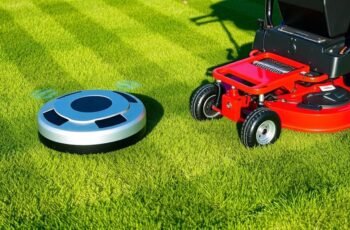
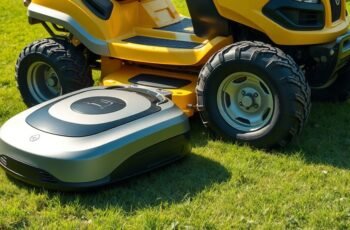
When comparing the maintenance requirements of robotic versus ride-on mowers, we find significant differences rooted in their design and operational complexity. Robotic mowers typically demand minimal upkeep, with simple tasks like sensor cleaning and blade sharpening, while ride-on models involve more extensive servicing, including engine and hydraulic system maintenance. Understanding these distinctions can influence not only ongoing costs but also ease of upkeep for different users, prompting a closer look at what each type truly entails.
Key Takeaways
- Robotic mowers require less manual maintenance but need regular sensor cleaning, blade sharpening, and software updates.
- Ride-on mowers demand more frequent inspections of belts, blades, hydraulics, and engine oil.
- Robotic mowers have lower overall maintenance costs, while ride-on mowers incur higher expenses due to mechanical complexity.
- Blade and deck cleaning are essential for both mower types to ensure consistent cutting quality.
- Regular troubleshooting, including battery checks and sensor calibration, improves mower performance and longevity.
How Do Robotic and Ride-On Mowers Differ in Maintenance Needs?
While both robotic and ride-on mowers serve the purpose of maintaining large lawns, their maintenance requirements differ considerably due to their distinct mechanical and electronic designs. Robotic mowers, integrated with advanced sensors and electronic components, demand regular software updates, battery management, and sensor calibration to guarantee peak performance. Their compact design simplifies mower storage, often requiring minimal space, but necessitates protection from weather elements to prevent electronic damage. In contrast, ride-on mowers involve more complex mechanical systems, such as engines, hydraulic components, and drive belts, which require routine inspection and lubrication. Additionally, their larger size demands dedicated storage areas for garden landscaping tools and equipment. Proper mower storage for both types minimizes exposure to environmental stressors, extending operational longevity and reducing maintenance costs.
What Are the Key Maintenance Tasks for Robotic Mowers?
Robotic mowers require a structured maintenance routine that focuses on guaranteeing their electronic and mechanical systems operate reliably. Regularly inspecting and cleaning the smart navigation sensors is crucial to maintain precise boundary recognition and obstacle detection. Clearing grass clippings from the chassis and cutting blades prevents buildup that can impair performance and cooling. Additionally, routine blade sharpening or replacement ensures clean cuts and prime grass health.
Key maintenance tasks include:
- Cleaning sensors and cameras to preserve smart navigation accuracy
- Removing grass clippings and debris from cutting blades and housing
- Checking and tightening drive belts, wheels, and electrical connections
Performing these tasks consistently keeps your robotic mower operating efficiently and extends its lifespan, especially in variable terrains or dense grass conditions.
How Do Ride-On Mowers Require Servicing and Upkeep?
Ride-on mowers require regular servicing to guarantee ideal performance and longevity, especially given their complex mechanical and hydraulic systems. Proper upkeep begins with inspecting the garden layout to identify potential obstacles and terrain that may impact operation. Routine maintenance includes checking and replacing hydraulic fluid, inspecting belts and blades for wear, and lubricating moving parts to prevent corrosion. Mower storage is critical; storing in a dry, sheltered location protects components from rust and weather damage. Additionally, cleaning the air filters, inspecting the engine oil, and ensuring the fuel system is free of debris minimize downtime. Regular calibration of the cutting deck and hydraulic systems ensures consistent performance across varied terrains, maintaining peak cutting quality and extending the mower’s lifespan.
Which Mower Type Is Easier to Maintain for Average Garden Owners?
For the average garden owner, choosing a mower that requires minimal maintenance often comes down to understanding how each type’s design influences upkeep. Robotic mowers generally require less manual intervention, thanks to their self-maintaining components like sealed gearboxes and automated blade sharpening, reducing the need for frequent servicing. Ride-on mowers, however, involve more complex systems such as belts, blades, and hydraulic parts, which demand regular inspection and lubrication. Garden layout and mowing schedules play a pivotal role; robotic mowers excel in smaller, uniform lawns, simplifying maintenance, while ride-ons suit larger, varied terrains, increasing upkeep complexity.
Robotic mowers require less maintenance with sealed parts, unlike ride-on models that need regular inspection of belts, blades, and hydraulics.
- Sealed components reducing manual servicing
- Automated systems minimizing user intervention
- Complexity of hydraulic and belt systems affecting maintenance frequency
How Do Maintenance Costs Compare Between Robotic and Ride-On Mowers?
When comparing maintenance costs, we focus on replacement parts expenses and routine upkeep, which differ substantially between robotic and ride-on mowers. Robotic mowers typically have lower routine maintenance but may incur higher costs for specialized parts when repairs are needed. Conversely, ride-on mowers often require more frequent servicing and larger parts replacements, impacting overall expenses.
Replacement Parts Expenses
Although robotic mowers often feature advanced sensors and electronic components, their replacement parts tend to be more specialized and costly compared to those of traditional ride-on mowers. The integration of sophisticated electronics, such as collision sensors and GPS modules, increases the expense of parts like circuit boards and motors. Additionally, the aesthetic design of robotic units demands custom components, which can be pricier due to manufacturing complexities. Brand reputation also influences costs; reputable brands with high-quality sensors and durable parts often charge more for replacements.
- Specialized electronic components with limited supplier options
- Premium materials used for aesthetic and durability considerations
- Higher costs driven by brand reputation and technological complexity
Routine Maintenance Requirements
Robotic mowers generally require less frequent and less intensive maintenance compared to traditional ride-on mowers, primarily due to their simplified mechanical systems and automated operation. They have fewer moving parts, reducing the need for routine tasks like blade sharpening or engine oil changes. Regular maintenance involves cleaning sensors, checking wheel alignment, and inspecting the charging station. Unlike ride-on mowers, robotic units don’t require lawn aeration or soil fertilization, which are essential for maintaining ideal turf health with traditional mowers. Ride-on mowers often need more extensive routine upkeep such as engine tune-ups, belt replacements, and hydraulic fluid checks. Overall, robotic mowers tend to lower ongoing maintenance costs because their design minimizes mechanical complexity and operational demands.
What Are Common Troubleshooting Tips for Both Mower Types?
To troubleshoot both robotic and ride-on mowers effectively, we start by verifying battery power levels to guarantee consistent operation. Next, inspecting blades and cutting decks for damage or buildup helps prevent performance issues, while cleaning and adjusting sensors can resolve navigation or cutting accuracy problems. These steps form the core of efficient maintenance and troubleshooting for both mower types.
Check Battery Power Levels
Ensuring both robotic and ride-on mowers have sufficient battery power is critical for ideal operation, and troubleshooting often begins with checking the battery’s charge level. Low battery life can cause unexpected shutdowns and reduced performance, directly impacting power consumption efficiency. To diagnose issues:
- Use a multimeter to verify voltage against manufacturer specifications.
- Check for signs of battery degradation, such as swelling or corrosion.
- Ensure the charger and charging port are functioning correctly, providing consistent current flow.
Monitoring these factors helps identify whether insufficient power stems from battery health or charging system faults. Properly maintaining battery health guarantees maximum power consumption and prolongs operational runtime, preventing unnecessary downtime and costly replacements.
Inspect Blades and Cutting Decks
Have you checked the blades and cutting decks lately? Regular inspection is vital for peak mower performance. Start by removing the blades carefully, inspecting for signs of dullness or damage, and perform blade sharpening to restore cutting efficiency. Dull blades cause uneven cuts and strain the motor, so sharpening is necessary for both robotic and ride-on mowers. Next, examine the cutting deck for debris, grass buildup, and corrosion. Deck cleaning removes obstructions that impair airflow and cutting quality. Make sure the deck is free of obstructions, and check for rust or corrosion that might weaken the structure. Proper blade sharpening and thorough deck cleaning prevent uneven mowing, reduce wear, and extend your mower’s lifespan. Consistent maintenance at this level keeps both mower types operating smoothly and efficiently.
Clean and Adjust Sensors
Cleaning and adjusting sensors is a critical step in troubleshooting both robotic and ride-on mowers, as sensors are essential for accurate navigation, obstacle detection, and safety features. Proper maintenance involves sensor calibration to guarantee accurate readings and debris removal to prevent obstructions. Dust, grass clippings, or dirt buildup can impair sensor function, leading to navigation errors or safety issues.
- Use a soft, lint-free cloth and gentle cleaning solutions to remove debris without scratching surfaces.
- Check sensor alignment and realign if necessary to maintain proper calibration.
- Inspect for damage or corrosion, and replace sensors if calibration cannot be restored.
Regular cleaning and precise adjustments help maintain ideal sensor performance, reducing troubleshooting time and ensuring safe, efficient operation.
Frequently Asked Questions
How Often Should Robotic and Ride-On Mowers Be Inspected for Wear?
We inspect robotic and ride-on mowers weekly, checking battery lifespan and cutting blade sharpness to prevent wear issues. Regular inspections guarantee peak performance, prolong equipment lifespan, and avoid unexpected breakdowns, especially during peak mowing seasons.
Are There Specific Maintenance Tools Required for Each Mower Type?
Like a surgeon’s toolkit, robotic mowers need specialized tools for blade sharpening and battery lifespan monitoring, including precision screwdrivers and multi-meters. Ride-on mowers require heavy-duty wrenches, oil filters, and tire gauges for thorough maintenance.
Can Robotic Mowers Be Repaired at Home or Need Professional Service?
We believe robotic mowers can often be repaired at home through DIY troubleshooting, like cleaning sensors or replacing blades, but complex issues, especially electronic or motor failures, typically require professional repair for safety and precision.
What Safety Precautions Should Be Taken During Mower Maintenance?
During mower maintenance, we wear safety gear like gloves and goggles, make sure blades are off, and follow emergency procedures such as disconnecting power sources, preventing injury from moving parts, and addressing electrical hazards with caution.
How Do Weather Conditions Affect Maintenance Schedules for Both Mowers?
Weather impact necessitates seasonal adjustments in maintenance schedules; wet, icy, or extreme heat conditions can cause corrosion, clogging, or overheating, prompting us to inspect, clean, and service mowers more frequently during adverse weather, ensuring best performance.
Conclusion
In comparing robotic and ride-on mowers, we see clear differences in maintenance complexity, cost, and frequency. Robotic mowers offer simplicity, requiring minimal tasks, less downtime, and lower costs, making them ideal for those seeking efficiency. Ride-on mowers demand more extensive care, increased maintenance time, and higher expenses, suitable for larger, more diverse terrains. By understanding these distinctions, we can select the mower that best aligns with our needs, ensuring peak performance and longevity.