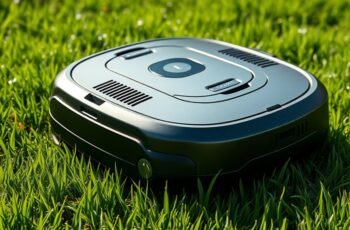
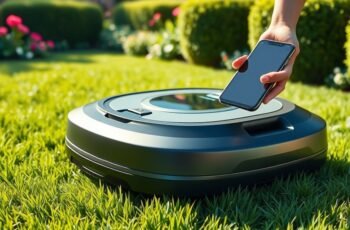
Studies show that robotic mowers can reduce lawn maintenance time by up to 70%, making them an increasingly popular choice for homeowners. Yet, selecting the right model involves analyzing various technical features, from navigation algorithms to safety systems, tailored to specific garden sizes and terrains. Understanding these complexities is essential, especially when considering how different models balance operational efficiency and durability. Let’s explore what factors truly matter in choosing the best robot mower for your home garden.
Key Takeaways
- Select models with appropriate cutting width and battery life for your garden size and mowing frequency.
- Prioritize safety features like obstacle detection, collision sensors, and PIN locks for secure operation.
- Consider terrain adaptability and slope handling to navigate your garden’s landscape effectively.
- Opt for models with app control and scheduling for convenient, automated mowing management.
- Regularly maintain boundary wires, blades, and update firmware to ensure optimal performance and safety.
How Do Robot Mowers Work and What Features Should You Know?
Understanding how robot mowers operate requires examining their core mechanisms and features. These devices utilize rechargeable batteries, making battery lifespan a crucial factor for sustained performance. Most models incorporate lithium-ion batteries, which offer a balance of longevity and quick recharge times. Safety features are equally essential; advanced sensors detect obstacles and prevent collisions or falls, ensuring safe operation around children and pets. Additionally, boundary wires or GPS systems define mowing areas, enhancing precision and efficiency. The mower’s blades rotate at high speeds, enabling consistent cutting, while sensors monitor battery levels, prompting return-to-base charging when necessary. Overall, the integration of durable batteries and thorough safety features ensures reliable, safe, and efficient mowing, making these machines suitable for various home garden sizes and terrains.
Key Factors to Consider When Choosing a Robot Mower for Your Garden
When selecting a robot mower for your garden, it’s vital to evaluate several key factors that directly impact performance, efficiency, and suitability for your specific landscape. First, consider the mower’s cutting width and battery life, which influence coverage and operational time, especially for complex garden landscaping. Next, assess terrain adaptability, including obstacle navigation and slope capacity, essential for uneven or varied landscapes. Additionally, integrated features supporting lawn fertilization, such as compatibility with soil health systems, can optimize growth. Safety features, like collision sensors and PIN locks, guarantee secure operation. Connectivity options, such as app control, facilitate precise scheduling and monitoring. These factors collectively determine the mower’s ability to maintain a healthy, aesthetically pleasing lawn with minimal manual intervention.
Top Robot Mowers for Small to Medium Home Gardens
When selecting robot mowers for small to medium gardens, compact size and streamlined design are essential for maneuverability and safe operation in confined spaces. Efficient cutting performance guarantees a uniform lawn finish, minimizing energy consumption and operational time. Analyzing these factors helps identify models that optimize both space management and mowing quality.
Compact Size and Design
For small to medium home gardens, the compact size and streamlined design of robot mowers are essential factors that influence performance and ease of use. A smaller form factor allows for precise navigation around garden features, reducing the risk of damaging plants or disrupting landscaping. This design also minimizes obstruction to garden aesthetics, maintaining a clean, uniform appearance. The compact structure facilitates more frequent mowing, which is crucial for maintaining healthy grass and a tidy look without overburdening the mower’s power or battery life. Additionally, a streamlined design simplifies storage and deployment, ensuring the mower integrates seamlessly into daily gardening routines. Overall, these design elements support consistent mowing frequency and preserve the visual integrity of the garden.
Efficient Cutting Performance
Efficient cutting performance is critical for guaranteeing that robot mowers maintain healthy, visually appealing lawns in small to medium home gardens. Precise cutting patterns promote uniform grass height, supporting ideal garden landscaping and reducing the need for manual lawn aeration. High-grade sensors and adaptive algorithms enable these mowers to navigate complex terrains, avoiding obstacles while maintaining consistent cut quality. Below is a comparative overview of top models:
| Model | Cutting Width | Battery Life | Key Feature |
|---|---|---|---|
| Model A | 22 inches | 2 hours | Smart navigation system |
| Model B | 20 inches | 1.5 hours | Terrain adaptation technology |
| Model C | 24 inches | 2.5 hours | Multi-zone mowing capability |
This technical performance ensures efficient, precise lawn care tailored for small to medium gardens.
Comparing Budget-Friendly and Premium Robot Mowing Solutions
When comparing budget-friendly and premium robot mowers, the primary distinctions lie in cost efficiency and overall value. Higher-end models typically offer advanced features and enhanced performance, while budget options focus on core functionality at a lower price point. Analyzing these gaps helps identify which solutions best align with specific lawn maintenance needs and budget constraints.
Cost Differences and Value
Are premium robot mowers worth their higher price tags compared to budget-friendly options? The answer hinges on several factors.
- Pricing strategies: Premium models often include advanced technology, longer battery life, and better build quality, justifying their cost.
- Brand reputation: Established brands tend to offer more reliable performance and superior after-sales support, impacting overall value.
- Durability and longevity: Higher upfront costs usually correlate with increased durability, reducing long-term replacement expenses.
- Operational efficiency: Premium models typically feature smarter navigation and scheduling, saving time and ensuring a more uniform cut.
While the initial investment is higher, these factors can translate into better long-term value, especially for larger or more complex gardens.
Feature and Performance Gaps
While budget-friendly robot mowers may seem appealing due to their lower cost, they often fall short in key performance areas when compared to premium models. Significantly, battery life tends to be limited, requiring more frequent charging cycles, which reduces overall efficiency. Noise levels are also typically higher, disrupting peaceful outdoor environments. Premium models, on the other hand, offer extended battery life and quieter operation, enhancing user experience and maintenance intervals.
| Feature | Budget-Friendly Models | Premium Models |
|---|---|---|
| Battery Life | Shorter, frequent recharge | Longer, less downtime |
| Noise Levels | Higher, disruptive | Quieter, less intrusive |
| Cutting Efficiency | Adequate for small lawns | Superior, handles diverse terrains |
| Durability | Less robust | Higher build quality |
| Navigation Systems | Basic, limited mapping | Advanced, precise mapping |
How to Install and Maintain Your Robot Mower for Optimal Performance
Installing and maintaining your robot mower properly is essential to guarantee it operates at peak efficiency and longevity. Correct setup ensures seamless integration into your garden landscaping, while regular upkeep maximizes cutting performance. Consider these critical steps:
- Secure Boundary Wires: Properly install boundary wires to define mowing zones, preventing overlap and missed areas.
- Adjust Cutting Height: Set the ideal cutting height based on grass type and lawn fertilization schedule, promoting healthy growth.
- Clean and Inspect Blades: Regularly clean blades and replace them when dull, maintaining precise cutting and reducing strain.
- Schedule Maintenance Checks: Periodically inspect for debris, check battery health, and update firmware to preserve efficiency.
Following these steps ensures your robot mower performs consistently, supporting effective lawn fertilization and enhancing overall garden landscaping.
Common Troubleshooting Tips for Robot Mower Users
Despite the advanced technology incorporated into robot mowers, users often encounter common issues that can disrupt their operation. One frequent problem relates to battery lifespan, which deteriorates over time and reduces mowing efficiency. Regularly monitoring battery health and replacing it when capacity diminishes guarantees consistent performance. Additionally, checking safety features is vital; malfunctioning sensors or emergency stop functions can pose risks or cause operational halts. Keep safety sensors clean and unobstructed, and verify their calibration periodically. Firmware updates can also address software glitches affecting safety protocols. By proactively managing battery health and verifying safety features, users can minimize downtime and maintain excellent mower performance, ensuring reliable and safe operation throughout the mower’s lifespan.
What Future Innovations Are Shaping the Robot Mower Market?
Innovations in sensor technology and artificial intelligence are fundamentally transforming the robot mower market by enhancing navigation accuracy and obstacle avoidance. AI integration allows for real-time environment analysis, optimizing mowing patterns with adaptive learning capabilities. Battery advancements are extending operational time and reducing charging cycles, enabling larger coverage areas. Future innovations include:
- Enhanced AI algorithms for smarter decision-making and terrain adaptation.
- Improved sensor arrays for better obstacle detection and avoidance.
- Solid-state batteries for increased energy density and faster charging.
- Machine learning integration to personalize mowing schedules based on yard usage patterns.
These advancements will lead to more autonomous, efficient, and reliable robot mowers, making them indispensable for modern home gardens.
Frequently Asked Questions
How Long Does a Robot Mower Typically Operate on a Single Charge?
A robot mower typically operates for about 1 to 2 hours on a single charge, depending on battery lifespan and mowing conditions. Charging time varies from 30 minutes to several hours, influencing overall efficiency and operational cycles.
Are Robot Mowers Suitable for All Grass Types and Terrains?
Robot mowers generally excel in grass compatibility and terrain adaptability, but their efficiency varies; clumped or uneven terrains can challenge them, so evaluating specific mower models for your grass type and landscape guarantees ideal performance.
What Safety Features Do Robot Mowers Include to Protect Children and Pets?
We guarantee child safety and pet protection with features like obstacle sensors, lift and tilt sensors, and PIN code security. These technical safeguards prevent accidents, making robot mowers a safe, reliable choice for households with children and pets.
Can Robot Mowers Handle Uneven or Hilly Landscapes Effectively?
Like a skilled mountain goat, our robot mowers excel on uneven terrain, thanks to advanced terrain adaptability and robust battery life. They efficiently navigate hills, maintaining sharp edges and consistent cutting, even on challenging slopes.
How Noisy Are Robot Mowers Compared to Traditional Gas-Powered Models?
Robot mowers are markedly quieter than gas-powered models, with lower noise levels allowing daily mowing without disturbance. They typically operate at a consistent frequency, optimizing lawn health while reducing noise-related complaints and enhancing overall efficiency.
Conclusion
In the evolving landscape of garden technology, choosing the right robot mower isn’t just about convenience—it’s about precision and performance that elevate your outdoor space. As we analyze features and innovations, it’s clear that the most effective mower balances functionality, safety, and durability. Like a finely tuned machine, your mower’s success depends on informed choices and proper maintenance. Embrace these insights, and your garden will flourish in the harmony of cutting-edge automation and meticulous care.