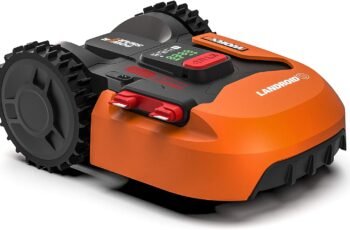
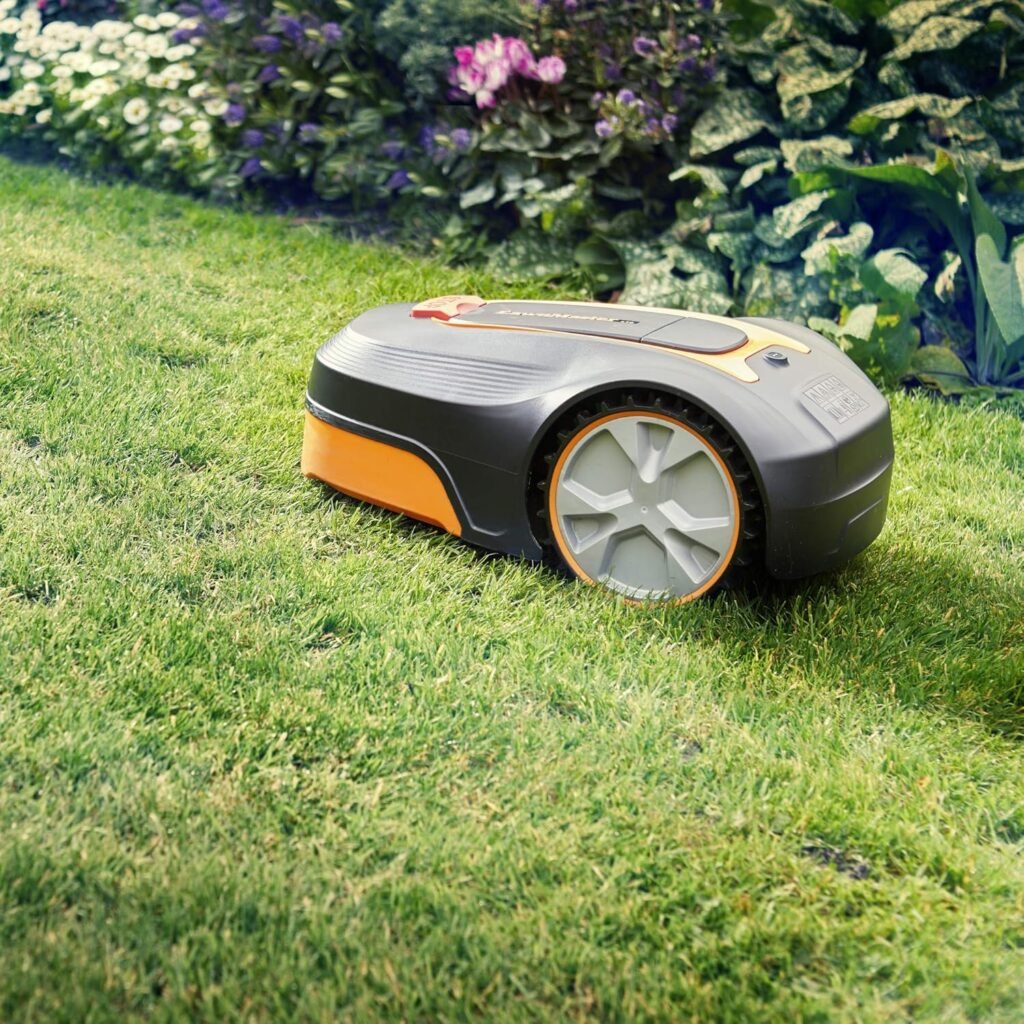
LawnMaster L10 Robot Lawnmower: Overview and First Impressions
Can an app-free robot mower keep a lawn of up to 400m² under control without turning installation into a weekend project? The LawnMaster L10 robot lawnmower takes a deliberately straightforward approach: it uses boundary wire rather than app-based mapping and includes a charging station, wire and step-by-step instructions. That makes it a potentially sensible choice for owners who want automatic mowing but don’t need remote alerts or smartphone controls.
For this assessment, we’re concentrating on installation, cutting, slope handling, maintenance, safety, customer evidence and ownership value. The LawnMaster L10 robot lawnmower looks most suitable for a suitably shaped lawn and a buyer willing to install the boundary loop carefully. It isn’t presented as a premium connected machine, and that simplicity will be either its main attraction or its biggest limitation.
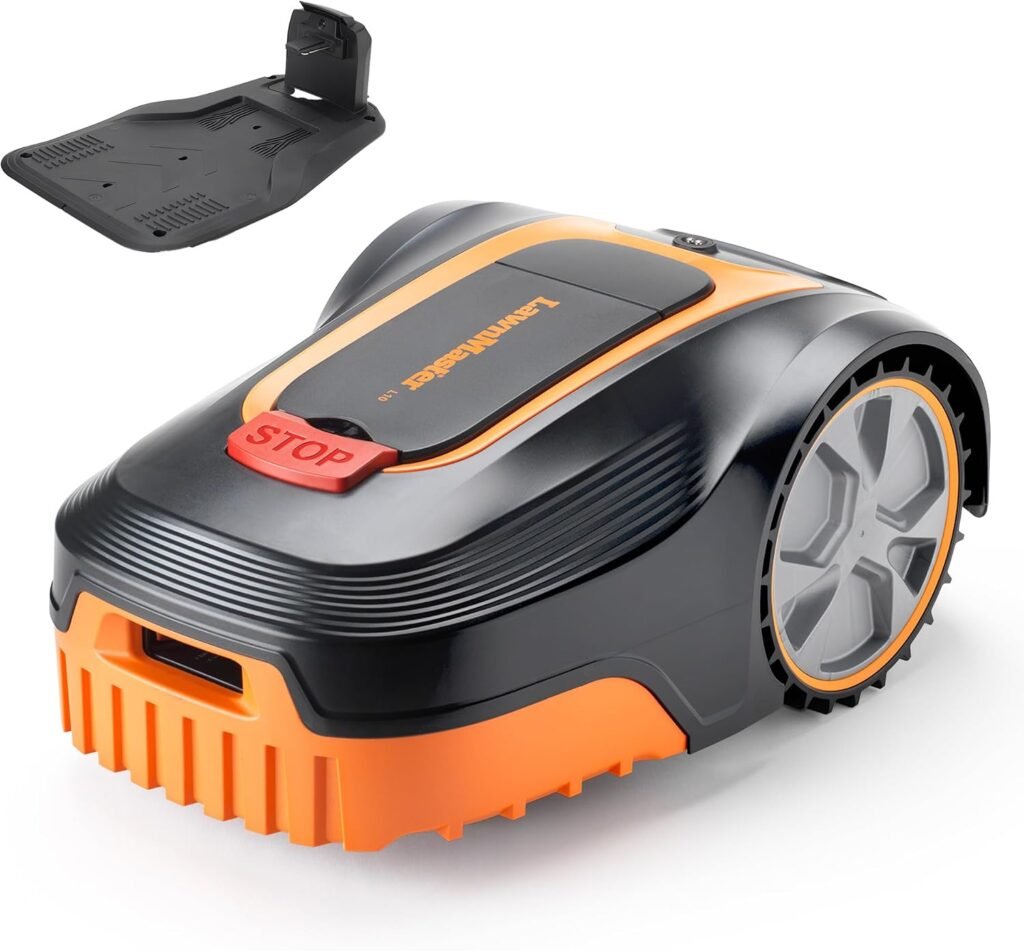

LawnMaster L10 Robot Lawnmower Specifications at a Glance
The LawnMaster L10 robot lawnmower has a practical specification for smaller and medium-sized gardens, but several comparison-critical details aren’t supplied. Here’s what is confirmed:
| Specification | Provided detail |
|---|---|
| Recommended lawn area | Up to 400m² |
| Cutting height | 20–60mm, adjustable |
| Water resistance | IPX5 |
| Internal slope limit | 35% or 19° |
| Boundary slope limit | 17% or 10° |
| Navigation | Boundary wire |
| Warranty | Two-year manufacturer’s warranty |
Grass is mulched rather than collected, so fine clippings remain on the lawn. The mower returns to its charging station automatically, although the station cannot be fitted in a lawn corner and needs 1m of boundary wire at both its front and back.
Battery capacity, mowing width, charging time, decibel rating, rain-sensor details and customer rating are not stated. Those omissions matter: battery and charge figures affect daily coverage, cutting width influences efficiency, noise matters near bedrooms or neighbours, and the rating gives shoppers a useful check on reliability. The LawnMaster L10 robot lawnmower is therefore easy to understand at a basic level, but not fully comparable until the live listing supplies those missing details.
Setting Up the LawnMaster L10 Robot Lawnmower
The LawnMaster L10 robot lawnmower requires a one-time wired installation, and the order of that work matters. First choose a station position with a clear approach, then lay the boundary wire continuously around the mowing area, connect both ends to the station, charge the mower and configure the mowing schedule. An additional guide wire isn’t required, which removes one installation stage found on some other wired systems.
The station cannot sit in a corner. Leave 1m of boundary wire before and after it so the mower has the space needed to approach and depart correctly. Before fixing the wire permanently, walk the proposed route and check that it excludes ponds, flower beds, loose gravel and other areas the mower shouldn’t enter.
- Remove toys, tools, branches and loose objects.
- Mark beds, water features and narrow passages.
- Confirm the wire can form one continuous loop.
- Run a perimeter test before setting regular mowing.
Poor placement can cause missed strips, restricted access or repeated boundary contact. We would test the LawnMaster L10 robot lawnmower around the perimeter while the wire remains easy to move, then correct tight corners or problem sections before committing to a daily schedule.

Cutting Performance, Height Adjustment and Mulching
The LawnMaster L10 robot lawnmower offers a 20mm to 60mm cutting-height range, giving owners room to deal with longer initial growth before moving towards a shorter routine finish. We would begin at 60mm if the grass is long, allow the mower to work regularly, and lower the setting gradually rather than removing too much leaf in one session.
Its mulching system returns tiny clippings and nutrients to the lawn instead of filling a grass box. That means less handling during the week and fewer visible piles when conditions are right. Frequent, light cuts are central to this approach, though: a robot mower isn’t the right tool for rescuing heavily overgrown grass in one pass.
When mowing height and frequency are managed well, the lawn may look tidier and can develop denser growth, while weeds may find it harder to establish. Those are reasonable expectations, not guarantees. During the first week, we would inspect for uncut areas, clumps and scalping, then raise the setting or alter the schedule if the surface shows stress.
The LawnMaster L10 robot lawnmower’s supplied information doesn’t confirm its cutting width, blade design or runtime, so we won’t infer performance figures from the height adjustment alone.
Slope Handling, Boundaries and Garden Layout Compatibility
The LawnMaster L10 robot lawnmower is rated for slopes of up to 35% or 19° inside the boundary area, but the limit falls to 17% or 10° when it is operating at the boundary wire. That lower edge figure is the one that matters on sloping borders, banks and transitions. A garden may be acceptable in its centre yet unsuitable where the perimeter runs across a steeper incline.
We recommend checking the actual boundary route rather than measuring only the steepest point in the middle of the lawn. A simple paper plan can show the proposed loop, trees, beds, passages and obstacles before installation. The stated 400m² capacity is an area guideline, not a promise that every narrow, fragmented or irregular garden will be covered evenly.
Separated lawns, tight corridors, exposed tree roots and loose gravel may all complicate operation. Areas that cannot be joined by a safe continuous boundary route may need another mowing arrangement. The LawnMaster L10 robot lawnmower’s description doesn’t confirm multi-zone programming, corridor management, edge-cutting results or obstacle mapping, so shoppers with complex gardens should seek those answers before ordering.
Automatic Scheduling, Charging and Maintenance
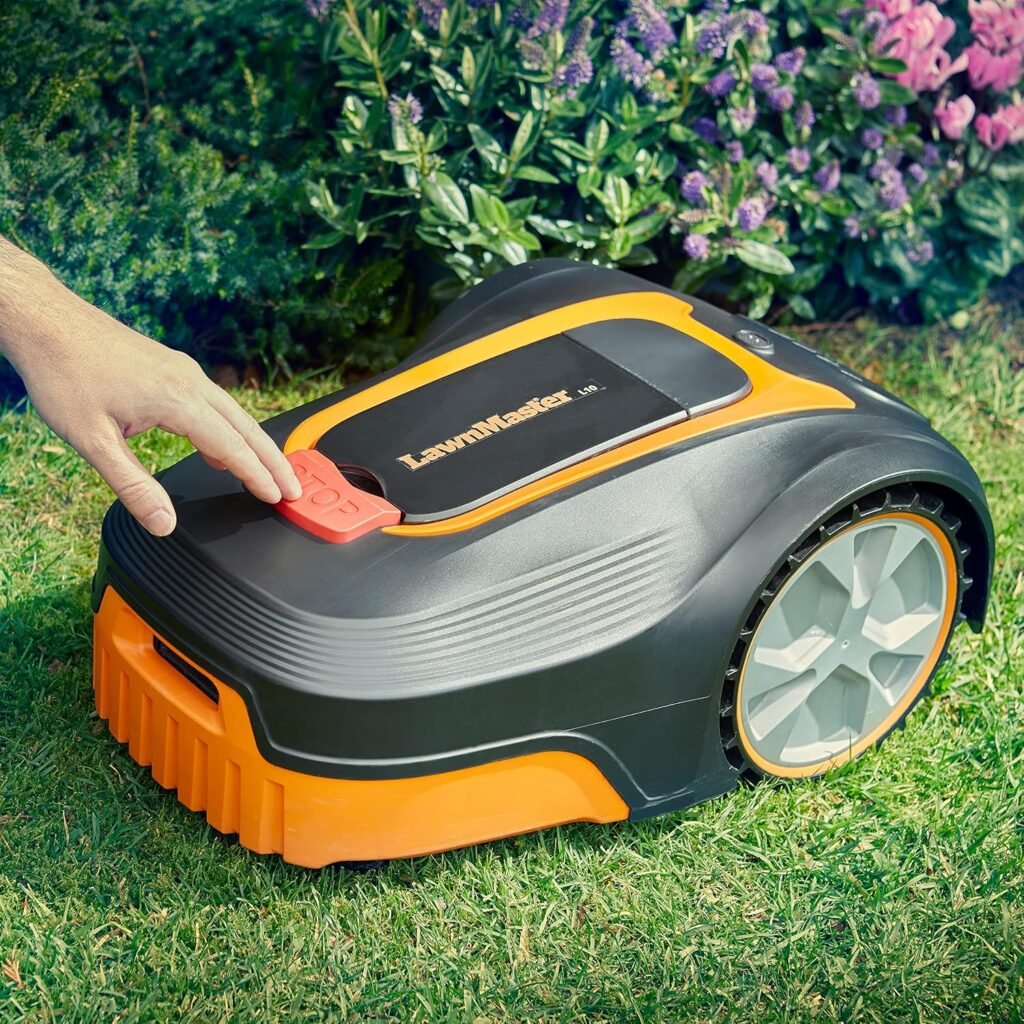
The LawnMaster L10 robot lawnmower is designed for app-free operation. Owners can choose mowing every day or every other day, after which it works to the schedule and returns to charge automatically. This is a simplicity choice rather than an automatic advantage for everyone: some people prefer fewer controls, while others will miss remote scheduling, status updates and alerts.
There is no grass box to empty, but low maintenance doesn’t mean no maintenance. We would switch off or secure the mower, clear grass and debris from underneath, inspect the blades, check the boundary wire and make sure the station remains accessible. Frequent mowing is particularly important during fast spring growth because mulching works best when each cut is light.
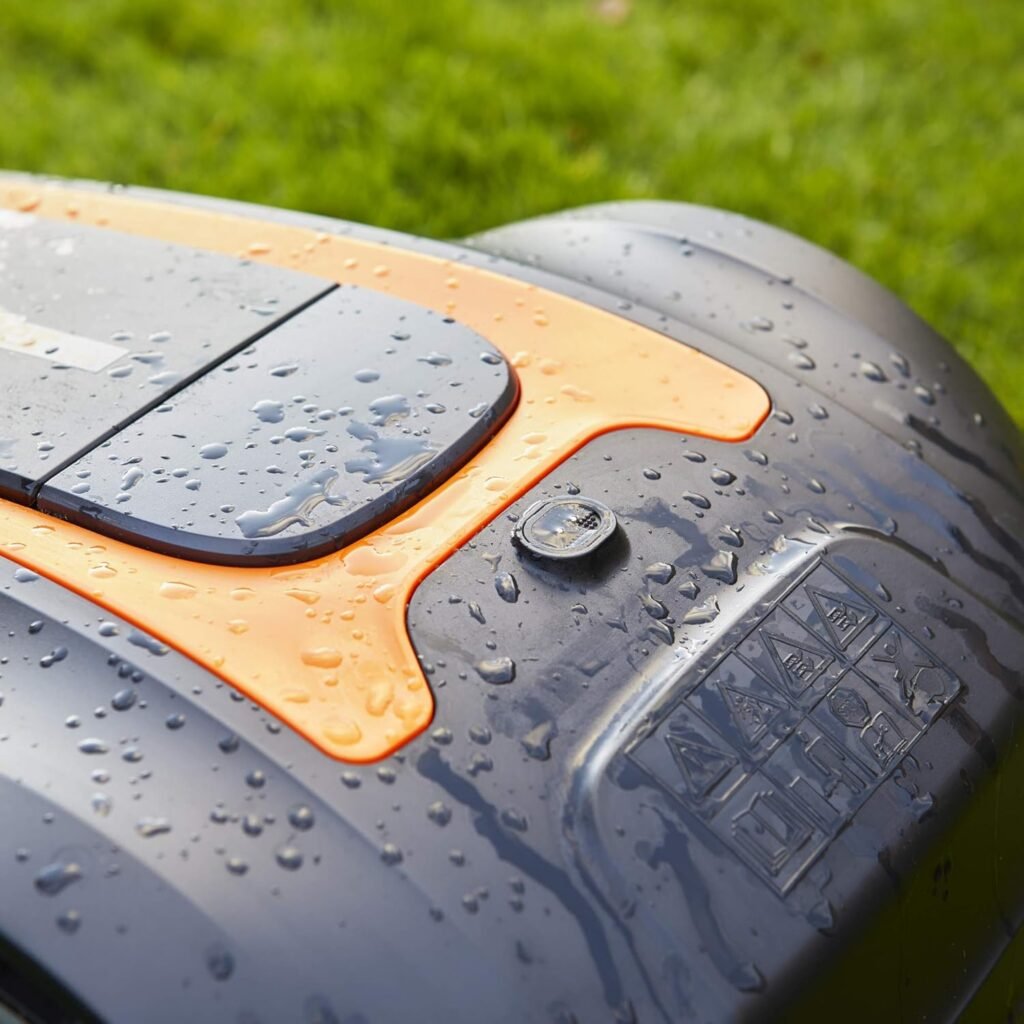
The IPX5 rating indicates protection against water jets. It doesn’t, by itself, confirm that the mower should be left outside in every weather condition, so we would follow the supplied operating and storage guidance rather than treating the rating as unlimited weather protection.
A two-year manufacturer’s warranty and UK-based customer support strengthen the ownership case. Keep the receipt, record the purchase date and follow the warranty conditions. The LawnMaster L10 robot lawnmower is easier to live with when its simple routine is treated as planned maintenance, not as a completely hands-off system.
Safety and Security Features
The LawnMaster L10 robot lawnmower uses lift and tilt sensors intended to stop the blades immediately when the machine is picked up or tipped. A bump sensor is designed to detect contact with objects and stop or change direction. These features add useful protection, but they don’t replace a clear lawn: toys, tools, cables and garden debris should still be removed before each cycle.
PIN-code protection is a basic security measure intended to discourage unauthorised use. It may be reassuring in a shared garden, although the supplied information doesn’t include independent security-test results or a verified blade-stop time. We therefore treat the manufacturer’s safety description as a claimed feature rather than laboratory evidence.
- Keep children and pets away while testing the mower.
- Inspect the lawn before each scheduled cycle.
- Stop and secure the mower before touching its underside.
- Store or handle the machine according to the supplied instructions.
Automated scheduling is convenient, but households with young children, pets or shared access still need sensible supervision. The LawnMaster L10 robot lawnmower can reduce routine intervention without removing responsibility for the environment in which it operates.
What Customers Are Saying About the LawnMaster L10 Robot Lawnmower
Evidence limitation: the supplied product data contains no live star rating, review count or verified-buyer comments. We therefore can’t honestly report that customers praise the battery, docking, quietness, cutting consistency or scheduling, and we won’t invent a rating or review volume for the LawnMaster L10 robot lawnmower.
Before publication or purchase, we would check the current listing for detailed reviews covering the entire ownership experience. The most useful comments should describe lawn area, garden shape, slope, wire placement and performance after several weeks, rather than simply saying that the mower is good or bad.
We would separate recurring themes from isolated remarks. Positive evidence would include repeated reports of reliable automatic docking, consistent cutting and straightforward scheduling; concerns would include missed edges, troublesome wire installation, charging faults, poor obstacle handling, wet-weather problems or long-term failures. Longer-term reviews deserve more weight than first-day impressions because installation satisfaction can change after a season.
If reports conflict, garden conditions may explain the difference. Grass length, perimeter design, loose obstacles and owner expectations can produce very different outcomes. The LawnMaster L10 robot lawnmower should be judged against reviews from gardens resembling ours, not against one-line ratings alone.
Who Should Buy the LawnMaster L10 Robot Lawnmower?
The strongest match for the LawnMaster L10 robot lawnmower is an owner with a lawn of up to 400m² who wants regular automatic mowing, automatic charging and controls that don’t depend on a smartphone. It also suits people who prefer mulching to collecting grass and are prepared to install a boundary wire carefully as part of the initial work.
The adjustable cutting range may help owners who need to start with longer grass and gradually move towards a shorter finish. Basic safety sensors, PIN protection and UK-based support are useful ownership factors, especially where a household wants straightforward protection and an accessible support route.
We’d be more cautious with highly fragmented lawns, difficult boundary slopes, demanding remote-control requirements or grass that is regularly allowed to become heavily overgrown. This is a conditional recommendation, not a universal one.
- Measure the mowing area.
- Inspect slopes along the perimeter.
- Confirm that the charging station has a suitable position.
- Decide whether app control is essential.
- Compare the live price, warranty and included accessories.
If those checks line up, the LawnMaster L10 robot lawnmower has a coherent feature set for uncomplicated gardens.
Pros and Cons
Pros
- App-free daily or alternate-day scheduling with automatic return to the charging station.
- 400m² recommended coverage with a 20–60mm adjustable cutting-height range.
- Mulching operation avoids emptying a grass box and returns fine clippings to the lawn.
- Boundary-wire installation does not require an additional guide wire.
- Stated IPX5 protection, PIN-code security and a two-year manufacturer’s warranty with UK-based support.
Cons
- The charging station cannot be installed in a lawn corner and requires 1m of boundary wire at both the front and back.
- Boundary-wire installation may be demanding on fragmented, narrow or irregular gardens.
- The boundary slope limit is lower than the internal slope limit, restricting some sloping edges.
- No app control is stated, so remote monitoring, alerts and smartphone scheduling may not be available.
- Battery capacity, mowing width, charge time, noise level, rain-sensor details and live customer evidence are not provided.
Final Verdict
Key Takeaways
- The mower is designed for lawns up to 400m² and uses boundary-wire navigation without requiring an app or additional guide wire.
- Its 20–60mm cutting range and mulching operation suit regular light mowing, rather than heavily overgrown grass.
- Station placement and boundary installation require care, particularly because the station cannot sit in a corner and perimeter slope capacity is lower than internal slope capacity.
- It is most appealing to owners of suitably shaped lawns who prefer simple automatic mowing over app-based monitoring.
Frequently Asked Questions
Are Flymo lawn mowers any good?
Flymo mowers can be suitable for shoppers who want compact garden equipment, but quality and suitability depend on the specific model, lawn size, controls and current customer feedback. For a robot mower, compare coverage, boundary setup, slope handling, warranty and verified long-term reviews rather than relying on the brand name alone.
What is the best robotic lawn mower for the money?
There isn’t one best model for every garden. The best value depends on the confirmed price, lawn area, boundary shape, slope limits, included wire and whether you need app control; the LawnMaster L10 is worth considering when its live EUR price is competitive and the garden suits boundary-wire navigation.
What are the negatives of robotic lawn mowers?
Common drawbacks include the initial boundary-wire installation, limited suitability for fragmented or steep gardens, edge areas that may need separate trimming and the need to keep toys and debris away from the mower. App-free models may also lack remote alerts and status monitoring.
Which is better, Flymo or Bosch?
Neither is automatically better. Flymo may suit shoppers seeking a compact, straightforward mower, while Bosch may appeal to those who prefer more structured navigation, but the right choice depends on the exact models, current EUR prices, lawn area, mapping or app features, warranty and verified reviews.
Disclosure: As an Amazon Associate, I earn from qualifying purchases.