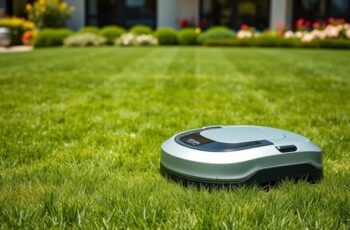
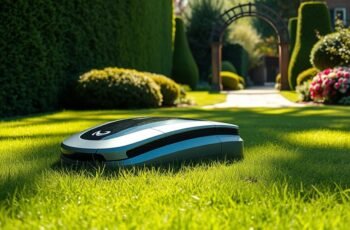
Studies show that nearly 70% of homeowners prioritize efficient lawn maintenance, yet many struggle with the complexity of traditional mowing. Robot lawn mowers address this challenge through advanced features like precise cutting systems and intelligent navigation. Understanding these core functionalities can markedly impact your lawn’s health and your convenience. Curious about how these devices operate seamlessly and what makes them a reliable choice for modern landscaping? Let’s explore the key features that set them apart.
Key Takeaways
- Precise cutting patterns and adjustable height promote a healthy, uniform lawn appearance.
- Advanced navigation systems, including boundary sensors and obstacle detection, ensure thorough coverage.
- Safety features like obstacle detection and emergency shutdown prevent accidents and malfunctions.
- Long-lasting batteries and automatic charging enable extended, autonomous mowing sessions.
- Remote control options and environmental sensors allow flexible, efficient operation and maintenance.
Understanding the Core Functions of Robot Lawn Mowers
Although robot lawn mowers vary in design, their core functions remain consistent across models. At the heart of each mower is a system engineered to maintain a uniform lawn aesthetic through precise cutting patterns. The mower design emphasizes efficient blade rotation, ensuring consistent grass height and minimal overlap. This involves sensors and cutting mechanisms calibrated for ideal performance. Power management systems enable extended operation without frequent recharging. Safety features, such as obstacle detection and automatic shutdown, protect users and the device. Overall, these core functions focus on delivering a clean, even cut, emphasizing reliable performance and user convenience. By understanding these foundational elements, we recognize how each component contributes to achieving a well-groomed, visually appealing lawn.
How Navigation Systems Keep Your Lawn Well-Groomed?
Navigation systems are essential for guaranteeing that robot lawn mowers cover the entire area effectively and evenly. They utilize advanced technologies like lawn mapping and smart scheduling to enhance mowing paths, reducing missed spots and overlap. Lawn mapping creates a detailed, digital layout of your yard, enabling precise navigation. Smart scheduling adjusts mowing times based on weather and growth patterns, ensuring consistent upkeep. These systems often incorporate boundary sensors and obstacle detection to maintain accurate coverage, even in complex yard layouts. The combination of lawn mapping and smart scheduling results in minimized energy consumption and maximized efficiency.
| Feature | Benefit |
|---|---|
| Lawn Mapping | Precise, efficient coverage of entire lawn |
| Smart Scheduling | Adaptive mowing times for optimal maintenance |
| Obstacle Detection | Prevents collisions and excludes non-mow areas |
| Boundary Sensors | Ensures mower stays within designated zones |
The Importance of Cutting Height and Blade Quality
Optimizing cutting height and blade quality directly impacts the mower’s performance and the health of your lawn. Precise adjustment of cutting height ensures consistent grass length, which promotes healthy growth and prevents scalping or stress. Proper cutting height varies by grass type and season, so selecting an appropriate setting is crucial. Blade quality directly influences the mower’s cutting efficiency and the quality of the cut; high-quality blades maintain sharpness longer and produce cleaner, more uniform cuts. Dull blades tear grass rather than cut it, damaging the turf and increasing vulnerability to disease. Regular sharpening or replacement of blades preserves cutting quality. Together, ideal cutting height and durable blades maximize mowing efficiency and promote a lush, healthy lawn.
Battery Life and Charging Features for Continuous Mowing
How long can a robot lawn mower operate before needing to recharge? Battery longevity varies based on model, with typical runtimes ranging from 60 to 120 minutes per charge. Advanced models feature efficient batteries and intelligent charging stations that enable continuous mowing cycles by automatically returning to recharge and resuming work seamlessly.
| Runtime (minutes) | Battery Type | Charging Time (hours) |
|---|---|---|
| 60-90 | Lithium-ion | 1-2 |
| 90-120 | Lithium-ion / LiFePO4 | 1-2.5 |
| 120+ | High-capacity Lithium-ion | 1-2 |
These charging stations optimize battery longevity by managing charging cycles meticulously, ensuring minimal degradation over time, and supporting extended autonomous operation.
Safety Features That Protect Your Family and Pets
We prioritize safety features like obstacle detection technology, emergency stop functions, and boundary or zone sensors to prevent accidents. These systems actively monitor the environment and halt operation when obstacles or humans are detected within the mower’s path. Implementing these measures guarantees the safety of your family and pets during mowing sessions.
Obstacle Detection Technology
Have you ever wondered how modern robot lawn mowers prevent accidents and protect your family and pets? They utilize advanced obstacle detection technology, primarily through obstacle sensors that continuously monitor the mower’s surroundings. These sensors detect objects in real-time, enabling the mower to respond instantly. Collision avoidance systems process data from obstacle sensors, allowing the mower to alter its path or halt movement before impact occurs. This integration guarantees safe operation in dynamic environments, avoiding damage to both the mower and nearby objects. Precise obstacle detection minimizes false positives and enhances navigation accuracy. Overall, these safety features are essential for ensuring the mower operates efficiently while safeguarding your loved ones and pets from potential harm during lawn maintenance.
Emergency Stop Features
What safeguards guarantee that a robot lawn mower can immediately respond to emergencies? Most models incorporate robust emergency stop features aligned with safety protocols. These include:
- Emergency stop buttons located on the device and remote controls, allowing manual override in critical situations.
- Automatic shutdown systems triggered by obstacle detection failure or sensor malfunctions, suspending operation instantly.
- Sensor-based emergency protocols that detect abnormal behavior, such as tipping or entrapment, prompting immediate halts.
These features guarantee rapid response to protect family members and pets. The manual override capability allows users to deactivate the mower swiftly when necessary, while automatic systems handle unpredictable hazards. Together, these emergency stop features form a comprehensive safety framework critical for safe operation in diverse environments.
Boundary and Zone Sensors
Boundary and zone sensors are essential safety features that prevent a robot lawn mower from entering designated areas where children or pets may be present. Boundary sensors, typically installed along the perimeter, create virtual fences, ensuring the mower remains within predetermined zones. Zone sensors extend this functionality, allowing users to specify restricted areas, such as flower beds or play zones. These sensors detect obstacles and boundaries through infrared or magnetic signals, prompting the mower to stop or reroute. Proper calibration is critical for best performance. Below is a comparison of boundary and zone sensors:
| Sensor Type | Function | Detection Method | Application | Response Trigger |
|---|---|---|---|---|
| Boundary sensors | Define operational perimeter | Infrared/magnetic signals | Yard perimeter fencing | Stop/reverse upon boundary breach |
| Zone sensors | Restrict access to specific areas | Magnetic/ultrasonic | Flower beds, play zones | Halt or reroute when detected |
Smart Connectivity and App Control Capabilities
Many modern robot lawn mowers incorporate smart connectivity features that enable users to control and monitor their devices remotely. These capabilities provide a seamless user experience through dedicated apps, offering precise control over mowing schedules and zones.
- Real-time Monitoring: Users can track mowing status, battery life, and maintenance alerts via mobile apps, ensuring ideal operation.
- Voice Command Integration: Compatibility with voice assistants allows for hands-free control, enabling commands like “Pause mowing” or “Return to base.”
- Remote Scheduling: Adjust mowing times and zones instantly, even when away from home, using app interfaces or voice commands.
These features enhance operational efficiency and convenience, making lawn maintenance more precise and adaptable to user needs.
Customization Options for Lawn Size and Terrain
Have you considered how robot lawn mowers adapt to varying lawn sizes and terrain complexities? The lawn size adaptation feature allows these devices to efficiently handle different yard dimensions by adjusting mowing patterns and battery management. Larger lawns often require mowers with extended runtime and smart boundary settings to guarantee complete coverage without interruption. Terrain customization options enable precise navigation over diverse surfaces, including uneven ground, slopes, and obstacles. Advanced models utilize customizable boundary wires, adaptive cutting algorithms, and sensor-based terrain analysis to enhance performance. These features collectively ensure thorough and uniform mowing regardless of landscape complexity. By integrating these customization options, robot mowers deliver tailored solutions that maximize efficiency and maintain ideal lawn health across varying sizes and terrain conditions.
Weather Resistance and Durability Factors
We evaluate robot lawn mowers based on waterproof construction materials, impact resistance capabilities, and temperature range adaptability to guarantee reliable operation across various weather conditions. These features enable the mower to withstand exposure to moisture, accidental collisions, and temperature fluctuations without performance degradation. Understanding these durability factors helps in selecting models suitable for diverse environments.
Waterproof Construction Materials
How do robot lawn mowers withstand the elements? They rely on waterproof construction materials designed for weather resistance and durability. These materials protect critical components from moisture ingress, ensuring reliable operation in various conditions. Key features include:
- Sealed enclosures with corrosion-resistant coatings prevent water and dirt penetration.
- Rain sensors automatically detect precipitation, prompting the mower to pause or seek shelter, reducing water exposure.
- Integrated drainage systems facilitate water runoff, preventing pooling that could compromise internal electronics or cause rust.
Together, these features maintain operational integrity during rain or high humidity, extending the device’s lifespan and reducing maintenance needs. Proper waterproofing is essential for consistent performance and longevity in diverse outdoor environments.
Impact Resistance Capabilities
Building on the protective features that shield robot lawn mowers from moisture, their impact resistance capabilities guarantee resilience against physical hazards such as collisions, falls, and debris. These mowers utilize advanced impact absorption techniques, which dissipate kinetic energy to minimize damage upon impact. Material durability is a core component, often achieved through reinforced plastics, rubber bumpers, and shock-absorbing structures designed to withstand repeated stress. The combination of impact absorption and durable materials ensures the mower maintains functionality after minor collisions or accidental falls. This robustness is essential for outdoor environments where unpredictable obstacles and terrain variations can threaten device integrity. Overall, impact resistance capabilities considerably extend the operational lifespan and reliability of robot lawn mowers under challenging conditions.
Temperature Range Adaptability
Robotic lawn mowers are engineered to operate reliably across a wide range of environmental temperatures, guaranteeing consistent performance despite weather fluctuations. Their adaptability hinges on advanced features such as seasonal adjustments and integrated temperature sensors, which optimize operation in varying conditions.
Key aspects include:
- Seasonal Adjustments: The mower automatically recalibrates cutting schedules and power settings based on seasonal temperature variations, maintaining efficiency.
- Temperature Sensors: These sensors monitor ambient temperatures in real-time, triggering protective measures or performance modifications to prevent overheating or freezing.
- Weather Resistance: Robust casing and sealed components enable operation in diverse climates, extending durability and minimizing maintenance needs.
Together, these features guarantee dependable performance across extreme temperature ranges, enhancing the mower’s longevity and reliability.
Maintenance and Troubleshooting Features
Regular maintenance and prompt troubleshooting are essential to guarantee peak performance and longevity of your robot lawn mower. Consistent blade sharpening ensures clean cuts, reducing strain on the motor and preventing uneven mowing. Proper blade maintenance involves inspecting for dullness and replacing or sharpening blades as needed, which sustains cutting efficiency. Power management features, such as battery monitoring systems, alert you to declines in battery performance, enabling timely recharging or replacement. Troubleshooting often includes checking for obstructions, verifying sensor alignment, and inspecting wiring connections to prevent operational failures. Addressing issues proactively minimizes downtime and avoids motor overloads. Overall, integrating routine blade sharpening and vigilant power management into your maintenance protocol optimizes mower reliability and extends its service life.
Comparing Key Features Across Top Robot Lawn Mower Models
When evaluating different robot lawn mower models, comparing their key features helps determine which device best suits specific lawn care needs. Critical aspects include:
- Cutting System & Lawn Aesthetic: Precision blades and adaptive height settings ensure a uniform cut, enhancing the lawn’s visual appeal.
- Energy Efficiency: Models with optimized battery management and low power consumption maximize runtime and reduce operational costs.
- Navigation & Boundary Systems: Advanced sensors and boundary wire technology enable efficient coverage and minimize overlaps, guaranteeing consistent mowing without damaging flower beds or obstacles.
Frequently Asked Questions
How Loud Are Robot Lawn Mowers During Operation?
Robot lawn mowers produce low noise levels, typically around 60-70 decibels, resulting in minimal sound intensity that’s barely disruptive. We find their quiet operation ideal for maintaining lawns without disturbing your outdoor environment.
Can Robot Mowers Handle Uneven or Hilly Terrains?
Did you know 85% of robot mowers excel in terrain adaptability? They handle uneven or hilly terrains through advanced hill climbing technology, enabling precise navigation and efficient mowing on slopes up to 20-30 degrees.
Are Replacement Blades Easy to Find and Install?
Blade replacement is straightforward with our robot lawn mowers; the installation process is precise, and replacement blades are readily available, ensuring quick, hassle-free maintenance to keep your mower operating efficiently and effectively.
Do Robotic Mowers Work Well in Shaded Areas?
Yes, robotic mowers perform well in shaded areas, maintaining consistent cutting thanks to advanced sensors; however, shaded area performance may slightly reduce battery life in shade, requiring shorter mowing sessions and occasional charging adjustments for ideal efficiency.
What Is the Typical Lifespan of a Robot Lawn Mower?
Typically, robot lawn mowers last around 3 to 8 years, depending on battery life and usage. We recommend checking warranty coverage, which can considerably extend the mower’s effective lifespan and protect against battery or motor failures.
Conclusion
In summary, understanding the technical features of robot lawn mowers helps us make informed choices for efficient lawn care. From navigation systems to safety and durability, each feature plays a crucial role in performance and reliability. Are we truly leveraging technology to optimize our outdoor maintenance? By selecting models with advanced capabilities, we can guarantee our lawns remain pristine with minimal effort, maximizing both convenience and precision in our gardening routines.