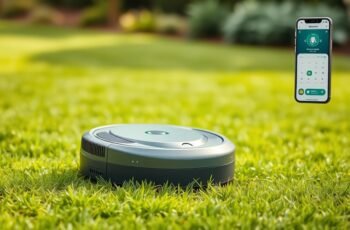
When selecting an uneven lawn robot mower, understanding the technical distinctions between models is essential for peak performance on challenging terrains. We analyze features such as suspension systems, terrain sensors, and traction technology to determine how each unit adapts to slopes and irregular ground. This comparison reveals which models excel in durability and efficiency, guiding you toward a solution that balances cost with long-term reliability. Our detailed evaluation highlights considerations that could influence your final choice, especially for complex landscapes.
Key Takeaways
- Compare models based on their terrain handling features like adaptive suspension and tilt sensors.
- Evaluate traction, wheel design, and tire tread depth for stability on uneven slopes.
- Assess cutting power, multi-blade systems, and navigation technology for efficient mowing on irregular surfaces.
- Consider setup, maintenance needs, and obstacle avoidance capabilities specific to uneven terrains.
- Match mower specifications with yard features, obstacle complexity, and landscape conditions for optimal performance.
Why Choosing an Uneven Lawn Robot Mower Matters
Choosing an uneven lawn robot mower is essential because such terrains present unique challenges that can compromise mowing efficiency and equipment longevity. These terrains demand precise navigation to prevent damage and ensure a uniform cut, directly impacting garden aesthetics. An uneven surface can cause instability, risking mower misalignment and uneven blade performance, which diminishes mower aesthetics. Selecting a mower designed specifically for rough or irregular terrain enhances maneuverability, ensuring consistent coverage without damaging delicate landscape features. Additionally, a specialized mower maintains its functional integrity longer, reducing maintenance costs. By prioritizing an uneven terrain-compatible robot mower, we safeguard both the visual appeal of the lawn and the durability of our equipment, achieving a well-maintained, attractive garden with minimal effort.
Key Features to Look for in Mowers for Uneven Terrain
When selecting a robot mower for uneven terrain, it’s vital to prioritize features that enhance stability, maneuverability, and durability. A robust suspension system helps navigate sloped areas without tipping, while adjustable cutting heights accommodate varying ground contours. Look for models with intelligent navigation algorithms that manage complex terrain efficiently. Incorporating features like effective garden edging capabilities ensures precise boundary control, reducing the risk of mower drift on uneven surfaces. Additionally, options for integrated lawn aeration attachments can improve soil health, supporting better mower traction and grass recovery. Key features include:
- Adaptive suspension systems for variable slopes
- Precise boundary sensors for effective garden edging
- Adjustable cutting heights for uneven ground
- Compatibility with lawn aeration tools to promote stability
How Different Mower Designs Handle Rough or Sloped Areas
When evaluating how mower designs handle rough or sloped terrain, wheel design and traction are critical for maintaining grip and maneuverability. The adaptability of the cutting system influences consistent performance on uneven surfaces, while weight distribution and stability factors determine the mower’s ability to prevent tipping and guarantee safety. Analyzing these technical aspects reveals which models are best suited for challenging outdoor conditions.
Wheel Design and Traction
The design of wheels and their traction capabilities critically influence a robotic mower’s ability to navigate uneven or sloped terrains effectively. Key factors include tire tread and wheel size, which determine grip and stability.
- Tire Tread: Deeper, more aggressive treads enhance grip on loose or uneven surfaces, preventing slippage on inclines.
- Wheel Size: Larger wheels improve obstacle clearance and stability on rough terrain by reducing the impact of uneven ground.
- Traction Surface Material: Rubber compounds with higher friction coefficients offer better grip, especially on wet or slippery slopes.
- Wheel Design: Multi-layered or textured wheels distribute weight more evenly, maintaining traction on inclines and rugged patches.
Optimizing these aspects guarantees superior traction, enabling the mower to handle challenging terrains efficiently.
Cutting System Adaptability
Different mower designs employ varied cutting system mechanisms that directly influence their ability to handle rough or sloped terrain effectively. Some models feature adaptive blade height adjustments that maintain consistent grass height despite uneven ground, preventing scalping or over-trimming. Others incorporate multi-blade systems with variable cutting angles, improving cut quality on inclines and rough patches. These designs often mitigate mower noise by reducing vibrations and optimizing blade rotation, even on challenging terrain. The cutting system’s ability to adjust dynamically ensures a cleaner cut and preserves turf health. Additionally, specialized cutting mechanisms can better handle debris and thick grass in rough areas, maintaining performance without excessive noise or grass height fluctuations. Ultimately, adaptable cutting systems are vital for consistent results across uneven, sloped landscapes.
Weight and Stability Factors
In tackling uneven or sloped terrain, the weight distribution and overall stability of robotic mowers are critical factors influencing their performance. Proper weight distribution ensures the mower maintains traction without excessive pressure on wheels, preventing slippage. Stability enhancement features include:
- Low center of gravity design to improve balance on inclines.
- Adjustable or wide wheelbases for better lateral stability.
- Enhanced weight placement to prevent tipping during slope navigation.
- Incorporation of sensors that detect tilt angles, prompting adjustments to maintain stability.
These design elements optimize how different mower models handle rough terrains. Effective weight distribution reduces the risk of slipping or rolling, while stability enhancements allow for safer, more reliable operation on uneven or sloped surfaces.
Comparing Top Uneven Lawn Robot Mowers by Performance and Price
When evaluating top uneven lawn robot mowers, we focus on cutting power and efficiency to guarantee consistent performance across varied terrain, alongside advanced navigation and sensor technology for obstacle avoidance and slope handling. Price and value comparison is vital to determine which models deliver ideal features within budget constraints. By examining these technical aspects, we can identify the most effective and cost-efficient options for maintaining uneven lawns.
Cutting Power and Efficiency
How do top uneven lawn robot mowers compare in cutting power and efficiency when faced with challenging terrain? Their ability to handle varying grass height and maintain consistent mowing frequency depends on motor strength, blade design, and power management.
Key distinctions include:
- Motor Power – Higher wattage motors enable better performance on thick, uneven grass.
- Blade Design – Multi-blade systems provide cleaner cuts, even on uneven surfaces.
- Cutting Height Adjustment – Precise control over grass height ensures effective clipping without overexertion.
- Efficiency Algorithms – Optimized mowing schedules maximize battery life, maintaining mowing frequency with minimal energy use.
Navigation and Sensor Technology
Charting uneven terrain poses a significant challenge for robot mowers, making advanced sensor and navigation systems essential for peak performance. High-end models employ LiDAR, ultrasonic, and infrared sensors to create real-time elevation maps and obstacle detection, ensuring precise navigation across complex surfaces. These systems allow mowers to adapt their paths dynamically, avoiding hazards and optimizing coverage. Additionally, some models feature cameras with multiple color options for enhanced visual recognition, aiding in boundary detection and obstacle identification. Battery life is also a vital factor, as sophisticated navigation demands increased power; top models balance sensor efficiency with longer runtime. The integration of advanced sensor technology and intuitive navigation systems ultimately results in more reliable, efficient mowing on uneven terrains, providing consistent results regardless of landscape complexity.
Price and Value Comparison
Evaluating the price and value of top uneven lawn robot mowers requires a detailed analysis of their performance capabilities relative to their cost. We focus on factors like lawn aesthetics, mower noise, and overall efficiency.
- Cost vs. Performance: Higher-priced models often deliver superior lawn aesthetics through precise cutting patterns on uneven terrain.
- Noise Levels: Premium mowers tend to operate quieter, minimizing disturbance while maintaining consistent performance.
- Durability and Maintenance Costs: Investment in robust build quality reduces long-term expenses, enhancing value.
- Additional Features: Advanced sensors and adaptive cutting algorithms justify higher prices by improving mowing accuracy and handling complex terrains.
Balancing these factors helps determine which mower provides the best performance-to-price ratio, ensuring ideal lawn aesthetics with minimal mower noise at a justifiable cost.
Tips for Setting Up and Maintaining Your Robot Mower on Uneven Ground
Setting up and maintaining your robot mower on uneven ground requires careful attention to both initial calibration and ongoing adjustments to guarantee ideal performance. Proper calibration ensures the mower navigates slopes safely, avoiding tipping and ensuring consistent cutting. Regularly check the mower’s sensors and adjust blade height to accommodate terrain variations. Maintaining optimal lawn irrigation prevents excessive moisture buildup that could hinder traction or cause rust. For pest control, ensure the mower’s blades are sharp to avoid damage from hidden pests or debris in uneven patches. Use the following table to help fine-tune your setup:
| Calibration Step | Maintenance Tip |
|---|---|
| Adjust slope sensors | Regularly clean sensors |
| Set blade height | Check for debris and pests |
| Map uneven areas | Inspect and replace worn parts |
| Test mower on slopes | Monitor traction and stability |
| Update firmware | Confirm software supports terrain |
Common Challenges and How to Overcome Them With Your Robotic Mower
Operating a robotic mower on uneven terrain presents specific challenges that can impact its efficiency and longevity. These include maintaining lawn health, preventing soil erosion, and guaranteeing consistent cutting performance. To address these issues:
- Adjust mowing height to avoid scalp damage, promoting healthy grass growth.
- Utilize boundary wires strategically to limit high-risk areas prone to soil erosion.
- Incorporate terrain sensors or adaptive algorithms that enable the mower to navigate slopes safely.
- Schedule mowing sessions during ideal moisture levels to prevent soil compaction and erosion, maintaining stable soil structure.
Implementing these strategies helps assure your mower operates effectively, preserves lawn health, and minimizes soil erosion risks. Properly managing uneven ground ultimately extends equipment lifespan and promotes a lush, resilient yard.
Making the Right Choice: Factors to Consider for Your Yard’s Unique Needs
Choosing the right robotic mower for your yard requires a thorough understanding of your landscape’s specific characteristics and how they influence mower performance. Factors like terrain unevenness, obstacles, and grass density directly impact cutting efficiency. For yards with significant variations, opt for models with adjustable cutting heights and advanced navigation systems to guarantee uniform mowing and prevent turf damage. Consider how the mower interacts with lawn decoration, avoiding delicate features, and whether it can maneuver around them without causing harm. Additionally, some mowers include pest control features, such as integrated mulch blades that distribute organic matter, reducing pest habitats. Evaluating these factors helps tailor your choice to your yard’s unique needs, ensuring ideal performance, aesthetic appeal, and ecological benefits.
Frequently Asked Questions
How Long Do Uneven Terrain Robot Mowers Typically Last?
Uneven terrain robot mowers typically last 1-3 years, depending on battery longevity and terrain adaptability. Their lifespan hinges on proper maintenance, battery quality, and how well the mower handles challenging, uneven surfaces over time.
Can Robot Mowers Handle Thick or Tall Grass on Uneven Lawns?
Think of robot mowers as skilled explorers; their grass adaptability and terrain navigation help them tackle thick or tall grass on uneven lawns. While capable, they may struggle in extreme conditions, requiring specialized models for peak performance.
Are Replacement Parts for Uneven Terrain Mowers Widely Available?
We find that replacement parts for uneven terrain mowers are generally available, though availability concerns may arise with specific brands. We recommend verifying manufacturer support and sourcing genuine parts to guarantee ideal mower performance and longevity.
Do Robot Mowers Impact Soil Health on Sloped Yards?
We believe robot mowers are a double-edged sword for sloped yards; they can reduce soil compaction and aid erosion prevention, but uneven terrain may cause localized soil disturbance, so monitoring soil health remains essential for sustainable lawn management.
How Do Weather Conditions Affect Mower Performance on Uneven Ground?
Weather conditions substantially influence mower performance on uneven ground; weather adaptability is vital. Rain or moisture reduces traction, while extreme temperatures affect battery life, with terrain influence intensifying these effects and necessitating advanced, adaptive mowing technology.
Conclusion
Choosing the right uneven lawn robot mower is like selecting the perfect compass for uncharted terrain—precision, adaptability, and resilience guide the way. By understanding each model’s terrain-handling abilities and features, we can navigate slope challenges and rugged patches with confidence. Investing in a mower designed for uneven ground guarantees your lawn’s intricate contours are sculpted with machine-like accuracy, transforming rough patches into smooth, lush landscapes—turning your yard into a meticulously maintained masterpiece.