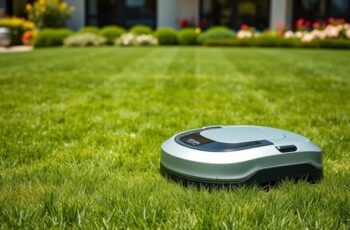
Imagine coming home on a sunny afternoon and finding your lawn perfectly mowed, with minimal effort on your part. That scenario is increasingly possible thanks to robot lawn mowers equipped with smart features, which utilize advanced sensors, GPS, and obstacle detection for precise navigation. These devices promise efficiency and eco-friendliness, but understanding their capabilities and limitations requires a closer look at how they are designed and integrated into modern garden management.
Key Takeaways
- Smart robot lawn mowers use sensors, GPS, and obstacle detection for autonomous, precise, and efficient lawn maintenance.
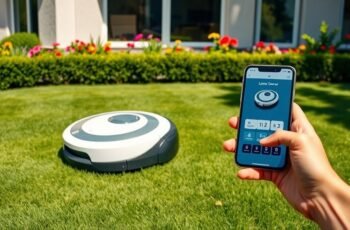
- They can be remotely controlled and monitored via smartphone apps or voice commands for customized scheduling.
- Key features include adjustable cutting heights, multi-zone mowing, and terrain adaptability for various yard types.
- Connectivity enables real-time updates, troubleshooting, and integration with smart home systems for seamless operation.
- Eco-friendly benefits include reduced emissions, water conservation, and lower maintenance costs through intelligent, automated mowing.
What Are Robot Lawn Mowers and How Do They Work?
Robot lawn mowers are autonomous devices designed to maintain lawns with minimal human intervention, utilizing advanced sensors and algorithms. They perform lawn mowing by steering through complex yard layouts through a combination of boundary wires, GPS, and obstacle detection sensors. Robot technology enables these devices to precisely cut grass, ensuring even coverage without over-mowing specific areas. They analyze terrain, adjust cutting patterns, and map out the yard to optimize efficiency. The sensors detect obstacles like trees, garden furniture, or pets, allowing the mower to avoid collisions. This integration of smart guidance and adaptive algorithms results in consistent, high-quality lawn maintenance. Overall, robot lawn mowers exemplify how innovative robot technology has transformed traditional lawn care into an automated, efficient process.
Key Features to Look for in a Smart Robot Lawn Mower
When selecting a smart robot lawn mower, it’s crucial to take into account key features that guarantee efficient, reliable, and safe operation. For ideal lawn care and seamless integration into garden design, look for adjustable cutting heights and multi-zone mowing capabilities, which allow precise customization for different grass types and landscape features. Obstacle detection and safety sensors are essential to prevent accidents and protect garden ornaments. Battery life and charging efficiency directly impact mowing coverage and consistency, especially for larger lawns. Additionally, programmable schedules and terrain adaptability ensure thorough maintenance without manual intervention. These features collectively enhance the mower’s performance, ensuring your lawn remains well-maintained, your garden design stays intact, and overall lawn care becomes smarter and more efficient.
How Bluetooth and Wi-Fi Connectivity Enhance Lawn Maintenance
Bluetooth and Wi-Fi connectivity enable us to control and monitor our lawn mowers remotely, offering convenience and precision. These connections allow for real-time updates on mowing progress and quick adjustments to settings, ensuring peak performance. By integrating these features, users can customize mowing schedules and respond to changing conditions instantly.
Remote Control Access
The integration of Bluetooth and Wi-Fi connectivity notably enhances remote control access, allowing homeowners to manage lawn maintenance with greater flexibility and precision. This connectivity enables seamless remote access via smartphones or tablets, facilitating mobile control that adjusts mowing schedules, zones, or specific tasks instantly. Such features reduce the need for manual intervention, improving efficiency. The table below summarizes key aspects:
| Feature | Benefits | Limitations |
|---|---|---|
| Bluetooth | Short-range, quick setup | Limited range |
| Wi-Fi | Long-range, real-time control | Requires stable internet connection |
| Mobile Control | Easy scheduling, zone adjustments | Security considerations |
This detailed approach ensures ideal lawn care, emphasizing the importance of reliable connectivity for effective remote access.
Real-Time Monitoring
By leveraging Bluetooth and Wi-Fi connectivity, homeowners can achieve real-time monitoring of their lawn maintenance, enabling immediate detection of issues and precise control over mowing operations. This connectivity facilitates drone surveillance, allowing users to visually assess their lawn’s condition remotely, identifying uneven patches or obstacles that might impede the mower. Weather synchronization enhances this system by adjusting mowing schedules based on real-time weather data, preventing mowing during rain or high winds that could damage the lawn or mower. These features ensure that maintenance is both efficient and responsive, reducing manual oversight. The continuous data flow enables prompt troubleshooting, minimizing downtime and optimizing the mower’s performance. Overall, Bluetooth and Wi-Fi integration create a thorough, intelligent system for proactive lawn care management.
Customizable Settings
Utilizing Bluetooth and Wi-Fi connectivity allows users to tailor their lawn maintenance settings with remarkable precision, enabling a highly customized mowing experience. These connections facilitate the adjustment of personalized settings based on specific user preferences, such as mowing frequency, cutting height, and scheduled times. This level of control guarantees the mower operates at its best for diverse lawn conditions. The table below highlights key features enabled by connectivity:
| Feature | Benefit |
|---|---|
| Personalized schedules | Automates mowing times aligned with user routines |
| Adjustable cutting height | Customizes grass length for aesthetic or health needs |
| Zone-specific control | Focuses mowing on designated lawn areas |
| Remote monitoring | Allows real-time oversight and adjustments |
| Alert notifications | Keeps users informed of mower status |
Setting Up and Customizing Your Smart Mower for Optimal Performance
After unboxing your smart mower, we recommend thoroughly reviewing the manufacturer’s setup instructions to guarantee all components are correctly assembled and functional. Precise calibration ensures the mower navigates your garden design efficiently, minimizing overlaps and missed areas. Customizing boundary wires and setting mowing schedules directly impact lawn aesthetics, maintaining a neat, uniform appearance. Adjusting cutting height according to grass type and season promotes healthy growth. Connecting the mower to your app allows for detailed zone mapping and personalized mowing preferences. Proper setup prevents obstructions and optimizes battery life, ensuring consistent performance. Investing time in initial configuration helps your smart mower adapt seamlessly to your garden’s unique layout, ultimately enhancing lawn aesthetics through precise, tailored mowing routines.
Benefits of Using a Robot Lawn Mower With Smart Features
Smart features in robot lawn mowers offer significant advantages that enhance both convenience and lawn health. By integrating sensors and adaptive algorithms, these mowers enable precise lawn care, ensuring even cutting and ideal grass growth. This garden automation reduces the need for manual intervention, saving time and effort while promoting healthier turf through consistent mowing schedules. Smart systems can detect obstacles, adjust routes, and avoid damage, resulting in a more efficient mowing process. Additionally, features like app control allow us to monitor and customize lawn care routines remotely, providing real-time insights and adjustments. Overall, these intelligent capabilities improve the quality and consistency of lawn care, making maintenance less labor-intensive and more effective. This technological integration ultimately leads to a more vibrant, well-maintained garden with minimal effort.
Comparing Popular Smart Robot Lawn Mower Models and Their Capabilities
With the growing variety of smart robot lawn mowers on the market, understanding their capabilities requires a careful comparison of models to determine which best suits different yard sizes and terrain complexities. Models like the Husqvarna Automower and Worx Landroid offer advanced navigation and customizable schedules, ideal for complex garden design. Others, such as the Gardena Sileno, excel in precision cutting for maintaining lawn art and intricate landscaping features. Battery life, obstacle detection, and app control are key factors influencing performance. For larger yards, models with higher mowing capacity and adaptive mapping are preferable. Ultimately, selecting the right mower depends on balancing terrain challenges with specific aesthetic goals, whether that’s seamless lawn coverage or detailed garden art preservation.
Tips for Maintaining and Troubleshooting Your Smart Mower
Maintaining and troubleshooting your smart mower requires a systematic approach to guarantee peak performance and longevity. Regularly inspect the blades for sharpness, as dull blades can compromise lawn aesthetics and disrupt your garden design. Clean sensors and charging contacts to ensure seamless navigation and consistent operation. Monitor the mower’s software updates, as these often include bug fixes that enhance functionality. When troubleshooting issues, check for obstacles or uneven terrain that could hinder movement or cause mechanical strain. Keep the mowing area well-defined and free of debris to maintain excellent lawn aesthetics. Consistent maintenance not only prolongs the mower’s lifespan but also ensures that your garden design remains pristine and well-manicured. Precise care translates to a healthier, more attractive lawn.
Eco-Friendly and Cost-Saving Advantages of Robotic Lawn Care
Have you ever considered how robotic lawn mowers contribute to a more sustainable and cost-effective outdoor maintenance routine? These devices promote sustainable landscaping by reducing reliance on gas-powered equipment, lowering carbon emissions, and minimizing air pollution. Their precise mowing patterns conserve energy and help maintain consistent grass health, which can reduce water usage and fertilizer needs. Additionally, robotic mowers support chemical-free gardening practices by eliminating the need for herbicides and pesticides, since healthy, well-maintained lawns naturally resist pests and weeds. Over time, their efficiency translates into significant cost savings—fewer fuel purchases, lower water bills, and less maintenance expense. Overall, robotic lawn care aligns with eco-friendly principles, offering a practical solution for environmentally conscious homeowners seeking to reduce their ecological footprint while saving money.
Integrating Your Robot Mower Into a Smart Home Ecosystem
Smart home technology has revolutionized how we manage outdoor spaces, making it more convenient and efficient to coordinate various devices. Integrating your robot mower into a smart home ecosystem enhances mowing efficiency by allowing seamless scheduling, adjustments, and real-time monitoring remotely. This integration guarantees consistent lawn aesthetics, as the mower can adapt to changes in weather or growth patterns automatically. Through smartphone apps or voice commands, we can optimize mowing routes, prevent overlaps, and quickly respond to any issues. Furthermore, smart sensors can provide data on grass health and soil conditions, informing maintenance decisions. By connecting the robot mower with other smart devices, we create a cohesive system that maintains a well-manicured lawn with minimal effort, maximizing both lawn aesthetics and overall operational efficiency.
Future Trends in Robotic Lawn Care Technology
Advancements in navigation systems will enable robotic mowers to operate with even greater precision and obstacle avoidance, reducing the need for manual intervention. AI-powered lawn analysis promises real-time adjustments based on grass health, moisture levels, and growth patterns, optimizing maintenance routines. Additionally, deeper integration with smart home ecosystems will facilitate seamless control and data sharing, creating a cohesive outdoor automation experience.
Enhanced Navigation Systems
As robotic lawn mowers evolve, enhanced navigation systems are increasingly pivotal in optimizing their efficiency and reliability. These systems enable precise, systematic coverage, which directly impacts lawn aesthetics by ensuring uniform grass cutting and reducing missed patches. Advanced sensors and mapping algorithms help maintain grass health by avoiding over-mowing or damaging sensitive areas, promoting ideal growth conditions. Enhanced navigation minimizes unnecessary overlaps, conserving energy and prolonging battery life, while also reducing wear on the mower. With real-time obstacle detection and adaptive path planning, these systems adapt to changing lawn conditions, ensuring thorough coverage without compromising the landscape. Ultimately, these innovations lead to more consistent, healthy lawns, aligning with homeowners’ expectations for both visual appeal and grass vitality.
AI-Powered Lawn Analysis
How will AI-powered lawn analysis transform the future of robotic lawn care? It enables precise assessment of lawn conditions, enhancing mowing patterns for improved lawn aesthetics and health. By analyzing factors like soil moisture, grass density, and growth rate, these systems facilitate tailored seasonal adjustments, ensuring the lawn adapts seamlessly throughout the year.
- Enhanced Precision: AI evaluates real-time data to create detailed profiles, improving mowing accuracy and consistency.
- Adaptive Seasonal Adjustments: The system predicts growth cycles, adjusting mowing frequency and height to maintain ideal lawn aesthetic.
- Proactive Maintenance: AI detects early signs of disease or stress, prompting targeted interventions before issues escalate.
This integration of AI makes robotic lawn care smarter, more efficient, and responsive to changing environmental conditions.
Integration With Smart Home
Integrating robotic lawn mowers with smart home systems promises to revolutionize lawn maintenance by creating seamless, centralized control over outdoor and indoor environments. This connectivity enables users to optimize lawn aesthetics through precise adjustment of mowing patterns, ensuring consistent coverage and uniform appearance. Smart integration allows for real-time monitoring of mower status, battery levels, and mowing schedules via mobile apps or voice commands. Advanced algorithms can adapt mowing patterns based on lawn growth, weather conditions, or user preferences, enhancing efficiency and aesthetic appeal. Additionally, integration facilitates automation within broader smart home ecosystems, enabling coordinated outdoor and indoor climate control, lighting, and security. This interconnected approach not only improves the visual quality of lawns but also streamlines maintenance, making robotic mowing more intuitive and responsive.
Frequently Asked Questions
How Long Does the Battery Last on a Single Charge?
Our robot lawn mower’s battery life typically lasts around 60 to 90 minutes per charge, depending on grass density, with a charging time of approximately 60 to 120 minutes, ensuring efficient and consistent mowing sessions.
Are Robot Lawn Mowers Suitable for Uneven Terrain?
Like explorers charting uneven landscapes, we find robot lawn mowers excel in terrain adaptability and slope navigation, analyzing each incline meticulously to guarantee efficient, safe mowing without getting stuck, making them suitable for varied, challenging terrains.
Can Multiple Smart Mowers Work Together in Large Yards?
Yes, multiple smart mowers can work together effectively in large yards through smart mower synchronization, which coordinates their actions, and advanced yard mapping capabilities that guarantee thorough coverage without overlap or missed areas, optimizing efficiency and maintenance.
What Safety Features Prevent Accidental Injuries?
Think of safety features as the guardians of your yard; child safety locks and emergency stop buttons act swiftly, preventing accidents by halting operation instantly, ensuring that smart mowers prioritize user safety and minimize injury risks.
How Do Weather Conditions Affect Mower Operation?
Weather patterns considerably influence mower operation; rain can cause slipping or damage, while extreme heat may lead to overheating. We recommend seasonal adjustments, like scheduling mowing during ideal conditions and protecting the mower during harsh weather for consistent performance.
Conclusion
As we embrace smart technology in lawn care, it’s clear that robotic mowers are transforming our outdoor maintenance routines. Studies show that automated lawn care can reduce water and energy usage by up to 30%, highlighting both environmental and cost benefits. By integrating advanced sensors and connectivity, we’re moving toward more sustainable, efficient, and personalized gardening solutions. These innovations not only save us time but also contribute to healthier, greener landscapes for years to come.