Like the pioneers who once explored uncharted territory, we now navigate the evolving landscape of lawn care with robotic technology. As homeowners seek smarter, more efficient ways to maintain their yards, understanding how these devices work and their benefits becomes essential. Whether you’re considering making the switch or just curious about what’s possible, exploring this guide can help you determine if a robot mower is the right fit for your outdoor space—and what steps to take next.
Key Takeaways
- Assess your yard size and terrain to choose a compatible robot mower with appropriate battery life and features.
- Set up boundary wires and define mowing schedules to ensure safe, efficient operation and protect delicate landscaping.
- Regularly maintain blades, sensors, and batteries to ensure optimal cutting performance and prolong mower lifespan.
- Prioritize safety by supervising initial operations, securing pets, and using boundary detection features to prevent accidents.
- Stay informed on emerging trends like AI integration, eco-friendly options, and smart home compatibility for future-proofing your mower.
How Do Robot Lawn Mowers Work and What Are Their Main Features?
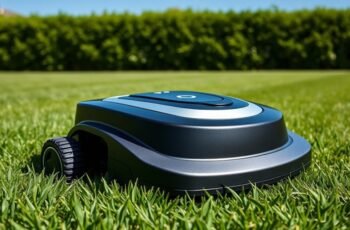
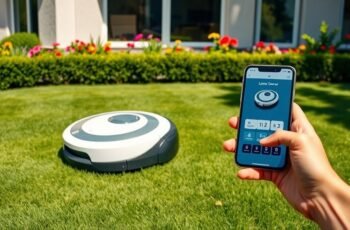
Robot lawn mowers operate autonomously by steering your yard to trim grass efficiently without manual effort. A robot mower uses built-in sensors and boundary wires to navigate your lawn, ensuring consistent grass cutting. These devices typically feature rechargeable batteries, allowing them to operate for hours before returning to their charging stations. Main features include adjustable cutting height, safety sensors to avoid obstacles, and programmable schedules to maintain your yard regularly. Some models come with app controls for remote operation, while others use GPS for precise navigation. The robot mower’s blades rotate quickly to cut grass evenly, leaving a clean, manicured look. Overall, these machines offer a practical, low-maintenance solution for keeping your lawn well-groomed with minimal effort.
Choosing the Right Robot Lawn Mower for Your Yard Size and Terrain
When selecting a robot lawn mower, we need to take into account how well it matches our yard size and terrain. Features like terrain adaptability and battery life are essential to guarantee the mower handles uneven ground and covers the area efficiently. By understanding these points, we can choose a mower that keeps our lawn pristine with minimal hassle.
Yard Size Compatibility
Choosing the right robot lawn mower depends heavily on your yard’s size and terrain, as these factors determine the mower’s suitability and efficiency. For yard size, compatibility options are vital—small to medium lawns typically need compact models with shorter run times, while larger yards require mowers with extended battery life and wider cutting decks. It’s important to select a mower designed for your yard’s dimensions to prevent overworking the device or leaving patches uncut. Many models specify their ideal yard size, making it easier to match your space with the right compatibility options. By considering your yard size carefully, you guarantee your mower is efficient, reliable, and capable of maintaining a pristine lawn without unnecessary strain or frequent recharges.
Terrain Adaptability Features
Since terrain variations can considerably impact mowing performance, it’s vital to select a robot lawn mower equipped with terrain adaptability features that match your yard’s landscape. Terrain challenges like uneven ground, slopes, and obstacles can hinder effective mowing if not properly addressed. Look for models with strong slope handling capabilities to guarantee the mower can navigate inclines safely. Features to evaluate include:
- Adjustable cutting height for different terrains
- Robust wheels or tracks for stability on uneven surfaces
- Sensors that detect and adapt to slopes and obstacles
- Power and torque suited for rugged, hilly yards
Choosing a mower with these terrain adaptability features helps prevent mishaps and guarantees your lawn is evenly mowed, regardless of terrain challenges. Proper selection makes all the difference in maintaining a beautiful, healthy yard.
Battery Life Considerations
A key factor in selecting the right robot lawn mower is guaranteeing it has enough battery life to cover your yard efficiently. Larger or more complex terrains require longer-lasting batteries, so consider mower models with higher capacity. Proper battery maintenance is essential to prolong battery life, including avoiding complete discharges and storing units in cool, dry places. Many mowers come with designated charging stations, which simplify recharging and keep the mower ready for use. Regularly checking and maintaining these stations ensures reliable power supply and minimizes downtime. If your yard is sizable or has challenging terrain, choose a mower with an extended battery life or consider models with quick-charging features. This way, your mower stays operational without interruptions, maintaining a healthy, well-manicured lawn.
Key Factors to Consider When Buying a Robot Mower
When selecting a robot lawn mower, focusing on specific features that match your yard’s unique needs is essential. Consider how the mower impacts garden aesthetics and soil health, guaranteeing it complements your landscape without damage. Look for models with adjustable cutting heights to maintain a neat appearance while protecting grass roots. A mower with boundary wires or sensors helps preserve flower beds and delicate plants. Noise levels matter for a peaceful environment, and safety features prevent accidents. Additionally, assess the size of your lawn to choose a mower with appropriate battery life and coverage. These factors assure your mower enhances your garden’s beauty and promotes healthy soil, giving you a well-maintained lawn with minimal effort.
- Adjustable cutting height for aesthetic and soil health balance
- Boundary detection to protect garden features
- Noise levels suitable for your environment
- Battery capacity aligned with lawn size
How to Set Up and Program Your Robot Lawn Mower for Optimal Performance
Getting your robot mower set up correctly is key to keeping your lawn healthy and tidy. We’ll walk you through the initial setup, programming, and tips to optimize performance. With the right adjustments, your mower will work efficiently and save you time.
Initial Setup Procedures
Ever wonder how to guarantee your robot lawn mower runs smoothly from the start? Proper initial setup sets the foundation for a healthy, attractive lawn that boosts garden aesthetics and supports lawn fertilization efforts. First, position the charging station in a level, sheltered area away from obstacles. Next, define the mowing perimeter to prevent the mower from straying into flower beds or driveways. Make certain the blades are sharp for clean cuts that improve grass health and appearance. Finally, check that the mower’s height adjustment matches your grass type, promoting ideal growth and lawn uniformity. By focusing on these setup steps, you’ll create a seamless mowing routine that maintains your lawn’s beauty and health, making gardening more enjoyable and guaranteeing your mower performs at its best.
Programming Your Mower
Once your mower is physically set up, programming it correctly is essential for efficient and effective lawn care. Start by connecting your remote control so you can easily adjust mowing schedules and settings from a distance. Utilize the weather sensors integrated into your mower to optimize mowing times; these sensors detect rain or high humidity, automatically pausing or rescheduling mowing to protect your lawn and equipment. Set boundaries and mowing patterns through the control panel, ensuring the mower covers the entire yard uniformly. Adjust mowing height and frequency based on your lawn’s needs. Proper programming minimizes manual intervention, conserves energy, and keeps your lawn healthy. Regularly review and update your settings to adapt to seasonal changes or new lawn conditions.
Optimization Tips
To maximize your robot lawn mower’s efficiency, it’s essential to set up and program it thoughtfully from the start. Proper configuration helps promote smart landscaping and reduces environmental impact. Start by defining boundaries clearly and scheduling mowing times during optimal hours. Regularly updating the software ensures smooth operation and adapts to yard changes. Adjust cutting height to match grass type and growth, encouraging healthy, lush lawns. Additionally, consider terrain features to prevent unnecessary energy use.
- Use boundary wires to create precise mowing zones, avoiding obstacles.
- Schedule mowing during low-traffic times to minimize disturbances.
- Regularly check and clean blades for better cut quality.
- Incorporate eco-friendly settings to reduce energy consumption and emissions.
Maintenance Tips to Keep Your Robot Mower Running Smoothly
Regular maintenance is essential to keep your robot mower operating at peak performance. To guarantee smooth operation, regularly inspect and clean the blades to maintain sharpness, which helps with precise cuts and reduces strain on the motor. Keep the mower’s sensors and wheels free of debris, especially after garden landscaping projects, to avoid navigation issues. Check the battery life and charge levels, replacing batteries when necessary to prevent unexpected shutdowns. Proper lawn fertilization promotes healthy grass, making mowing easier and more efficient. Additionally, trimming overgrown or uneven patches before mowing can prevent the mower from overworking. By staying on top of these maintenance tasks, your robot mower will work efficiently, prolonging its lifespan and keeping your lawn looking immaculate.
Safety Tips for Using Your Robot Lawn Mower Around Kids and Pets
While robot lawn mowers offer convenience, it’s crucial to prioritize safety when kids and pets are around. To guarantee child safety and protect pets, always supervise the mower during operation and keep children and animals away from the mowing area. Use boundary wires or virtual fences to prevent accidental entry into unsafe zones. Regularly check for small parts or moving blades that could pose a hazard. Educate family members about the mower’s operation and safety features to avoid unintentional injuries.
Prioritize supervision, secure pets and children, and use boundary systems for safe robot lawn mower operation.
- Establish a designated play area away from the mower’s path
- Turn off and unplug the mower when not in use
- Keep pets indoors or in a secure area during mowing
- Regularly inspect safety sensors for proper functioning
Common Problems With Robot Mowers and How to Fix Them
Robot mowers are generally dependable, but like any device, they can encounter common issues that disrupt their performance. These problems can affect garden aesthetics and lawn aesthetics, so quick fixes are key.
| Issue | Solution |
|---|---|
| Poor Cutting Performance | Check blades for damage or dullness; sharpen or replace. |
| Charging Problems | Ensure charging station is clean and properly connected. |
| Navigation Errors | Clear debris from sensors; recalibrate if necessary. |
| Uneven Lawn | Map out obstacles; adjust boundary wires for better coverage. |
| Excess Noise | Inspect blades; tighten or replace as needed. |
Comparing Popular Robot Lawn Mower Brands and Models
When comparing robot lawn mower brands and models, we focus on performance, battery life, and overall value to find the best fit for your yard. Understanding how each model handles cutting power and run time helps you choose one that meets your needs without overspending. By considering price ranges and features, we can identify options that deliver quality and reliability at a practical cost.
Performance and Cutting Power
Choosing the right robot lawn mower depends heavily on understanding their performance and cutting power, which vary considerably among brands and models. Performance metrics like motor power and blade design directly influence cutting efficiency, ensuring a clean, even cut. When comparing models, focus on how well they handle different grass types and terrain.
- Motor strength: Stronger motors often mean better performance on thick or dense grass.
- Blade design: Sharp, durable blades improve cutting precision and reduce strain.
- Cutting height adjustments: Flexibility here helps adapt to grass growth and maintain lawn health.
- Navigation systems: Advanced sensors enhance efficiency, reducing missed spots and overlaps.
A clear grasp of these factors helps us choose a mower that maximizes performance and keeps our lawns healthy and neat.
Battery Life and Run Time
Have you ever wondered how long a robot lawn mower can run before needing a recharge? Most models offer between 60 to 90 minutes of continuous mowing, depending on the terrain and grass density. Battery life varies across brands and models, so it’s essential to weigh how often you’ll need to recharge. Proper battery maintenance, like keeping contacts clean and avoiding deep discharges, can extend run time. Many mowers come with dedicated charging stations that automatically return the mower when the battery runs low, ensuring uninterrupted mowing sessions. Some high-end models feature larger batteries for longer run times, reducing the number of recharges needed. Understanding these factors helps you choose a model that fits your yard’s size and keeps your lawn looking great without frequent interruptions.
Price Range and Value
Ever wondered how much you should expect to spend on a robot lawn mower, and what kind of value different brands offer? Pricing transparency varies widely, so understanding the value comparison is key. Typically, prices range from around $300 for basic models to over $2,000 for premium options with advanced features. Higher costs often bring better durability, smarter navigation, and longer warranties, but that doesn’t always mean more value. To make an informed choice, consider:
- The balance between upfront cost and long-term durability
- Additional features that enhance efficiency
- Brand reputation and customer service
- Overall reliability relative to price
How Much Do Robot Lawn Mowers Cost and Are They Worth It?
Robot lawn mowers typically range in price from around $300 to over $1,500, depending on features and brand. While the initial investment might seem high, many homeowners find they’re worth it for maintaining a tidy, even lawn without manual effort. They can enhance garden design by providing consistent mowing, which improves lawn aesthetics and promotes healthy grass growth. For smaller or complex yards, a more affordable model might suffice, but larger or intricate landscapes may require advanced features like GPS navigation or app control, increasing costs. Ultimately, whether a robot mower is worth it depends on your lawn’s size, terrain, and your desire for a pristine yard with minimal effort. When chosen wisely, it can be a practical addition to your garden care routine.
Future Trends in Robotic Lawn Care and Smart Garden Technology
As technology continues to advance, the future of robotic lawn care is poised to become more integrated, intelligent, and user-friendly. We expect innovations to build on historical trends, making devices smarter and more adaptable to various gardening aesthetics. Future robotic mowers may incorporate AI to analyze grass health, optimize mowing patterns, and learn user preferences. Smart garden technology could enable seamless integration with home automation systems, giving homeowners control via voice or apps. Additionally, advancements might include eco-friendly features, such as solar-powered units or biodegradable components. These trends will likely result in more personalized, efficient, and aesthetically pleasing lawns, reducing manual effort and enhancing the overall gardening experience.
- AI-driven maintenance and customization
- Enhanced integration with smart home systems
- Eco-friendly, sustainable features
- Adaptive designs for diverse gardening aesthetics
Frequently Asked Questions
Can Robot Lawn Mowers Handle Steep Slopes or Uneven Terrain?
Robot lawn mowers can handle steep slopes and uneven terrain thanks to advanced slope adaptability features and terrain sensors. We recommend choosing models specifically designed for challenging landscapes to guarantee efficient mowing and safety on varied surfaces.
How Loud Are Robot Lawn Mowers During Operation?
Robot lawn mowers are generally quiet, with noise levels often below 60 decibels, making them barely disruptive. They also feature audible alerts for safety and operational updates, ensuring you stay informed without noise disturbance.
Do Robot Mowers Work Effectively in Rainy or Wet Conditions?
We find that robot mowers handle rainy or wet conditions surprisingly well, thanks to rain resistance and wet condition performance features. Still, we recommend avoiding prolonged exposure to heavy rain to guarantee ideal operation and longevity.
Can Robot Lawn Mowers Mow Multiple Zones or Separate Areas?
Yes, robot lawn mowers excel at multi-zone navigation, easily handling area separation. They can mow multiple zones or separate areas, making yard maintenance more efficient without needing manual intervention between different sections.
What Is the Typical Lifespan of a Robot Lawn Mower?
Like a trusty steed, a robot lawn mower usually lasts 7-10 years, depending on battery longevity and maintenance requirements. Regular care keeps it running smoothly, ensuring it stays a loyal helper in your yard work.
Conclusion
Think of a robot lawn mower as a trusted garden companion, quietly tending to your yard like a diligent gardener’s apprentice. By choosing the right model, setting it up properly, and maintaining it well, we make lawn care simpler and more enjoyable. With smart features and future innovations on the horizon, our outdoor spaces will flourish effortlessly. Embrace this tech-savvy helper, and watch your garden transform into a lush, well-manicured paradise—without breaking a sweat.