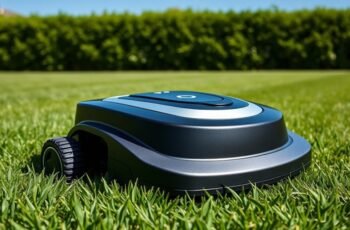
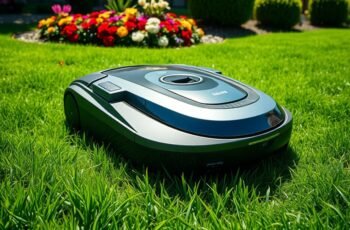
Did you know that robot lawn mowers can operate continuously with minimal human oversight, yet their efficiency depends heavily on yard features? While they offer precise, eco-friendly trimming, their limitations in handling tall grass or uneven terrain can affect overall performance. Understanding these factors is essential before considering such a device. Exploring the benefits and potential drawbacks can help determine if a robot mower truly fits your outdoor maintenance needs.
Key Takeaways
- Provides precise, even lawn trimming while reducing manual effort and noise pollution.
- Ideal for flat or moderately sloped terrains but struggles with tall or uneven grass.
- Requires regular maintenance, including blade replacement and sensor cleaning, increasing long-term upkeep.
- Higher initial cost but offers savings on labor, fuel, and manual mowing over time.
- Performance depends on matching features to yard size, shape, and terrain complexity.
What Are the Main Benefits of Robot Lawn Mowers?
Robot lawn mowers offer several notable advantages that make them an increasingly popular choice for maintaining outdoor spaces. Their precise trimming capabilities enhance garden aesthetics by producing an even, well-manicured lawn with minimal effort. These mowers operate autonomously, reducing the need for manual labor and allowing for frequent, consistent cutting, which promotes healthier grass growth. From an environmental perspective, robot mowers typically have lower emissions than traditional gas-powered models, decreasing their environmental impact. Their small size and efficient energy use contribute to reduced carbon footprint and less noise pollution, making them suitable for noise-sensitive neighborhoods. Overall, these benefits combine to deliver a sustainable, efficient, and visually appealing solution for lawn maintenance.
How Do Robot Lawn Mowers Work?
To understand how robot lawn mowers operate, we need to examine their core components and the technology that enables autonomous functioning. They rely on advanced battery technology for efficient, cordless operation and sophisticated mowing algorithms to navigate and cut grass systematically. These algorithms process sensor data to avoid obstacles and optimize coverage. The battery’s capacity determines runtime, while charging stations facilitate automatic recharging. The mower’s navigation system, often GPS or boundary wires, guides its movement.
| Core Component | Functionality | Impact |
|---|---|---|
| Battery technology | Power source for operation | Affects runtime and efficiency |
| Mowing algorithms | Path planning and obstacle avoidance | Ensures complete, systematic mowing |
| Navigation system | Guides mower within boundaries | Ensures coverage and safety |
What Are the Potential Drawbacks of Using a Robot Lawn Mower?
Robot lawn mowers often struggle with tall grass, which can hinder their cutting efficiency and lead to incomplete mowing. Additionally, they tend to require more maintenance than traditional mowers due to frequent component wear and potential technical issues. Understanding these limitations helps us evaluate whether their convenience outweighs their operational drawbacks.
Limited Performance in Tall Grass
Have you ever wondered how well a robotic lawn mower handles thick, tall grass? Tall grass challenges often expose mower performance limitations, especially since most models are engineered for regular conditions. When faced with dense growth exceeding a few inches, the mower’s blades may struggle to cut effectively, reducing efficiency and potentially causing strain on the motor. The following table illustrates how different grass heights impact mower performance:
| Grass Height | Mower Efficiency | Risk of Overheating | Blade Effectiveness | Navigation Difficulty |
|---|---|---|---|---|
| Short (<3 inches) | Ideal | Low | High | Easy |
| Medium (3-6 inches) | Good | Moderate | Good | Moderate |
| Tall (>6 inches) | Restricted | High | Reduced | Difficult |
| Overgrown (>8 inches) | Subpar | Very High | Minimal | Very Difficult |
| Uncut/Thick Patches | Not feasible | High | Ineffective | Almost impossible |
Higher Maintenance Requirements
Ever wondered if the convenience of robotic lawn mowers comes with hidden costs? These devices require higher maintenance, which can be unexpected. Regular maintenance tasks include cleaning sensors, checking blade sharpness, and inspecting wheels. Over time, parts like the blades, batteries, or wheels may need replacement, adding to ongoing costs. This maintenance can disrupt the seamless experience many expect.
- Frequent part replacement can be costly and time-consuming.
- Batteries may degrade faster than anticipated, reducing runtime.
- Sensors and blades require regular cleaning and replacement.
- Mechanical wear demands technical skills to perform repairs.
- Unexpected breakdowns can lead to downtime and additional expenses.
While automated, these mowers demand ongoing attention, making them less maintenance-free than initially perceived.
How Do You Choose the Right Robot Lawn Mower for Your Yard?
Choosing the right robot lawn mower for your yard requires careful consideration of several technical factors that directly impact performance and efficiency. Key among these are battery life and noise levels. Longer battery life guarantees extended mowing sessions without frequent recharges, essential for larger lawns. Evaluate the mower’s battery capacity and recharge time to match your yard’s size and mowing frequency. Noise levels also matter, especially if your property is close to neighbors or you value a quieter environment. Opt for models with lower decibel ratings to minimize disturbance. Additionally, consider the mower’s cutting width, terrain adaptability, and obstacle sensors. These features collectively determine how well the mower will perform in your specific yard conditions, ensuring a balanced combination of power, quiet operation, and efficiency.
Are Robot Lawn Mowers Cost-Effective in the Long Run?
While initial costs for robot lawn mowers can be higher than traditional mowers, evaluating their long-term cost-effectiveness involves considering maintenance, energy consumption, and durability. Unlike manual gardening or traditional mowers, robot mowers often reduce labor and fuel expenses over time. They can cut grass consistently, preventing overgrowth and damage, which minimizes costly repairs. Additionally, their energy-efficient operation lowers electricity bills, making them more economical long-term. However, potential replacement parts, software updates, and battery life can add costs.
- Experience hassle-free mowing every week
- Save on fuel, oil, and manual labor
- Extend lawn health with precise trimming
- Minimize repair costs with durable design
- Enjoy consistent yard maintenance without extra effort
Can Robot Lawn Mowers Handle All Types of Lawns and Terrains?
Robot lawn mowers are designed with varying terrain capabilities, but their performance can be limited on steep slopes or uneven surfaces. Additionally, lawn size and shape considerably influence their efficiency, with complex or large areas potentially requiring more advanced models. Understanding these factors helps determine whether a robotic mower suits a specific landscape.
Terrain Compatibility Limitations
Although robot lawn mowers have advanced considerably, their ability to handle diverse terrains remains limited by design and technology. They often struggle with uneven terrain and steep slopes, which can compromise safety and efficiency.
- Moving sharply uneven surfaces increases the risk of tipping or getting stuck, reducing coverage.
- Steep slopes exceeding certain inclines can overwhelm the mower’s motor and wheel traction.
- Irregular ground surfaces cause inconsistent cutting patterns and potential damage.
- Large rocks or roots interfere with navigation sensors and blade operation.
- Complex terrain with multiple elevation changes can exhaust the mower’s battery quickly, limiting runtime.
These limitations mean that, despite technological improvements, robot mowers are best suited for relatively flat, even lawns.
Lawn Size and Shape
The ability of robot lawn mowers to handle various lawn sizes and shapes depends largely on their design and features. For irregular contours or narrow strips, advanced models with precise boundary sensors perform better, orchestrating complex layouts efficiently. Larger lawns require sufficient battery capacity and mowing schedules, while smaller, intricate areas demand agility and sharp cornering. Some mowers excel on flat terrain but struggle with uneven or hilly landscapes. The following table summarizes capabilities:
| Lawn Size | Shape Complexity | Terrain Adaptability |
|---|---|---|
| Large, open areas | Regular & irregular | Flat to moderate slopes |
| Small, narrow strips | Complex contours | Uneven terrains |
| Irregular shapes | Sharp corners, tight spaces | Hilly or rugged terrains |
Frequently Asked Questions
How Long Do Robot Lawn Mowers Typically Last Before Needing Replacement?
Robot lawn mowers typically last 5 to 8 years, depending on battery life and maintenance requirements. Proper upkeep, like regular cleaning and battery care, can extend their lifespan, ensuring efficient performance before needing replacement.
Are Robot Lawn Mowers Suitable for Steep Slopes or Hilly Terrain?
Like mountain goats maneuvering steep terrain challenges, we find robot lawn mowers struggle with hilly yard navigation, often requiring special models or additional features to handle steep slopes effectively, ensuring safe, efficient mowing on challenging slopes.
What Safety Features Are Included in Most Robot Lawn Mowers?
Most robot lawn mowers include safety sensors to detect obstacles and prevent collisions, along with an emergency stop feature that halts operation instantly if necessary, ensuring user safety and operational control in various terrains and conditions.
Can Robot Lawn Mowers Be Used During Rainy or Wet Conditions?
Like a trusty steed, many robot lawn mowers are rain resistant or waterproof, allowing us to operate them during wet conditions. However, we recommend checking manufacturer’s guidelines for ideal rain resistance and avoiding prolonged exposure to moisture.
How Noisy Are Robot Lawn Mowers Compared to Traditional Mowers?
We find robot lawn mowers considerably quieter than traditional mowers, with sound levels typically around 60-70 decibels, making the noise comparison favorable; they operate with minimal disturbance, ideal for quiet neighborhoods and early mornings.
Conclusion
In summary, robot lawn mowers offer significant efficiency and environmental benefits, but their effectiveness depends on proper yard assessment and maintenance. While they excel on flat, manageable terrains, challenging landscapes may require additional solutions. We believe that understanding their capabilities and limitations allows homeowners to make informed decisions, optimizing long-term costs and lawn health. Ultimately, selecting the right model tailored to your yard’s specific needs ensures you maximize these advanced tools’ potential, balancing innovation with practical application.