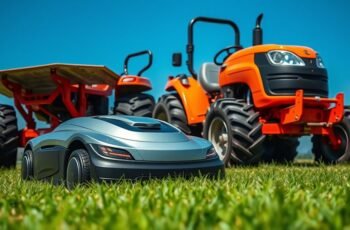
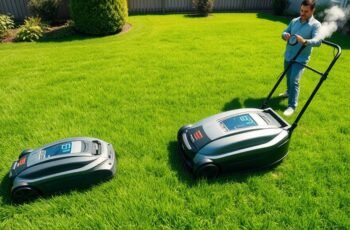
When evaluating lawn maintenance options, we recognize that manual mowing requires continuous physical effort and time commitment, whereas robotic mowers offer automation that minimizes human input. This comparison involves analyzing effort, efficiency, and overall convenience, raising questions about long-term costs and suitability for various yard types. As we consider these factors, understanding the specific operational differences becomes essential to making an informed choice that aligns with our needs.
Key Takeaways
- Robot mowers require minimal physical effort and operate quietly, reducing manual labor compared to manual mowing.
- Manual mowing demands significant human effort, especially on larger or complex lawns, and can be physically tiring.
- Robot mowers automate scheduled cutting, saving time and effort, while manual mowing depends on operator availability and stamina.
- Manual mowing often involves longer sessions and more effort for adjustments, whereas robot mowers handle routine tasks autonomously.
- Using robot mowers decreases ongoing effort and maintenance time compared to the regular upkeep needed for manual equipment.
How Do Robot Mowers Work and What Sets Them Apart?
How exactly do robot mowers operate, and what differentiates them from traditional manual mowers? Robot mowers utilize embedded sensors and GPS technology to navigate lawns autonomously, ensuring consistent, precise cuts. They operate on predefined boundaries, minimizing human input and reducing uneven trimming, which enhances garden aesthetics. Unlike manual mowers, they work continuously, adjusting cutting patterns to prevent over-trimming and promote healthy turf growth. Their quiet operation limits noise pollution, and their automated cycles reduce the need for manual effort. Regarding wildlife impact, robot mowers tend to be less disruptive because they operate at low noise levels and cut gradually, preserving habitat integrity. Overall, these technical features make robot mowers a more efficient, environmentally conscious choice that maintains visual appeal without disturbing local ecosystems.
Comparing Effort: Manual Mowing vs Robot Mowing
When comparing the effort involved in manual mowing to that of robot mowing, the differences become immediately apparent regarding human input and operational efficiency. Manual mowing demands physical exertion, precise maneuvering, and consistent attention to detail, which directly impacts garden aesthetics by influencing the uniformity of cut and overall appearance. In contrast, robot mowers automate the process, reducing physical effort and providing a more consistent cut, thereby enhancing garden aesthetics with minimal human intervention. Noise levels also differ markedly; manual mowers can be loud and disruptive, whereas robot mowers operate quietly, improving overall environmental comfort. These distinctions highlight that robot mowers substantially decrease effort while maintaining or improving aesthetic standards, making them a more efficient and less intrusive alternative for lawn maintenance.
Time Investment: Which Takes Less Time to Maintain?
Manual mowing typically requires a significant time commitment due to longer operational sessions, whereas robot mowers operate on scheduled intervals that optimize efficiency. Robot mowers tend to need less active oversight but require ongoing maintenance, including blade sharpening and software updates. Analyzing these factors helps determine which approach minimizes overall time investment for lawn upkeep.
Manual Mowing Duration
Manual mowing requires a significant time commitment, often demanding regular, scheduled sessions that can vary greatly depending on the lawn’s size and growth rate. Larger areas, especially those with complex garden designs or extensive seasonal planting, extend the duration of each mowing session. The need for precision in maintaining the lawn’s aesthetic and health—such as trimming around intricate features—further increases time investment. Seasonal growth fluctuations influence mowing frequency, with rapid spring growth requiring more frequent cuts. Consequently, manual mowing becomes a labor-intensive task that demands careful planning and consistent effort. In contrast, the duration of manual mowing is directly affected by landscape complexity, emphasizing the importance of efficient garden design to minimize time spent on routine maintenance.
Robot Mower Scheduling
Robot mower scheduling is designed to optimize maintenance time by automating mowing routines based on predefined parameters. Utilizing smart technology, these systems adjust mowing frequency and duration for efficiency. Scheduling minimizes manual intervention, allowing the mower to operate during ideal times, preserving battery life through strategic routing and cutting patterns. Advanced algorithms analyze terrain and grass growth, ensuring consistent coverage without overworking the battery. The table below highlights key scheduling parameters:
| Parameter | Description | Impact on Efficiency |
|---|---|---|
| Frequency | How often mowing occurs | Reduces manual effort |
| Duration | Time allocated per session | Extends battery life |
| Time of Day | Scheduled operation hours | Optimizes smart tech use |
| Cut Height | Grass length before next mow | Maintains lawn health |
| Terrain Adaptation | Adjusts for landscape variations | Enhances overall efficiency |
Maintenance Time Requirements
Have you ever considered which mowing system demands less ongoing maintenance time? Robot mowers generally require less manual intervention, as they operate autonomously and only need periodic blade sharpening and battery maintenance, reducing overall time investment. Manual mowing, however, involves regular engagement, which can be more time-consuming depending on lawn size and complexity. When considering lawn aesthetics, robot mowers maintain consistent cutting patterns, minimizing the need for seasonal adjustments to address uneven growth or overgrowth. Manual mowing may necessitate more frequent adjustments for seasonal changes, such as increased frequency during peak growth periods. Overall, robot mowers streamline maintenance by reducing time spent on seasonal adjustments and routine upkeep, making them a more time-efficient solution for consistent lawn aesthetics.
Convenience Features: Ease of Use and Automation
While traditional mowers rely on user intervention for operation, robotic mowers emphasize automation and user-friendly features that markedly enhance convenience. They leverage smart technology to enable seamless scheduling, obstacle detection, and adaptive mowing paths, reducing manual oversight. These features contribute to greater energy efficiency by optimizing cutting cycles and minimizing unnecessary power usage. The automation reduces the physical effort required, allowing users to focus on other tasks or leisure. Enhanced connectivity options, such as app control, further simplify operation and status monitoring.
- Experience effortless lawn maintenance with intuitive controls
- Maximize energy efficiency through intelligent mowing patterns
- Enjoy consistent, hands-free operation that adapts to your schedule
Effectiveness and Lawn Quality: Which Yields Better Results?
When evaluating lawn quality, we focus on precision cutting, consistency, and overall uniformity, which directly impact the turf’s health and appearance. We analyze how well each method maintains ideal performance over time, considering maintenance needs that influence long-term results. Ultimately, understanding these factors helps determine which approach consistently produces superior lawn quality.
Precision Cutting Consistency
Robotic mowers are engineered to maintain consistent cutting heights through precise, programmed movements, which often results in uniform lawn surfaces. This consistency enhances overall lawn quality by reducing uneven patches and ensuring an even appearance. When considering garden design, this precision allows for cleaner edges and well-defined zones, creating a polished aesthetic. Additionally, precise mowing minimizes disturbance to wildlife, as less frequent, targeted cuts reduce habitat disruption. The technology’s reliability fosters predictable results, enabling better planning for aesthetic and functional landscape goals.
- Feel the satisfaction of a flawlessly manicured lawn, every time
- Witness the harmony between garden design and natural ecology
- Experience pride in achieving professional-quality results effortlessly
Lawn Uniformity Quality
Robotic mowers consistently produce a more uniform lawn surface by precisely controlling cut height and coverage, leading to higher overall quality. This consistency enhances lawn aesthetics by minimizing uneven patches and irregular growth patterns. The precise mowing pattern results in a smoother, more visually appealing surface, directly improving lawn aesthetics. Additionally, robotic mowers operate with minimal mower noise, reducing disruption during frequent, scheduled cuts, which further supports uniformity by enabling more consistent mowing intervals. Manual mowing often introduces variability due to inconsistent cutting height and coverage, impacting lawn appearance. Overall, robotic mowers deliver superior lawn uniformity by maintaining consistent cut quality and coverage, which translates into an improved visual appeal and healthier grass growth, establishing them as more effective tools for achieving high-quality lawn aesthetics.
Maintenance and Performance
Evaluating the effectiveness of maintenance and performance between robotic and manual mowing reveals critical differences in lawn quality outcomes. Robotic mowers excel in maintaining consistent cutting heights, supporting ideal garden design, and adapting to seasonal adjustments automatically. Manual mowing, however, often depends on operator skill, leading to variability in cut quality.
- Achieve a uniform, healthy lawn that boosts curb appeal and emotional connection.
- Reduce the risk of over- or under-mowing, ensuring precise grass health.
- Adapt seamlessly to seasonal changes, preserving lawn integrity year-round.
While robots provide reliable, scheduled maintenance with minimal effort, manual mowing allows for detailed adjustments based on garden design and seasonal needs. Both approaches impact overall lawn performance, but robotic systems offer consistent, data-driven results.
Cost Considerations: Upfront Investment and Long-Term Savings
Although the initial investment for a robot mower is higher than manual equipment, it’s essential to analyze the long-term financial implications. A thorough cost analysis reveals that, despite the upfront cost, robot mowers can reduce ongoing labor expenses and maintenance costs over time. When planning your budget, consider purchase price, energy consumption, and potential savings in manpower. The table below compares key cost factors:
| Cost Component | Manual Mowing | Robot Mower | Notes |
|---|---|---|---|
| Upfront Investment | Low | High | Initial purchase cost |
| Operating Costs | Labor, fuel, maintenance | Electricity, minimal upkeep | Lower ongoing expenses |
| Labor Cost Savings | None | Significant | Reduced manual effort |
| Maintenance Expenses | Frequent, manual repairs | Scheduled, automated | Long-term savings possible |
| Resale Value | Low | Moderate | Influences budget planning |
Maintenance and Troubleshooting: Keeping Your System Running Smoothly
Maintaining a robot mower requires regular attention to guarantee peak performance and longevity. Proper maintenance directly impacts battery longevity and blade durability, essential for efficient operation. Regularly inspecting and cleaning the blades prevents dullness, ensuring clean cuts and reducing strain on the motor. Monitoring battery health through systematic charging and avoiding complete discharges prolongs battery lifespan. Troubleshooting common issues, such as navigation errors or connectivity problems, minimizes downtime.
To keep your system running smoothly, focus on:
- Consistently sharpening or replacing blades to maintain cutting efficiency and prevent motor overload.
- Monitoring battery performance to detect early signs of degradation.
- Firmware updates and sensor calibration to optimize navigation and operational accuracy.
Suitability for Different Yard Sizes and Types
When selecting a robot mower, understanding how well it suits the size and terrain of your yard is essential to maximizing efficiency and minimizing operational issues. Larger, complex landscapes require models with increased battery capacity, greater cutting width, and adaptive navigation systems to handle varied terrain. For smaller or intricately designed gardens, compact mowers with precise boundary controls preserve landscaping aesthetics and avoid damage to delicate features. Terrain factors such as slopes, uneven ground, or dense vegetation influence the mower’s suitability; some models excel on flat lawns but struggle on inclines or cluttered spaces. Properly matching the robot mower to your garden design guarantees consistent mowing, enhances landscaping aesthetics, and reduces the need for manual intervention, ultimately supporting a well-maintained and visually appealing outdoor environment.
Making the Choice: Is a Robot Mower Right for Your Lawn and Lifestyle?
Deciding whether a robot mower aligns with your lawn and lifestyle requires a careful assessment of your yard’s characteristics and your personal preferences. Factors such as maintaining consistent lawn aesthetics, seasonal impacts on growth, and your daily routine influence this choice. Robot mowers excel in delivering uniform cut quality and reducing manual effort, but may be less suitable for complex terrain or highly variable seasonal conditions.
Consider these points:
- Achieving a pristine, manicured appearance with minimal effort
- Consistent mowing despite seasonal growth fluctuations
- Integrating technology into a busy lifestyle for efficient yard maintenance
Frequently Asked Questions
How Long Do Robot Mowers Typically Last Before Replacement?
Robot mowers typically last 3-7 years, depending on battery lifespan and maintenance needs. Regular upkeep, such as blade sharpening and software updates, can extend their operational life, making them a cost-effective, durable choice for automated lawn care.
Are Robot Mowers Safe for Children and Pets?
Coincidentally, robot mowers are designed with child safety and pet protection in mind, featuring sensors and safety features that halt operation if obstacles are detected, ensuring a secure environment for both children and pets during mowing.
Can Robot Mowers Handle Uneven or Hilly Terrain?
Robot mowers excel in terrain adaptability and slope handling, efficiently managing uneven or hilly terrain with advanced sensors and motor power. Their design guarantees consistent cutting performance, although extremely steep slopes may require additional features or manual intervention.
What Are the Environmental Impacts of Robot Vs Manual Mowing?
We find robot mowers reduce noise pollution by up to 50% compared to manual mowing, promoting eco-friendly practices. Their lower emissions and quieter operation make them a more sustainable choice for environmentally conscious homeowners.
How Does Weather Affect the Performance of Robot Mowers?
Weather conditions markedly influence mower performance; rain can cause slippage or clogging, while extreme heat may reduce battery efficiency. We analyze these factors to optimize robot mower functionality across varying weather scenarios, ensuring consistent, reliable operation.
Conclusion
In weighing the effort between robot mowers and manual mowing, we find that robotic systems act as silent partners, easing labor like a well-oiled machine. They reduce physical exertion, save time, and optimize lawn health with minimal intervention. While the upfront costs may seem steep, the long-term efficiencies and convenience make them a compelling choice for modern lawn care. Ultimately, selecting the right approach hinges on your yard’s complexity and your lifestyle’s demands.