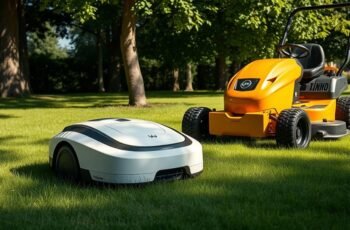
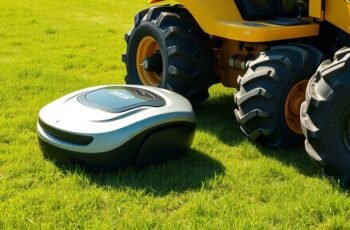
When comparing robotic and rotary mowers, we recognize that each offers specific technical advantages suited to different lawn care needs. Understanding their performance across various terrains, long-term costs, and operational considerations is essential for making an informed choice. As we analyze these factors, the decision becomes more nuanced, especially with hybrid options emerging. But which approach truly aligns with your lawn’s unique characteristics and maintenance goals?
Key Takeaways
- Robotic mowers operate quietly with electric motors, while rotary mowers generate higher noise due to internal combustion engines.
- Robotic mowers excel on flat, dry lawns, whereas rotary mowers handle thick, wet, or uneven terrain more effectively.
- Initial costs for robotic mowers are higher, but they offer lower long-term maintenance and operational expenses.
- Rotary mowers are suitable for large, complex terrains but require more manual effort and regular maintenance.
- Combining both types can optimize lawn care by leveraging robotic precision and rotary mower power.
What Are the Main Differences Between Robotic and Rotary Mowers?
While both robotic and rotary mowers serve the primary function of maintaining grass, their design principles and operational mechanisms differ markedly. Robotic mowers typically feature rechargeable batteries with extended battery life, allowing for continuous, scheduled operation without manual intervention. In contrast, rotary mowers rely on internal gasoline engines or corded electric power, which impacts their operational duration and refueling needs. Noise levels also vary appreciably; robotic mowers operate quietly due to electric motors, minimizing disturbance, whereas rotary mowers generate higher noise levels because of their engines, making them less suitable for noise-sensitive environments. These fundamental differences influence not only performance but also suitability for specific lawn sizes and environments, highlighting the importance of understanding these technical distinctions when choosing between the two mower types.
How Do Robotic and Rotary Mowers Perform in Different Lawn Conditions?
Robotic and rotary mowers respond differently to varying lawn conditions due to their distinct design features and operational mechanisms. Robotic mowers excel in handling consistent terrain and moderate lawn moisture, as their sensors and adaptive programming maintain precise cutting patterns. However, complex terrain with uneven surfaces or slopes can challenge their navigation and stability. Conversely, rotary mowers are more versatile in diverse conditions; their robust blades handle thick, wet grass effectively, though excess moisture can cause clogging and reduce efficiency. Terrain complexity impacts rotary mowers less profoundly, thanks to their heavier build and manual control. Ultimately, robotic mowers perform best on relatively flat, dry lawns, while rotary mowers adapt more readily to irregular, moist, or challenging terrains.
Which Mower Is More Cost-Effective Over Time?
Determining which mower is more cost-effective over time requires a careful analysis of initial investment, maintenance expenses, and operational costs. Robotic mowers tend to have higher upfront costs but benefit from low ongoing maintenance and reduced labor. Their battery life directly impacts operational costs, as longer-lasting batteries reduce replacement frequency and downtime. Conversely, rotary mowers involve lower initial expenses but incur higher fuel, oil, and maintenance costs over their lifespan. Noise levels also influence operational costs indirectly; quieter robotic mowers may allow extended use without disturbance, potentially reducing the need for additional equipment. Over time, the lower operational and maintenance costs of robotic mowers can offset their initial investment, especially when considering the efficiency gains linked to battery performance and reduced noise-related restrictions.
What Are the Key Factors to Consider When Choosing Between Robotic and Rotary Mowers?
When selecting between robotic and rotary mowers, several key factors influence the decision-making process. Lawn aesthetics is critical, as robotic mowers often deliver a more uniform cut, enhancing the lawn’s visual appeal, while rotary mowers may require more manual adjustment for a consistent finish. Noise levels also play a significant role; robotic mowers operate quietly, making them suitable for noise-sensitive environments, whereas rotary mowers typically generate higher sound levels, which can be disruptive. Other considerations include terrain complexity, battery life, and maintenance. Robotic mowers excel on flat, manageable lawns with minimal manual intervention, while rotary mowers are better suited for larger, uneven terrains requiring more power and durability. Balancing these factors helps determine the most appropriate mower type for specific lawn care needs.
Can You Combine Both Mower Types for Optimal Lawn Care?
Combining different mower types can enhance lawn care by leveraging their respective strengths to address various terrain and aesthetic requirements. Using robotic and rotary mowers together allows for a strategic approach to gardening automation, boosting lawn aesthetics through targeted trimming and consistent maintenance. Robotic mowers excel at precise, automated mowing of flat areas, maintaining a uniform appearance, while rotary mowers handle more complex terrains and thicker grass. This hybrid approach ensures thorough coverage, reducing manual effort and improving overall lawn health. Integrating both types requires thoughtful planning to maximize efficiency and minimize overlap, but it results in a more adaptable, professional-looking landscape. Ultimately, combining mower types offers a nuanced solution for achieving ideal lawn aesthetics with technological precision.
Frequently Asked Questions
Are Robotic Mowers Suitable for Large or Hilly Lawns?
We find robotic mowers suitable for large lawns and steep terrain when equipped with powerful motors, advanced navigation, and appropriate safety features, ensuring efficient cutting and stability, though rotary mowers may still outperform in extremely rugged or complex landscapes.
How Noisy Are Robotic Mowers Compared to Rotary Mowers?
Robotic mowers are particularly quieter than rotary mowers, reducing noise pollution and enhancing the environment. Their minimal noise comparison proves they’re more eco-friendly, making them ideal for maintaining lawns without disturbing neighbors or wildlife.
What Maintenance Is Required for Robotic Versus Rotary Mowers?
We find robotic mowers demand less maintenance, focusing on battery life and blade sharpening, ensuring cutting precision, whereas rotary mowers require more frequent blade replacements and engine tune-ups, leading to higher ongoing upkeep.
Can Robotic Mowers Handle Uneven or Debris-Filled Lawns?
Robotic mowers struggle with uneven terrain and lawn debris, often getting stuck or missing patches. While they excel on smooth surfaces, tackling complex landscapes requires more robust, manual rotary mowers, proving technology still has limits in nature’s chaos.
Do Robotic Mowers Have Safety Features for Children and Pets?
Robotic mowers incorporate advanced safety features like child safety sensors and pet protection systems, automatically stopping or rerouting when detecting motion or obstacles, ensuring a secure environment for children and pets during operation and maintenance.
Conclusion
Ultimately, choosing between robotic and rotary mowers is like selecting the right tool for a craft—each has its strengths tailored to specific needs. By analyzing terrain, lawn size, and maintenance preferences, we can craft an efficient, cost-effective solution. Hybrid approaches offer a symphony of performance, maximizing coverage while minimizing effort. The key is strategic selection, ensuring our lawn care journey is both precise and sustainable—turning a simple yard into a carefully orchestrated masterpiece.