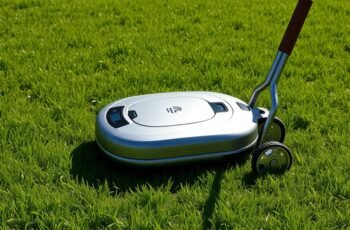
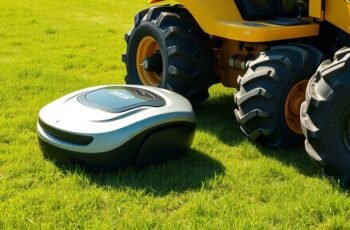
Imagine a quiet robot gliding across your lawn, its blades humming softly as it works autonomously, while a ride-on mower requires you to steer and manage every cut. When choosing between these options, convenience plays a key role. We recognize that many homeowners weigh ease of use, setup, and maintenance, but which mower truly fits their lifestyle? Exploring these differences can help you decide which approach minimizes effort and maximizes lawn care efficiency.
Key Takeaways
- Robot mowers offer automated, scheduled operation with minimal manual effort, enhancing convenience for users seeking ease of use.
- Ride-on mowers require manual setup, active operation, and more physical involvement, making them less convenient for routine mowing.
- Robot mowers are quieter and suitable for frequent, flexible use without disturbance, while ride-on mowers are noisier and less discreet.
- Maintenance for robot mowers is minimal, mainly battery and blade care, whereas ride-on mowers need regular engine and part servicing.
- Ideal for small to medium lawns with less effort, robot mowers prioritize convenience, while ride-on mowers suit large, rugged terrains requiring manual control.
How Do Robot Mowers and Ride-On Mowers Differ in Convenience?
When comparing the convenience of robot mowers and ride-on mowers, it’s clear that each offers distinct advantages tailored to different lawn care needs. Robot mowers excel at maintaining consistent lawn aesthetics, quietly trimming grass with minimal human intervention, which is ideal for homeowners seeking a neat, uniform appearance. They operate automatically, saving time and effort, and are energy-efficient, reducing environmental impact through lower emissions. Ride-on mowers, on the other hand, are better suited for larger or more complex terrains, offering faster coverage and greater control, but require more effort to operate and maintain. While ride-ons might generate more noise and emissions, they deliver powerful performance for diverse lawn conditions. Overall, both options provide unique convenience benefits based on lawn size, landscape complexity, and environmental priorities.
Setting Up and Operating: Which Option Is Easier for Homeowners?
When comparing setup and daily operation, robot mowers are generally easier to install, often requiring just boundary wire placement and minimal initial adjustments. Ride-on mowers, on the other hand, typically need more extensive setup, including fuel, oil, and safety checks. In daily use, robot mowers operate automatically with simple maintenance, while ride-on mowers demand more active involvement and skill to operate safely.
Ease of Installation
Installing a robot mower generally involves a straightforward process that many homeowners find less intimidating than setting up a ride-on mower. Typically, it requires placing boundary wires around the lawn, connecting the charging station, and configuring simple settings. This setup is quick and can often be completed within a few hours. In contrast, ride-on mowers usually demand more effort—assembling parts, filling fuel, and guaranteeing safety features are in place. Robot mowers are quiet, with low noise levels that make installation less disruptive. Additionally, battery life considerations come into play; many models have long-lasting batteries that ensure efficient operation without frequent recharges. Overall, robot mowers offer a more user-friendly, less time-consuming installation process suitable for most homeowners.
Daily Operation Simplicity
After completing the straightforward installation process, homeowners often find that daily operation and setup are equally important factors in choosing between a robot mower and a ride-on mower. Robot mowers excel in ease of use, requiring minimal manual effort, often just scheduled runs via a smartphone app. They maintain lawn aesthetics consistently without human intervention, ensuring a neat appearance day after day. Noise levels are markedly lower, making them suitable for quiet neighborhood settings and early morning or late evening operation. Ride-on mowers, while more involved initially, can be quicker for larger lawns once mastered, but they typically demand more effort to start and maneuver. Overall, robot mowers provide a more seamless, less labor-intensive experience, especially when considering daily upkeep and maintaining a visually appealing, quiet yard.
Time Commitment: How Much Hands-On Maintenance Is Required?
While both robot mowers and ride-on mowers require some level of maintenance, robot mowers generally demand less hands-on attention on a regular basis. They are designed for minimal upkeep, mainly involving battery management and occasional blade sharpening. Their battery life influences how often they need recharging, and proper maintenance guarantees consistent performance. Noise levels are typically lower with robot mowers, making them less disruptive during operation.
Key considerations include:
- Regularly checking and charging the battery
- Monitoring blade sharpness for clean cuts
- Ensuring the mower’s sensors and safety features function properly
- Minimal engine maintenance compared to ride-on models
Automation and Smart Features: Which Mower Offers More Convenience?
When it comes to convenience, automation and smart features play a significant role in how effortlessly your mower can handle lawn care. Robot mowers excel here, offering features like programmable schedules, obstacle detection, and remote app control, reducing manual control needs. They adapt to your lawn’s size and shape, often requiring less frequent maintenance due to their self-diagnosing systems. Ride-on mowers, on the other hand, typically rely on manual control and lack advanced automation, which can make mowing more hands-on. While ride-ons might need regular checks, cleaning, and oil changes, robot mowers are designed to minimize maintenance frequency. Overall, robot mowers provide more convenience through automation, freeing you from constant supervision and manual adjustments.
Cost and Accessibility: Is One Mower More Budget-Friendly and User-Friendly?
Cost and accessibility considerably influence which mower is more suitable for different users. When comparing robot mowers and ride-on models, budget considerations play a key role. Robot mowers typically have a higher upfront cost but lower ongoing maintenance, making them cost-effective long-term for small to medium lawns. Ride-on mowers are often less expensive initially but may incur higher maintenance and fuel costs. Accessibility factors also matter; robot mowers require minimal physical effort and are easy to set up, ideal for users with mobility issues. Conversely, ride-on mowers demand more physical interaction and skill to operate.
- Robot mowers are often more budget-friendly over time for small lawns
- Ride-on mowers offer immediate affordability for larger areas
- Accessibility for robot mowers is generally higher, with less physical effort needed
- Ride-on mowers may require more user skill and physical strength
Suitability for Different Lawn Sizes and Terrain Types
Robot mowers are ideal for small lawns, offering efficient, autonomous trimming with minimal effort. They also handle complex terrain, such as uneven ground or narrow spaces, better than many ride-on models. However, for larger or more challenging landscapes, ride-on mowers often provide greater power and coverage.
Optimal For Small Lawns
For small lawns, robot mowers often provide a highly convenient and efficient solution, especially when the terrain remains relatively flat and straightforward. They excel at maintaining consistent lawn aesthetics without requiring much effort from homeowners. Additionally, their low noise levels make them suitable for daily use without disturbing household routines or neighbors. When considering suitability, keep in mind:
- Precise trimming capabilities for neat, uniform lawns
- Minimal noise for unobtrusive operation
- Ease of programming and minimal maintenance
- Ideal for lawns with simple, flat terrain
These features assure that small lawn owners enjoy a tidy yard with less effort, making robot mowers a practical choice for those prioritizing convenience and aesthetic appeal.
Handles Complex Terrain Well
While small, flat lawns benefit from the simplicity of robot mowers, larger or more complex terrains present a different challenge. Robot mowers excel in terrain navigation, thanks to advanced obstacle detection systems that help them maneuver around uneven ground, slopes, and obstacles like trees or garden features. Their sensors allow precise adjustments, ensuring thorough coverage without getting stuck or missing patches. However, their effectiveness depends on the terrain’s complexity; highly rugged or steep areas may still require a ride-on mower for ideal results. Ride-on mowers, with their robust power and stability, handle challenging terrains more reliably, but robot mowers are continuously improving in their ability to navigate diverse landscapes. Ultimately, choosing between them depends on the specific terrain and your lawn’s size.
Common User Concerns and How Each Mower Addresses Them
Many users are concerned about ease of use, maintenance, and reliability when choosing between a robot mower and a ride-on mower. For DIY gardening enthusiasts, simplicity in setup and daily operation matters. Robot mowers excel here, with automated scheduling reducing hands-on effort and seasonal maintenance being minimal. Ride-on mowers, while more powerful, require more regular upkeep, such as oil changes and blade sharpening.
- Robot mowers handle routine tasks autonomously, ideal for those seeking convenience
- Ride-on mowers demand more manual effort but offer greater control for complex terrains
- Both options require initial setup, but robot mowers often include smart features for troubleshooting
- Longevity and reliability depend on proper maintenance, which varies between models and usage patterns
Frequently Asked Questions
Can Robot Mowers Handle Complex or Uneven Terrain Effectively?
Robot mowers can handle complex terrain with good terrain adaptability, but uneven or obstacle-rich areas may challenge their obstacle navigation. For highly irregular terrain, ride-on mowers often provide better coverage and control, ensuring a cleaner cut.
How Do Weather Conditions Impact the Performance of Each Mower Type?
Think of weather resilience like a sturdy ship steering through seasonal storms; robot mowers usually excel in consistent conditions, offering reliable seasonal performance, while ride-on mowers might face challenges in wet or uneven weather, affecting their efficiency.
What Safety Features Are Included to Prevent Accidents With Robot Mowers?
We guarantee safety with child safety features, like PIN codes and sensor alerts, plus emergency shutdown options that automatically stop the robot mower if obstacles or children are detected, making lawn care safer for families.
Are There Any Restrictions on Lawn Size for Ride-On Mowers?
Like a seasoned gardener, we find ride-on mowers often have lawn size or mowing restrictions, typically suited for large to very large lawns. Always check manufacturer guidelines to guarantee your lawn size aligns with mower capacity.
How Do Noise Levels Compare Between Robot and Ride-On Mowers?
We find robot mowers considerably quieter than ride-on mowers, reducing noise pollution and environmental impact. They operate smoothly and discreetly, making them ideal for maintaining lawns quietly without disturbing neighbors or wildlife around your property.
Conclusion
Ultimately, choosing between a robot mower and a ride-on boils down to your lawn’s needs and your lifestyle. Think of the robot as a silent, tireless gardener, effortlessly keeping your yard tidy with smart features, while the ride-on demands a bit more elbow grease but offers hands-on control. Whichever path you take, both options transform lawn care from a chore into a breeze—like having your own personal groundskeeper, always ready to spring into action.