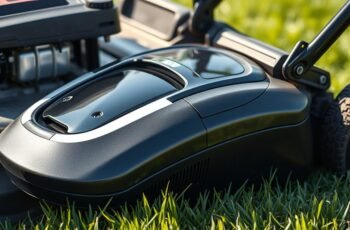
When evaluating storage options for robotic versus ride-on mowers, it’s essential to understand their distinct requirements for space, protection, and environmental controls. While robotic mowers demand minimal, weatherproof enclosures to safeguard electronic components, ride-on mowers require larger, well-ventilated structures for engine maintenance and security. Recognizing these differences influences not only the initial setup but also ongoing maintenance practices, prompting questions about the most effective solutions for various yard sizes and conditions.
Key Takeaways
- Robotic mowers require minimal, weather-protected indoor storage, while ride-on mowers need large, ventilated outdoor sheds.
- Space-efficient solutions like wall-mounted racks and small sheds suit robotic mower storage, unlike the extensive space ride-on mowers demand.
- Climate control is crucial for both, with robotic mowers needing protection from humidity, while ride-on mowers benefit from ventilation and security.
- Proper cleaning, fuel stabilization, and battery disconnection are essential for both types before storage.
- Security features and cost considerations influence the choice of storage solutions for each mower type.
What Are the Key Differences Between Robotic and Ride-On Mower Storage?
While both robotic and ride-on mowers require designated storage solutions, their differences in size, design, and operational requirements lead to distinct storage considerations. Robotic mowers are compact, lightweight, and contain integrated batteries optimized for frequent recharging, making battery efficiency a key factor. They typically need minimal space and are stored indoors or in weather-protected areas to prevent battery degradation. Conversely, ride-on mowers are considerably heavier, with larger footprints due to their bulk and engine components, demanding more substantial storage setups. Their weight affects the choice of storage surface and security measures, especially for outdoor storage. Proper storage must accommodate the mower’s weight and protect sensitive electrical components, ensuring longevity and operational readiness for both types.
How Much Space Does a Robotic Mower Typically Require for Storage?
Robotic mowers are designed with compactness in mind, typically requiring only a minimal amount of storage space to guarantee ease of access and protection. Usually, they need a dedicated area of about 1 to 2 cubic meters, depending on the model’s dimensions. This space facilitates proper battery maintenance, as the mower can be stored in a dry, well-ventilated environment to prolong battery life. Adequate storage safety involves ensuring the mower is shielded from extreme temperatures and moisture, which can damage electronic components. A secure, clutter-free space also minimizes the risk of accidental damage or injury during storage. Overall, the small footprint simplifies integration into existing structures, making robotic mower storage efficient without compromising safety or maintenance needs.
What Are the Storage Needs for Ride-On Mowers Compared to Robotic Models?
Ride-on mowers typically require considerably more storage space than robotic models due to their larger size and mechanical complexity. They need ample room for safe storage, ongoing battery maintenance, and routine safety precautions, such as securing blades and electrical components. Proper storage prevents damage to essential parts and guarantees safe operation.
Key storage considerations include:
- Indoor or sheltered space to protect against weather and corrosion
- Adequate ventilation for battery maintenance and charging
- Secure storage to prevent unauthorized use
- Space for regular safety inspections
- Organization for tools and replacement parts
Compared to robotic models, ride-on mowers demand larger, more specialized storage areas to maintain performance, ensure safety, and facilitate routine maintenance.
Which Storage Solutions Are Best for Small Yards and Limited Spaces?
For homeowners with small yards or limited storage space, selecting an appropriate solution requires careful consideration of both size and functionality. Compact, weatherproof enclosures are ideal, minimizing footprint while protecting equipment from elements. Storage units should facilitate garden design integration, blending seamlessly into landscape aesthetics. Modular shelving systems optimize vertical space, allowing for organized storage of lawn aeration tools and robotic mower docks.
| Storage Solution | Key Features |
|---|---|
| Vertical Cabinets | Space-efficient, weatherproof, lockable |
| Wall-Mounted Shelves | Easy access, maximizes floor space |
| Compact Sheds | Customizable, durable materials |
| Under-Deck Storage | Hidden, utilizes unused space |
How Do Climate and Weather Impact Mower Storage Requirements?
Climate and weather conditions substantially influence mower storage requirements by affecting material integrity and electronic components. High humidity can promote corrosion and mold growth, while temperature fluctuations can cause condensation and metal fatigue. Seasonal variations demand tailored storage practices to preserve equipment performance and prolong lifespan.
Humidity Effects on Equipment
Humidity levels profoundly influence the longevity and performance of both robotic and ride-on mowers during storage, as excessive moisture can accelerate corrosion, promote mold growth, and degrade electrical components. High humidity can compromise battery longevity by increasing internal moisture, leading to reduced charge cycles. It also creates ideal conditions for pests, which can damage wiring and insulation. To mitigate these risks, proper storage involves:
- Using dehumidifiers or silica gel packs to control moisture levels
- Ensuring airtight covers or sealed storage units
- Regularly inspecting for signs of corrosion or mold
- Applying protective coatings to electronic parts
- Maintaining a pest prevention protocol to avoid infestation-related damage
Controlling humidity is essential for preserving mower integrity and ensuring reliable performance upon deployment.
Temperature Fluctuations Risks
Fluctuations in temperature can cause significant stress on mower components during storage, particularly when extreme cold or heat suddenly occurs. Rapid temperature shifts accelerate battery aging, reducing overall battery longevity by damaging internal cells and increasing the risk of capacity loss. Extreme cold can cause fluids within the mower’s mechanical parts to contract, leading to potential cracks or leaks, while excessive heat can accelerate material degradation. These temperature swings also impact storage security, as inconsistent conditions may loosen fasteners or compromise seals, risking moisture intrusion or corrosion. Proper storage should involve climate-controlled environments or insulation to buffer against rapid temperature changes, ensuring the mower’s integrity and preserving battery health. Maintaining stable temperatures ultimately extends equipment life and enhances overall storage security.
Seasonal Storage Considerations
How do seasonal changes influence the storage requirements for robotic and ride-on mowers? Fluctuating temperatures, humidity levels, and precipitation markedly affect maintenance and storage protocols. During colder months, robotic mowers should be stored in temperature-controlled environments to prevent battery degradation, while ride-on mowers require draining fuel and protecting engine components from moisture. Seasonal shifts also impact branding strategies, as mower color schemes may need to adapt for visibility and safety in different weather conditions. Proper storage minimizes corrosion, preserves paint finishes, and maintains branding integrity.
- Temperature-sensitive components demand insulated storage
- Humidity control prevents rust on metal parts
- Moisture barriers protect electronic systems
- UV exposure can fade mower color schemes
- Climate considerations influence ideal storage locations
What Are the Pros and Cons of Indoor vs. Outdoor Storage for Both Mowers?
Choosing between indoor and outdoor storage for robotic and ride-on mowers involves evaluating the advantages and potential drawbacks of each option. Indoor storage offers a controlled environment that minimizes exposure to moisture, temperature fluctuations, and UV rays, which benefits battery maintenance by reducing degradation. It also facilitates better tool organization, allowing for maintenance supplies and accessories to be kept nearby, streamlining servicing routines. Conversely, outdoor storage is more accessible and space-efficient but exposes equipment to weather elements, increasing risks of rust, corrosion, and battery damage. Outdoor setups may require additional protective measures like covers or shelters. Ultimately, indoor storage provides superior protection for both mowers and their components, but outdoor options can suffice with proper weatherproofing and organization strategies.
How to Properly Prepare Your Mower for Storage to Extend Its Lifespan?
To properly prepare your mower for storage, we start by thoroughly cleaning and inspecting it to remove debris and identify any potential issues. Next, we carefully drain or stabilize fluids like fuel and oil to prevent deterioration during inactivity. Finally, select an environment with stable temperature and humidity levels to minimize corrosion and mechanical stress over time.
Clean and Inspect Mower
Ensuring your mower is thoroughly cleaned and inspected before storage is essential to prevent corrosion, maintain peak performance, and extend its lifespan. Proper cleaning involves removing dirt, grass clippings, and debris from the deck, blades, and cooling fins to prevent rust and clogs. Inspection should include checking the battery’s condition and performing battery maintenance, such as cleaning terminals and guaranteeing proper charge levels. Blade sharpening is critical; dull blades cause uneven cuts and stress the motor. Additionally, examine belts, filters, and air vents for wear or damage.
- Remove debris from the deck and blades
- Clean and inspect battery terminals
- Sharpen mower blades for clean cuts
- Check belts, filters, and vents for damage
- Guarantee all moving parts are properly lubricated
Drain Fluids Properly
Since residual fluids can cause corrosion and damage internal components during storage, it’s vital that we drain all necessary liquids from the mower properly. Begin by draining the fuel tank after adding fuel stabilizer to prevent degradation and clogging of carburetors or fuel lines. Run the engine briefly to circulate stabilized fuel before draining. Next, carefully remove or drain engine oil, ensuring all old oil is expelled to prevent gumming or corrosion. For battery maintenance, disconnect the battery and clean terminals to prevent corrosion, then store it in a cool, dry place. Fuel stabilization is essential to avoid varnish buildup, which can impair fuel system components. Properly draining and stabilizing fluids prolong mower lifespan and guarantee reliable operation when recommissioned.
Store in Suitable Environment
Properly storing your mower in a suitable environment is essential for preserving its condition and ensuring reliable performance over time. An ideal storage area minimizes exposure to extreme temperatures, humidity, and direct sunlight, which can degrade components like battery capacity and affect mowing speed. For robotic mowers, a cool, dry, and ventilated space prevents battery corrosion and capacity loss. Ride-on mowers benefit from a level surface that avoids moisture buildup and potential rust. Adequate space allows for maintenance and prevents accidental damage.
- Keep in a temperature-controlled environment between 32°F and 77°F
- Avoid areas with high humidity or direct sunlight
- Store on a level, dry surface to prevent corrosion
- Cover with breathable material to deter dust and debris
- Disconnect batteries for long-term storage
What Accessories and Storage Aids Can Help Keep Your Mower Organized?
To maintain an organized storage system for your mower, incorporating specific accessories and storage aids can considerably enhance efficiency and safety. Using wall-mounted racks or shelving units allows for vertical storage, freeing up space and preventing accidental damage. Battery maintenance is simplified with dedicated charging stations or moisture-resistant covers, ensuring longevity and reliable operation. Utilizing labeled bins or tool holders keeps smaller parts—like blades or screws—accessible and orderly, reducing setup time. To preserve lawn aesthetics, consider installing weatherproof covers that shield your mower from the elements, preventing rust and debris buildup. Additionally, cable hooks or hanging brackets help manage power cords and charging cables, reducing clutter and risk of tripping hazards. Overall, these accessories support ideal maintenance and a tidy, functional storage environment.
How Do Cost and Maintenance Influence Your Storage Choices?
When evaluating storage options for robotic and ride-on mowers, cost and maintenance requirements play a crucial role in decision-making. Proper storage can extend battery life, optimize power efficiency, and reduce long-term expenses. For robotic mowers, considerations include protecting sensitive electronics and batteries from environmental damage, which impacts maintenance costs. Ride-on mowers demand more space and robust storage solutions to prevent mechanical wear. Key factors include:
- Climate-controlled environments to preserve battery health
- Adequate ventilation for heat dissipation
- Secure storage to prevent theft or vandalism
- Accessibility for routine maintenance
- Cost-effective solutions balancing initial investment and upkeep
Understanding these factors helps us choose storage options that enhance durability, maximize operational efficiency, and minimize ongoing costs.
Which Storage Options Offer the Most Convenience for Different Yard Sizes?
Choosing the most convenient storage solutions depends heavily on the size of your yard and the operational demands of your mower. For smaller yards, compact storage sheds or wall-mounted units integrated into your garden design provide quick access and protect equipment from elements, facilitating efficient lawn care. Medium-sized properties benefit from modular storage options, such as weatherproof cabinets or dedicated mower garages, which optimize space without disrupting landscape aesthetics. Larger yards often require robust, ventilated storage structures, like custom-built sheds or covered lean-tos, to accommodate ride-on mowers and robotic units alike. These options enhance convenience by reducing setup time and protecting machinery, ultimately supporting consistent lawn care routines and maintaining the visual appeal of your garden design.
Frequently Asked Questions
Are There Specific Security Measures Recommended for Robotic Mower Storage?
We recommend strict security protocols like locking storage units, installing surveillance cameras, and using alarm systems for theft prevention. Additionally, consider GPS tracking and disabling features to protect your robotic mower during storage.
How Does Seasonal Storage Differ for Robotic Versus Ride-On Mowers?
Seasonal storage varies; robotic mowers require careful battery maintenance and a sheltered storage location to prevent degradation, while ride-on mowers benefit from thorough fuel system maintenance and a dry, secure storage environment for ideal preservation.
Can Robotic Mowers Be Stored Outdoors Year-Round Safely?
Robotic mowers can be stored outdoors year-round if we guarantee proper storage location, protect batteries from extreme temperatures, and perform battery maintenance, like regular charging and cleaning, to prevent corrosion and preserve longevity in varying weather conditions.
What Are the Environmental Considerations for Storing Each Type of Mower?
Like guarding a treasure chest, we must consider battery maintenance and pest prevention when storing mowers outdoors. Robotic mowers need protection from moisture and pests that can damage batteries, while ride-on mowers require secure, well-ventilated spaces to prevent corrosion.
How Often Should You Service a Mower During Storage Periods?
We recommend servicing mowers every 1-3 months during storage, focusing on battery maintenance for robotic models and fuel stabilization for ride-on types, ensuring peak performance and preventing corrosion or degradation in long-term inactive periods.
Conclusion
In the landscape of mower storage, choosing the right solution is like selecting the perfect armor—guarding your investment against the relentless assault of weather and wear. By understanding each mower’s unique needs and environment, we can craft storage strategies that preserve performance and prolong lifespan. With precision, organization, and thoughtful planning, we turn a simple shed into a fortress—ensuring your mower remains a steadfast tool for years to come.