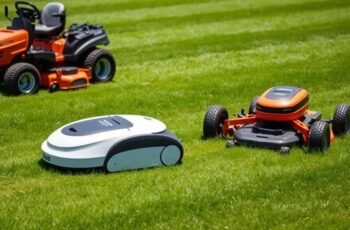
When comparing maintenance requirements for robotic versus regular mowers, we find significant differences in the scope and frequency of tasks involved. Robotic models typically demand minimal ongoing attention, focusing mainly on battery health and blade sharpening, whereas traditional mowers require frequent oil changes, engine checks, and blade replacements. Understanding these distinctions can influence long-term costs and effort, prompting us to examine the specifics of each type’s maintenance demands and how they impact overall performance and lifespan.
Key Takeaways
- Robotic mowers require less frequent maintenance, focusing mainly on batteries, blades, and sensors every 3-6 months.
- Regular mowers need regular blade sharpening, oil changes, and engine upkeep every few weeks.
- Maintenance costs are generally lower for robotic mowers due to fewer mechanical parts and simpler upkeep.
- Robotic mowers demand tools like multimeters and sensor cleaning brushes, while regular mowers need mechanical tools and lubricants.
- Proper maintenance extends lifespan and performance, with robotic mowers needing less overall effort and manual intervention.
How Do Robotic and Regular Mowers Differ in Maintenance?
How do robotic and regular mowers differ in maintenance requirements? Robotic mowers demand attention to their battery life, which directly influences cutting performance and operational efficiency. A degraded battery reduces cutting precision, requiring periodic checks and, occasionally, replacement to maintain peak function. They also have fewer mechanical parts, meaning less routine lubrication or blade sharpening but necessitating software updates and sensor calibration. Regular mowers, on the other hand, require more frequent blade sharpening, oil changes, and engine maintenance, which can be labor-intensive. Their mechanical complexity means more parts to inspect and replace over time. Overall, robotic mowers tend to have lower ongoing maintenance but require specific attention to battery health and software integrity to sustain precise cutting over their lifespan.
What Are the Routine Upkeep Tasks for Robotic Mowers?
| Task | Purpose | Frequency |
|---|---|---|
| Battery management | Maximize battery lifespan | Monthly |
| Blade sharpening | Maintain cutting efficiency | Every 3-6 months |
| Sensor calibration | Keep navigation precise | After impacts or updates |
Consistent adherence to these tasks guarantees ideal performance and longevity of your robotic mower.
How Much Time and Effort Do Regular Mowers Require for Maintenance?
Regular mowers demand a consistent commitment of time and effort to keep them operating efficiently. Maintenance involves regular blade sharpening or replacement, which affects cutting precision and fuel efficiency, as dull blades increase engine workload. Engine oil changes and air filter replacements are necessary to maintain peak fuel efficiency and prevent engine strain. Adjusting carburetor settings and inspecting spark plugs also contribute to smooth operation. Additionally, routine cleaning of deck and components reduces buildup that could elevate noise levels and impair performance. Regularly checking and maintaining fuel systems ensures efficient fuel consumption, directly impacting overall fuel efficiency. Overall, these tasks demand a significant time investment, and neglecting them can lead to increased noise levels, reduced performance, and higher long-term repair costs.
What Are the Common Repairs and Troubleshooting Tips for Both Mower Types?
Both robotic and traditional mowers encounter common mechanical and electrical issues that require systematic troubleshooting to restore peak performance. Key areas include battery life management and blade condition, which directly affect cutting efficiency.
- Battery Troubleshooting: Check for diminished battery capacity, which may cause runtime issues. Replace or optimize charging cycles to extend battery longevity.
- Blade Inspection and Sharpening: Dull blades reduce cut quality. Regularly inspect blades for wear and sharpen them to maintain a clean, precise cut.
- Electrical System Diagnostics: For both types, examine wiring connections, fuses, and motors for faults or corrosion. Proper diagnostics can identify issues like motor failures or sensor malfunctions, ensuring reliable operation.
How Do Cost and Frequency of Maintenance Compare Between Robotic and Regular Mowers?
Robotic mowers generally incur lower ongoing maintenance costs and require less frequent attention compared to traditional mowers, primarily due to their automated operation and fewer moving parts. Their maintenance mainly involves monitoring battery life, blade sharpness, and cleaning grass clippings from sensors and wheels. Regular mowers, however, demand more frequent oil changes, spark plug replacements, and blade sharpening, increasing overall costs.
| Aspect | Robotic Mower | Regular Mower | Notes |
|---|---|---|---|
| Maintenance Frequency | Every 1-3 months | Every 2-4 weeks | Based on usage and grass growth |
| Cost of Parts | Lower (battery and blades) | Higher (oil, spark plugs, blades) | Battery replacement impacts cost |
| Battery Life | Typically 2-3 years | Not applicable | Critical for operation |
| Grass Clippings | Mulched and redistributed | Often collected or discharged | Reduces need for bagging |
| Cleaning & Inspection | Minimal, mostly sensor cleaning | Regular blade and engine checks | Less labor-intensive |
What Tools and Supplies Are Needed to Maintain Each Type of Mower?
Maintaining each type of mower requires specific tools and supplies tailored to their unique components and operational needs. For robotic mowers, essential tools include a multimeter for monitoring battery lifespan, a blade sharpening kit for maintaining cutting efficiency, and a cleaning brush to remove debris from sensors and moving parts. Regular mowers demand a different set: a socket wrench set for blade replacement, a spark plug wrench for engine health, and lubricants for moving parts. Proper blade sharpening is critical for both types to ensure clean cuts and reduce strain on motors. Battery lifespan management in robotic mowers hinges on voltage testers and proper charging tools. In contrast, traditional mowers rely more on mechanical tools and consumables to maintain peak performance.
How Can Proper Maintenance Extend the Lifespan of Your Mower?
Regularly performing targeted maintenance tasks can considerably prolong the operational life of your mower. Consistent blade sharpening ensures clean cuts, which preserve lawn health and enhance lawn aesthetics. Checking and replacing air filters prevents engine strain, maintaining peak performance. Properly lubricating moving parts reduces wear and prevents premature failure. Additionally, inspecting electrical connections and sensors guarantees reliable operation, especially for robotic mowers. To illustrate, consider this table:
| Maintenance Task | Frequency | Purpose |
|---|---|---|
| Blade sharpening | Every 10-15 hours | Maintain precise cutting and lawn design |
| Filter replacement | Monthly | Prevent engine damage |
| Lubrication | Quarterly | Reduce component wear |
| Sensor cleaning | Biweekly | Ensure correct navigation |
Adhering to these protocols sustains mower efficiency, preserves lawn aesthetics, and extends overall lifespan.
Which Mower Requires Less Maintenance Overall: Robotic or Traditional?
While both robotic and traditional mowers require ongoing maintenance, robotic mowers generally demand less hands-on upkeep due to their automated design and fewer moving parts. They are engineered for minimal intervention, reducing downtime that impacts garden aesthetics and mower aesthetics alike.
Specifically:
- Robotic mowers need regular blade sharpening or replacement every 2-3 months, whereas traditional mowers require more frequent carburetor and spark plug servicing.
- Robotic units typically feature self-docking and self-charging capabilities, lowering the need for manual battery maintenance.
- Traditional mowers demand more frequent fuel management, oil changes, and belt inspections, increasing overall maintenance effort.
Frequently Asked Questions
Are Robotic Mowers Suitable for All Grass Types?
Robotic mowers suit most grass types, but dense grasses or uneven terrains can challenge their terrain adaptability and cutting efficiency; selecting models with higher torque and adaptive blades guarantees ideal performance across varying grass densities and terrain conditions.
Can Robotic Mowers Be Used in All Weather Conditions?
Robotic mowers have limited weather resilience, especially in heavy rain or snow, which can cause maintenance challenges like clogging or slipping. We recommend monitoring weather forecasts and avoiding operation during extreme conditions for peak performance.
How Often Should Robotic Mowers Be Recalibrated?
We recommend recalibrating robotic mowers monthly or when you notice uneven cutting or battery life issues, adjusting for ideal cutting height and ensuring sensors are clean for accurate navigation and consistent performance.
Do Robotic Mowers Require Software Updates?
Think of your robotic mower like a high-tech athlete; it needs software updates to stay competitive. These updates enhance battery longevity and guarantee software compatibility, keeping the mower efficient and preventing performance issues over time.
What Safety Features Do Robotic Mowers Include?
Robotic mowers include child safety features like safety sensors, blade protection, and automatic shut-off systems that activate when lifted or tilted, ensuring secure operation and preventing injuries, especially around children or pets.
Conclusion
In summary, robotic mowers demand considerably less frequent and less intensive maintenance compared to traditional mowers, primarily focusing on battery health, sensor calibration, and blade sharpening. Their streamlined design reduces mechanical complexity and routine upkeep, translating into lower long-term costs. But, considering the technical demands of regular mower upkeep, isn’t investing in a robotic mower a smarter choice for minimizing downtime and maximizing efficiency? Ultimately, the decision hinges on balancing maintenance effort with operational needs.