Many believe that switching to robot mowers automatically reduces lawn care emissions, but the full environmental impact warrants closer examination. While battery-powered models produce no direct pollutants and operate quietly, factors like manufacturing, energy sources, and lifecycle emissions complicate the comparison with petrol mowers. To truly understand which option is more sustainable, we need to analyze not just operational emissions but also their overall carbon footprint and long-term ecological effects.
Key Takeaways
- Robot mowers run on batteries, producing no direct emissions, unlike petrol mowers which emit CO₂, NOx, and particulates.
- Electric motors in robot mowers are more energy-efficient and quieter, reducing noise and environmental disturbance.
- Proper maintenance of robot mowers extends battery life, further lowering lifecycle emissions compared to petrol counterparts.
- The environmental impact of electric mowers depends on electricity sources; renewable energy enhances greenness.
- Overall, robot mowers have a lower carbon footprint and minimal air and noise pollution compared to petrol mowers.
How Do Robot Mowers Reduce Emissions Compared to Petrol Mowers?
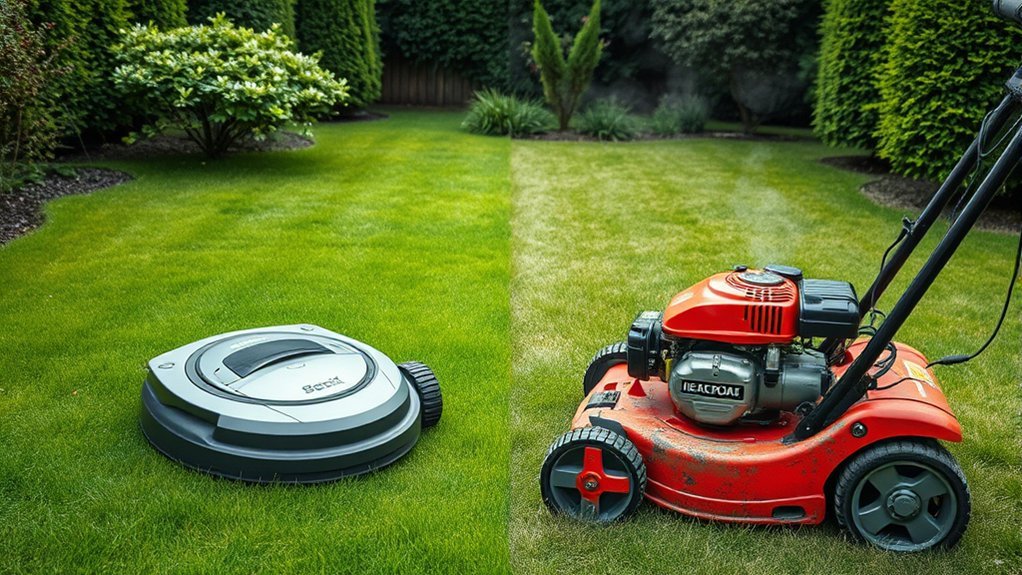
Although petrol mowers have long been the standard for lawn maintenance, robot mowers offer a notably greener alternative by greatly reducing emissions. They operate on batteries with high efficiency, which minimizes energy waste and lowers overall carbon footprint. Unlike petrol engines, electric motors produce no direct emissions, contributing considerably to cleaner air quality. Additionally, robot mowers generate minimal noise pollution, making them less disruptive and further decreasing environmental impact. Their battery efficiency ensures longer operational periods with fewer recharges, optimizing energy use. By replacing fuel-powered engines, robot mowers eliminate exhaust gases like CO2 and NOx, key contributors to climate change and air pollution. Overall, their design promotes a sustainable approach to lawn care, aligning technological innovation with environmental preservation.
Measuring Emissions: What Are the Environmental Impacts of Each Mower Type?
When we compare the environmental impacts of robot and petrol mowers, precise measurement of their emissions becomes essential. To evaluate this, we focus on three key aspects:
- Battery efficiency, which influences how much energy is consumed and potential indirect emissions during manufacturing and disposal.
- Noise pollution, as petrol mowers produce high decibel levels, disrupting ecosystems and human health.
- Direct emissions, where petrol mowers emit carbon monoxide, nitrogen oxides, and particulate matter, markedly impacting air quality.
The Carbon Footprint of Operating a Robot Mower vs Petrol Mower
Operating a robot mower generally results in a considerably lower carbon footprint compared to a petrol mower, primarily due to differences in energy sources and efficiency. Battery efficiency plays a crucial role, as modern lithium-ion batteries store and deliver energy with minimal losses, reducing overall emissions during operation. Unlike petrol engines, which emit CO₂ and other pollutants directly, electric models rely on cleaner energy grids and produce no tailpipe emissions. Additionally, the lower noise pollution of robot mowers indicates less environmental disturbance and often correlates with quieter, more energy-efficient motors. This combination of efficient energy use, minimal direct emissions, and reduced noise pollution underscores the environmental advantages of robot mowers in lowering their carbon footprint over petrol alternatives.
How Maintenance and Lifecycle Affect Overall Emissions
Maintenance practices and the overall lifecycle of mower equipment considerably influence their total environmental impact. Proper upkeep guarantees optimal battery efficiency, reducing energy consumption and emissions over time. Conversely, neglecting maintenance can lead to decreased battery performance and increased waste. Material sustainability also plays a key role; durable, recyclable materials extend a mower’s lifespan and lower the need for replacements. Consider these factors:
- Regularly maintaining batteries to preserve efficiency and delay disposal.
- Using sustainable materials to minimize resource depletion.
- Extending the mower’s lifecycle through thoughtful design and repairs.
Together, these practices decrease overall emissions, highlighting that environmentally conscious maintenance and lifecycle management are essential in reducing the ecological footprint of both robot and petrol mowers.
Which Mower Is Truly Greener? Factors to Consider for Eco-Conscious Lawn Care
Determining which mower is truly greener requires a thorough evaluation of multiple environmental factors beyond just emissions during operation. Battery technology plays a vital role; advances have improved energy efficiency and reduced lifecycle environmental impact, making electric options more sustainable. However, the source of electricity influences overall greenness, with renewable energy reducing carbon footprints further. Noise pollution is another essential consideration—robot mowers operate quietly, minimizing disturbance and its associated ecological impacts, whereas petrol mowers generate significant noise, contributing to noise pollution and disturbance to wildlife. Additionally, manufacturing and disposal processes impact environmental sustainability. A holistic assessment must weigh these factors—battery technology’s eco-friendliness, noise pollution levels, and lifecycle impacts—to determine which mower aligns best with eco-conscious lawn care.
Frequently Asked Questions
Are Robot Mowers More Energy-Efficient Than Petrol Mowers?
We find robot mowers more energy-efficient due to their optimized battery life and lower energy consumption, reducing environmental impact. They use less power overall, making them a more sustainable choice compared to petrol mowers.
How Long Does a Typical Robot Mower Last Before Replacement?
Typically, robot mowers last around 3-5 years, depending on battery lifespan and usage. We consider manufacturing impact and environmental factors, emphasizing the importance of sustainable design and recycling to minimize ecological footprints over their lifecycle.
Do Robot Mowers Produce Noise Pollution?
Robot mowers produce minimal noise pollution, with sound levels typically lower than traditional petrol mowers, reducing sound pollution and environmental disturbance. We find them to be more eco-friendly, aligning with our goal of minimizing noise impact on ecosystems.
What Are the Disposal Impacts of Old Robot Mowers?
We analyze disposal impacts by emphasizing battery recycling and plastic component management, recognizing that proper recycling minimizes environmental harm, reduces landfill waste, and promotes sustainability, making old robot mowers environmentally friendly when correctly processed.
Can Robot Mowers Operate Effectively on Uneven Terrain?
Think of robot mowers as nimble explorers; their terrain adaptability and obstacle navigation enable them to effectively conquer uneven terrain. We find they’re designed for precise, environmentally-conscious trimming, ensuring consistent care even in challenging, irregular landscapes.
Conclusion
While petrol mowers may offer immediate convenience, their emissions—CO₂, NOx, and particulates—contribute to long-term environmental harm. Robot mowers, by contrast, may require more frequent maintenance but operate quietly and produce no direct pollutants, reducing our carbon footprint. Ultimately, choosing a greener mower isn’t just about emissions; it’s about embracing a sustainable mindset that balances efficiency with ecological responsibility, recognizing that true environmental health depends on thoughtful, ongoing decisions.