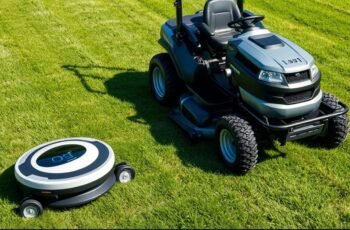
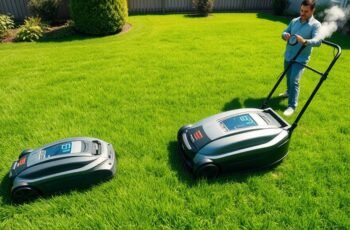
Much like choosing between a trusty steed and a sleek drone, selecting the right mower involves weighing tradition against innovation. Ride-on and robot mowers each bring distinctive engineering, operational strengths, and limitations that directly impact their suitability for various lawn sizes and terrains. Exploring these differences reveals critical considerations for modern lawn care, prompting a closer look at how technology and design influence long-term investment and ease of use—an analysis worth considering before making a decision.
Key Takeaways
- Ride-on mowers offer high power and suitability for large, uneven terrains; robot mowers excel in smaller, flat lawns with simpler terrain.
- Ride-on mowers have higher upfront and maintenance costs, while robot mowers are cheaper initially but may incur battery replacement expenses.
- Manual operation and extensive maintenance characterize ride-on mowers; robot mowers provide automated, low-maintenance, programmable lawn care.
- Ride-on mowers feature advanced guidance and diagnostics; robot mowers incorporate intelligent navigation and safety sensors.
- Long-term efficiency depends on terrain, lawn size, and budget, making each mower type suitable for different lawn care needs.
How Do Ride-On and Robot Mowers Differ in Design and Operation?
While both ride-on and robot mowers serve the same fundamental purpose of lawn maintenance, their designs and operational mechanisms differ markedly. Ride-on mowers feature a large engine, typically gas-powered, which impacts fuel efficiency negatively but provides high power for extensive, tough terrains. They are manually operated, requiring human input to steer and control, leading to higher noise levels compared to robots. In contrast, robot mowers utilize electric motors powered by rechargeable batteries, offering superior fuel efficiency and considerably reduced noise levels. Their compact design enables autonomous operation through programmed routines, sensors, and boundary wires, allowing for continuous, low-impact trimming. These differences in design and operation directly influence their efficiency, environmental impact, and suitability for specific lawn sizes and terrains.
Which Mower Is Better Suited for Different Lawn Sizes and Terrains?
Choosing the appropriate mower depends heavily on the size and complexity of the lawn, as well as the terrain’s characteristics. For large, flat areas requiring uniform lawn aesthetics, ride-on mowers excel due to their high power and efficient coverage, although they tend to produce higher noise levels. Conversely, robot mowers are better suited for medium to small lawns with simpler terrains, providing precise, consistent cuts that enhance lawn aesthetics with minimal noise disturbance. Uneven or hilly terrains challenge robot mowers’ navigation capabilities, making ride-ons more effective in such environments. Terrain features like thick grass or wooded areas also influence choice, with ride-on mowers offering greater maneuverability. Ultimately, matching mower type to terrain conditions ensures suitable lawn aesthetics while managing noise levels effectively.
What Are the Cost Considerations for Ride-On vs Robot Mowers?
Cost considerations for ride-on versus robot mowers depend considerably on initial purchase price, ongoing maintenance expenses, and long-term operational costs. Ride-on mowers typically require a significant upfront investment, with costs influenced by engine type, deck size, and features. Robot mowers, while initially cheaper, involve considerations like battery life, which impacts runtime and replacement frequency, and warranty coverage, affecting repair costs.
Cost factors for ride-on versus robot mowers include purchase price, maintenance, battery life, warranties, and long-term expenses.
Key factors include:
- Battery life: Longer-lasting batteries reduce replacement costs for robot mowers.
- Warranty coverage: Extended warranties can mitigate repair expenses over time.
- Maintenance costs: Ride-ons often need more frequent servicing, parts, and fuel.
- Depreciation and resale value: These influence long-term financial impact for both options.
How Do Maintenance and Ease of Use Compare Between the Two Options?
Maintenance requirements and user-friendliness vary considerably between ride-on and robot mowers, often influencing overall convenience and operational efficiency. Ride-on mowers require regular oil changes, blade sharpening, and fuel management, impacting fuel efficiency and increasing downtime. They also demand substantial storage space due to their size and auxiliary equipment. In contrast, robot mowers have minimal maintenance; their brushless motors and sealed batteries require only periodic cleaning and software updates. They are designed for easy operation, often with programmable settings via mobile apps. Storage for robot mowers is minimal, fitting compactly in a shed or garage. Overall, robot mowers offer a more streamlined, less labor-intensive experience, while ride-on mowers may involve more ongoing upkeep but handle larger, more complex terrains efficiently.
Which Mower Offers Better Features and Technology for Modern Lawn Care?
Modern lawn care increasingly relies on advanced features and integrated technology to optimize efficiency and precision. Robot mowers excel with intelligent navigation systems, customizable mowing schedules, and remote monitoring capabilities. They prioritize safety features like obstacle detection, automatic shutoff, and perimeter sensors, enhancing user security. Battery life is critical; high-capacity batteries enable extended operation, minimizing downtime. Ride-on mowers, while traditionally less tech-driven, now incorporate GPS guidance, automated deck adjustments, and connectivity for diagnostics. They often include safety features such as rollover protection and emergency stop buttons. For modern lawn care, robot mowers offer autonomous, feature-rich operation, whereas ride-on mowers provide more power and versatility. Both integrate technology, but robot mowers generally lead in safety innovations and battery optimization.
Frequently Asked Questions
How Long Does Each Mower Typically Last With Regular Use?
With regular use, ride-on mowers typically last 8-10 years, while robot mowers often last 5-7 years; battery life and mowing frequency impact longevity, with proper maintenance extending each mower’s functional lifespan considerably.
Are There Any Safety Concerns Specific to Either Mower Type?
Safety concerns are minimal; modern models boast advanced safety features designed for accident prevention, but always stay attentive. Ride-on mowers pose risks like tip-overs, while robot mowers might cause minor collisions, emphasizing the importance of vigilant operation and maintenance.
Can Ride-On and Robot Mowers Handle Uneven or Sloped Terrain?
We find ride-on mowers excel in terrain adaptability, effectively handling uneven or sloped terrain, though they require regular maintenance. Robot mowers struggle with such landscapes, often needing smoother, flatter areas for peak performance and minimal upkeep.
What Are the Environmental Impacts of Each Mower Type?
Like a whisper in the wind, robot mowers reduce noise pollution and fuel consumption, making them environmentally friendly. Ride-on mowers, though powerful, tend to consume more fuel and generate higher noise levels, impacting ecosystems.
How Do Warranty and Customer Support Compare for Both Options?
We find ride-on mowers typically offer extensive warranty policies and dedicated customer service, whereas robot mowers often have limited warranties but benefit from innovative, accessible customer support. Both require evaluating specific brands for detailed coverage.
Conclusion
Ultimately, choosing between ride-on and robot mowers depends on our lawn’s size, terrain, and maintenance preferences. Ride-ons offer power, efficiency, and ruggedness, suited for larger, challenging terrains. Robot mowers provide convenience, sustainability, and advanced technology, ideal for smaller, simpler lawns. Both options demand specific investments in time, money, and care. By understanding their distinct features and operational needs, we can make informed decisions that optimize our lawn care efficiency and effectiveness.