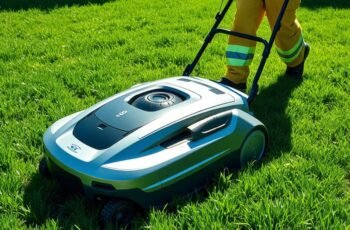
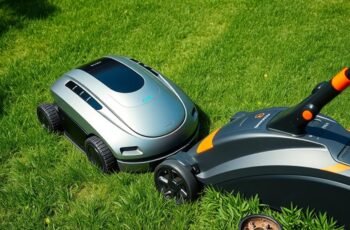
Studies show that robotic mowers can reduce lawn maintenance time by up to 70%, highlighting their efficiency for small to medium estates. However, selecting the most suitable mowing solution depends on various factors, including terrain, size, and budget. Understanding the technical differences between robotic and ride-on mowers is essential to making an informed decision. We’ll explore these considerations to help you determine which option best fits your estate’s needs.
Key Takeaways
- Robotic mowers are ideal for small, flat lawns requiring precise, uniform cuts with minimal maintenance.
- Ride-on mowers handle large, uneven estates more efficiently but may create less consistent cuts.
- Robotic mowers have lower upfront costs and are quieter, suitable for low-impact, aesthetic-focused gardens.
- Ride-on machines offer greater power and terrain adaptability, better for complex, extensive landscapes.
- Cost, terrain, lawn size, and maintenance needs are critical factors when choosing between the two for estate lawns.
Comparing the Benefits and Drawbacks of Robotic Mowers and Ride-On Machines
While both robotic mowers and ride-on machines serve the purpose of maintaining estate lawns, they differ considerably in their operational benefits and limitations. Robotic mowers excel at preserving garden aesthetics through precise, uniform cutting patterns, which promote a tidy appearance. They also offer a lower environmental impact due to electric operation, reducing emissions and energy consumption. Conversely, ride-on machines, with their more powerful engines, handle larger, uneven terrains more efficiently but can create uneven cuts that affect visual consistency. Additionally, ride-ons typically consume more fuel, increasing their environmental footprint. While robotic mowers contribute to a more sustainable landscape maintenance strategy, ride-on machines prioritize efficiency on complex terrains, though potentially at the expense of environmental considerations and aesthetic finesse.
Which Lawn Size and Terrain Suit Robotic Mowers or Ride-On Mowers?
Selecting the appropriate mowing system depends heavily on the size and terrain complexity of the estate. For smaller, flatter lawns, robotic mowers excel due to their precision and minimal seasonal maintenance, integrating seamlessly into garden design without disrupting aesthetics. Conversely, larger estates with varied terrain—hills, slopes, or uneven ground—favor ride-on mowers, which provide higher power, stability, and efficiency for extensive, complex landscapes. Robotic mowers are best suited for smooth terrains where precise, consistent cutting enhances garden design, reducing manual effort during seasonal maintenance. Ride-on machines, with their adaptability to diverse terrains, support thorough landscaping needs. Ultimately, understanding the garden’s design and terrain intricacies guides the ideal choice, balancing mowing capacity with long-term maintenance efficiency.
Cost Considerations: Budgeting for Robotic vs Ride-On Lawn Equipment
Budget considerations play a critical role in choosing between robotic and ride-on lawn equipment, as initial purchase price, ongoing maintenance costs, and operational expenses vary considerably. Robotic mowers typically have a lower upfront cost but require investment in weather resilience features to operate reliably across diverse conditions. Maintenance costs are influenced by battery lifespan, which affects replacement frequency and overall durability, impacting long-term expenses. Ride-on mowers tend to have higher initial costs but benefit from robust build quality and less frequent replacements. Operational costs for ride-ons involve fuel or electricity, whereas robotic mowers often rely on rechargeable batteries, with weather resilience affecting operational continuity. Careful analysis of these factors helps optimize budget allocation, balancing upfront investment against long-term reliability and maintenance demands.
Ease of Use and Maintenance: What to Expect From Each Mowing Option
When evaluating robotic mowers and ride-on equipment, understanding the ease of use and maintenance requirements is key to making an informed decision. Robotic mowers excel in simplicity, often requiring minimal user intervention post-setup, which benefits complex garden designs by maintaining consistent grass height. Maintenance involves routine blade sharpening and software updates, contributing to low ongoing effort. Conversely, ride-on machines demand more operator engagement for regular checks, fluid refills, and parts replacement, especially in varied terrain. From a wildlife impact perspective, robotic mowers tend to be quieter and less disruptive, aligning better with sensitive garden ecosystems. Overall, robotic mowers offer streamlined operation suited for minimal upkeep, while ride-ons require more active management, impacting garden design flexibility and ecological considerations.
Making the Right Choice: Factors to Consider for Your Estate Lawn
Choosing the appropriate mowing solution for your estate lawn requires a careful assessment of several factors that directly influence long-term performance, cost-efficiency, and ecological impact. Key considerations include lawn aesthetics, as the mower must deliver uniform, high-quality cut for a pristine appearance. Seasonal adaptability is equally critical; a system that adjusts to varying growth cycles ensures consistent maintenance year-round. For larger estates, robotic mowers offer precise, low-impact trimming but may require strategic planning to meet aesthetic standards. Conversely, ride-on mowers provide robust power and adaptability for diverse terrain and complex layouts. Evaluating these factors allows us to select a solution that balances visual appeal, operational efficiency, and environmental footprint, aligning with the specific needs and characteristics of your estate’s landscape.
Frequently Asked Questions
How Do Robotic Mowers Handle Uneven or Sloped Terrain?
Robotic mowers handle uneven terrain through advanced terrain adaptability and slope navigation features, allowing precise adjustments for inclines and irregular surfaces, ensuring efficient, safe mowing even on challenging slopes and uneven grounds.
What Are the Environmental Impacts of Robotic Versus Ride-On Mowers?
Research shows robotic mowers emit 50% less noise pollution and consume considerably less energy than ride-on counterparts. Their superior fuel efficiency reduces environmental impact, making them a sustainable choice for eco-conscious estate lawn management.
Can Robotic Mowers Be Integrated With Smart Home Systems?
We find robotic mowers can indeed be integrated with smart home systems, offering smart home compatibility and voice control integration, which enhances automation, remote monitoring, and user convenience, making lawn maintenance more efficient and technologically seamless.
How Do Weather Conditions Affect the Performance of Each Mower Type?
Weather conditions markedly impact weather resilience and mowing efficiency; robotic mowers perform best in dry, mild conditions, while ride-ons handle wet, uneven terrains better, though both experience reduced efficiency during extreme weather events.
What Safety Features Are Available for Robotic Mowers?
Robotic mowers feature safety sensors, obstacle detection, and emergency stop functions—like a vigilant guard dog. Their battery life and noise levels enhance safety, ensuring efficient, quiet operation while protecting users from potential hazards during lawn maintenance.
Conclusion
Ultimately, choosing between a robotic mower and a ride-on depends on your estate’s specific needs and future plans. While robotic mowers offer precision and eco-friendliness, ride-ons provide power for larger, uneven terrains. But what if your landscape evolves or your priorities shift? The decision isn’t just about today’s lawn—it’s about anticipating tomorrow’s challenges. As technology advances, the best choice might surprise you. Are you ready to make that leap?