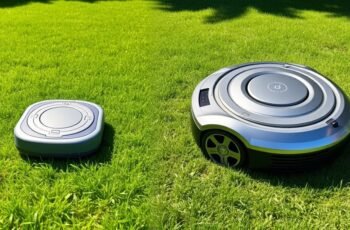
We recognize that choosing a robot lawn mower can seem complex, especially when taking into account technical features and safety concerns. While it might feel overwhelming to evaluate aspects like coverage capacity, navigation systems, and safety sensors, making informed choices is essential for long-term efficiency and reliability. Focusing on these critical elements ensures your investment delivers consistent performance and peace of mind. To optimize your decision, it’s important to reflect on what specific features will best suit your yard’s unique requirements.
Key Takeaways
- Ensure the mower’s coverage capacity matches your yard size for efficient, thorough mowing.
- Prioritize battery life and power for longer runtime and ability to handle tough grass.
- Look for safety features like obstacle detection, lift sensors, and emergency stop buttons.
- Choose models with smart connectivity for remote control, scheduling, and real-time updates.
- Consider durability, brand reputation, and warranty to ensure long-term reliability and support.
How to Determine the Right Cutting Capacity for Your Yard Size
To accurately select a robot lawn mower with the appropriate cutting capacity, we must first assess the size of your yard. Lawn size directly impacts the necessary cutting capacity, as larger areas demand a mower with a higher mowing rate and wider cutting deck. To determine this, measure your lawn’s total square footage, factoring in irregular shapes and obstacles. A mower’s cutting capacity is typically expressed in square meters or feet per hour, so choose a model that matches or exceeds your yard’s dimensions for efficient coverage. For example, a small yard under 1,000 square feet requires a mower with a lower cutting capacity, while larger lawns over 10,000 square feet demand higher capacity units. Proper matching guarantees thorough mowing without overloading the mower’s performance.
Why Battery Life and Power Matter in Robot Mowers
Battery life and power capacity directly influence a robot mower’s ability to complete tasks efficiently and reliably. Longer battery longevity guarantees extended mowing sessions without frequent recharges, which is critical for larger yards. Power efficiency determines how effectively the mower uses its energy, impacting runtime and overall performance. A well-powered mower with optimized energy consumption can handle thicker grass and challenging terrains more effectively. Consider the following table:
| Battery Capacity | Runtime per Charge | Suitable Yard Size |
|---|---|---|
| 2.0 Ah | 45 minutes | Up to 1,000 sq ft |
| 4.0 Ah | 90 minutes | Up to 2,000 sq ft |
| 6.0 Ah | 2 hours | Up to 3,500 sq ft |
Prioritizing these factors ensures sustained mowing efficiency and reduces downtime.
Navigating Safety Features to Protect Your Family and Pets
Given the potential risks associated with autonomous mowing, it’s essential to evaluate the safety features incorporated into robot lawn models. Child safety is prioritized through features like automatic lift or tilt sensors that immediately halt blades if the mower is lifted or tipped. Pet protection is enhanced via obstacle detection sensors that prevent collisions, and boundary sensors that restrict access to designated zones. Some models include PIN code locks to prevent unauthorized use, ensuring children cannot activate the mower. Additionally, emergency stop buttons allow quick manual shutdown in case of unexpected hazards. These safety mechanisms collectively reduce the risk of injury, providing peace of mind for families with children and pets. Ensuring these features are present and functional is key to safe, autonomous lawn maintenance.
The Importance of Navigation Technology and Lawn Mapping
Effective navigation technology and precise lawn mapping are critical for ideal mowing efficiency and coverage. We compare different navigation system types, such as GPS-based and boundary wire systems, to determine their reliability in various terrains. Additionally, obstacle detection features like ultrasonic sensors and real-time adjustments ensure the mower avoids hazards and maintains accurate lawn boundaries.
Precision of Lawn Mapping
Accurate lawn mapping is essential for ensuring thorough coverage and efficient mowing patterns, which is why advanced navigation technology plays a critical role in modern robot lawn mowers. High mapping precision ensures each section of your lawn is precisely identified, minimizing missed spots and overlaps. Precise mapping depends on sensor quality, data processing algorithms, and real-time adjustments. Enhanced lawn accuracy leads to optimized mowing routes, reducing energy consumption and wear on the mower. The following table illustrates key factors influencing lawn mapping accuracy:
| Factor | Impact on Mapping Precision |
|---|---|
| Sensor Quality | Determines the accuracy of boundary detection |
| Data Processing Algorithms | Affects the ability to adapt to lawn changes |
| Real-time Adjustment | Ensures consistent lawn accuracy during mowing |
Navigation System Types
The choice of navigation system fundamentally shapes how a robot lawn mower interprets and interacts with its environment, directly influencing lawn mapping accuracy and overall mowing efficiency. Different systems, such as GPS-based, boundary wire, and vision-based navigation, offer varying levels of navigation accuracy and terrain adaptability. GPS systems excel in large, open areas but struggle with precision in dense foliage or complex layouts. Boundary wire systems provide reliable mapping but lack flexibility for terrain changes. Vision-based systems utilize cameras and sensors to adapt to terrain variations, enhancing terrain adaptability and detail recognition. Selecting the appropriate navigation technology involves evaluating the mower’s ability to maintain precise mapping, adapt to uneven terrain, and operate efficiently across diverse lawn conditions.
Obstacle Detection Features
Obstacle detection features are essential components that enable robot lawn mowers to navigate safely and efficiently within complex or unpredictable environments. Advanced obstacle sensors utilize infrared, ultrasonic, or lidar technology to detect objects in real-time, facilitating precise obstacle avoidance. These sensors create a detailed map of the lawn, allowing the mower to adapt its path dynamically and prevent collisions. Critical aspects include the sensor’s detection range, response speed, and ability to differentiate between static and moving objects. Effective obstacle avoidance reduces the risk of damage to property or the mower itself.
- Types of obstacle sensors: infrared, ultrasonic, lidar
- Detection range and response time
- Differentiating static vs. moving objects
Features That Enhance Convenience and Smart Connectivity
Modern robot lawn mowers incorporate advanced features that considerably enhance user convenience and facilitate seamless smart connectivity. Voice control enables hands-free operation, allowing us to activate, pause, or schedule mowing sessions through compatible voice assistants like Alexa or Google Assistant. This integration streamlines maintenance and adjustments without manual interaction. Mobile app integration further elevates convenience by providing real-time control, status updates, and customizable mowing parameters directly from smartphones or tablets. These apps often include GPS mapping, allowing us to monitor coverage and make precise adjustments remotely. Additionally, app notifications alert us to maintenance needs or issues, minimizing downtime. Together, voice control and mobile app integration create a highly intuitive user experience, reducing manual effort and enabling efficient lawn management through connected, smart features.
How to Set a Budget Without Sacrificing Essential Features
To establish an effective budget, we first identify must-have features such as obstacle avoidance or programmable schedules and assign them priority. Next, we determine the overall price range that aligns with our financial constraints while ensuring these features are attainable. Finally, we balance cost against durability and reliability, recognizing that investing in higher-quality components can reduce long-term maintenance expenses.
Prioritize Must-Have Features
Establishing a clear budget before shopping for a robot lawn mower helps prevent overspending while guaranteeing you prioritize essential features. To optimize lawn maintenance and preserve garden aesthetics, focus on must-have capabilities. Key features include:
- Cutting system durability: Ensures consistent, clean cuts across varied grass types and terrain.
- Navigation technology: Precise mapping and obstacle avoidance improve coverage, reducing gaps and overlaps.
- Battery life and recharge cycles: Longer runtime supports larger areas, minimizing downtime and maintaining uniformity.
Determine Overall Budget Range
Setting a realistic budget is a fundamental step that directly influences the range of features available in a robot lawn mower. To determine this, we analyze pricing strategies across brands, considering both initial purchase costs and long-term value. Recognizing that higher-priced models often incorporate advanced navigation, larger cutting widths, and robust build quality, we factor in brand reputation as an indicator of reliability and customer support. It is crucial to balance affordability with essential features, avoiding overspending on premium brands if basic models suffice. Conducting detailed comparisons of specs and prices helps identify models that meet core requirements without unnecessary extras. This strategic approach ensures we allocate funds efficiently, maintaining quality standards while avoiding compromises that could affect performance or durability.
Balance Cost and Durability
Balancing cost and durability requires a strategic approach that prioritizes essential features while managing expenses effectively. To do this, consider material quality, as it directly influences the mower’s longevity; higher-grade plastics or metals often justify a higher upfront cost. Brand reputation is also critical—established brands typically offer better build quality, reliable performance, and responsive customer support. When setting a budget, focus on these key factors:
- Material quality of critical components (blades, chassis)
- Brand reputation for durability and service
- Warranty coverage and availability of replacement parts
Frequently Asked Questions
How Often Should I Service or Maintain My Robot Lawn Mower?
We recommend servicing our robot lawn mower every 4-6 weeks to preserve battery life and guarantee consistent mowing patterns, inspecting blades and cleaning sensors regularly, and replacing parts as needed for peak performance and longevity.
Can Robot Mowers Handle Uneven or Sloped Terrain Effectively?
Like mountain goats navigate steep cliffs, our robot mowers excel in uneven terrain with advanced slope compatibility and terrain navigation. They handle slopes up to 25-30 degrees, ensuring efficient, precise mowing on challenging, sloped landscapes.
What Warranty Options Are Available for Robot Lawn Mowers?
We find that warranty coverage varies, typically offering one to three years, with some models including on-site repairs. Always check warranty duration and coverage specifics, such as parts and labor, to guarantee thorough protection for your robot lawn mower investment.
Are Robot Mowers Suitable for All Grass Types?
We find robot mowers are like skilled navigators, adapting to diverse terrains and grass types. Their compatibility depends on grass density and terrain complexity, ensuring efficient cutting through careful design for terrain adaptability and grass compatibility.
How Do I Troubleshoot Common Issues With My Robot Mower?
We troubleshoot common robot mower issues by checking battery life for power loss and inspecting blades for dullness or damage, replacing them as necessary. Regular maintenance guarantees peak performance and prevents operational disruptions.
Conclusion
Choosing the right robot lawn mower is like assembling a finely tuned machine, where each component must work seamlessly. By prioritizing capacity, safety, navigation, and connectivity, we guarantee a precision cut that elevates our lawn care. Balancing these features within your budget is the key to accessing consistent, reliable performance. When all parts align perfectly, your mower becomes an extension of your landscape—an efficient, intelligent partner in maintaining your outdoor sanctuary.