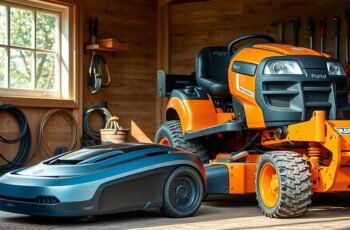
Many assume that all robot lawn mowers operate quietly, but evidence suggests significant variation based on design and motor technology. While some models produce noise levels comparable to a quiet conversation, others generate sounds akin to a running dishwasher, raising questions about their suitability for residential environments. Understanding the factors that influence these differences is essential for making informed choices—so, what exactly determines a mower’s noise profile and how can we evaluate its impact?
Key Takeaways
- Noise levels mainly depend on motor type, blade design, and mower size, with advanced motors producing less sound.
- Terrain complexity and obstacle density increase motor effort, raising noise emissions during operation.
- Brands vary in noise reduction technology; models meeting standards typically operate below 60 dB.
- Operating conditions like weather and terrain significantly influence the mower’s noise output.
- Quieter models often feature advanced motor technology and sound insulation, balancing efficiency and reduced disturbance.
How Do Robot Lawn Mowers Produce Noise?
Although robot lawn mowers are designed to operate quietly, their noise production results primarily from the interaction of their motors, blades, and drive mechanisms. The motor’s operational efficiency influences both noise levels and battery life, with more powerful motors generating higher decibel levels but extending mowing capacity. Blade rotation creates vibrations and airborne sound waves, contributing considerably to overall noise output. Drive mechanisms, including wheels and gears, produce additional mechanical sounds during operation. These sound emissions are carefully balanced to guarantee user safety, preventing excessive noise that could cause discomfort or hearing issues. Additionally, optimizing battery life impacts noise levels; longer-lasting batteries enable consistent operation at lower motor speeds, reducing noise and enhancing safety by maintaining predictable, controlled movements in various environments.
Factors That Influence Mower Noise Levels
Several key factors influence the noise levels of robot lawn mowers, including motor type and power output, which directly affect operational sound intensity. Blade design and rotational speed also play a significant role in noise emissions, as more aggressive cutting mechanisms tend to generate higher decibel levels. Additionally, the operating environment—such as terrain, obstacles, and surface materials—can amplify or dampen overall noise during use.
Motor Type and Power
How does the type and power of a motor influence the noise levels of a robotic lawn mower? The motor type—brushless DC (BLDC) versus brushed—significantly impacts noise reduction, with BLDC motors typically producing less noise due to fewer mechanical components and smoother operation. Power output, measured in watts, correlates with motor size and operational intensity; higher power motors often generate more noise, though efficient motor design can mitigate this. Battery efficiency plays a vital role, as more efficient batteries support stable motor performance at lower power levels, reducing unnecessary noise. Ultimately, selecting a motor with optimized power and advanced design improves noise reduction while maintaining effective mowing performance, highlighting the importance of balancing motor specifications for quieter, more efficient operation.
Blade Design and Speed
Blade design and speed are critical determinants of a robotic lawn mower’s noise output, as they directly influence the mechanical and aerodynamic forces generated during operation. Blade efficiency depends on factors like sharpness, material, and shape, which affect the amount of force required and consequently, noise levels. High blade efficiency reduces unnecessary vibrations and sound emissions. Speed variability also plays a significant role; consistent, moderate speeds minimize abrupt force changes, lowering noise. Conversely, rapid or fluctuating speeds generate increased aerodynamic turbulence and mechanical vibrations, amplifying sound emissions. Optimizing blade geometry for streamlined airflow and maintaining stable operating speeds are essential for noise reduction. Understanding these technical aspects helps in designing quieter mowers without sacrificing cutting performance.
Operating Environment Factors
Environmental conditions surrounding a robotic lawn mower considerably influence its noise levels during operation. Weather conditions, such as wind, rain, or humidity, can amplify or dampen noise transmission, affecting perceived loudness. For instance, wind can carry sound further, increasing disturbance, while rain may necessitate quieter operation or shutdown, altering noise exposure. User operation also impacts noise levels; frequent manual interventions, such as repositioning or obstacle removal, can temporarily increase noise emissions due to sudden motor or blade activity. Additionally, uneven terrain or thick vegetation can cause the mower to work harder, generating more noise. Understanding these environmental factors helps in accurately evaluating a mower’s noise profile and optimizing operational strategies to minimize disturbance, especially in sensitive or noise-sensitive environments.
Comparing Noise Levels of Popular Robot Lawn Mower Brands
Examining the noise levels of various robot lawn mower brands requires a comparison against established standards and manufacturer specifications. We analyze sound output data to identify variations attributable to design and operational factors. This approach helps us understand how different models perform in real-world noise mitigation.
Noise Level Standards
When comparing robot lawn mowers, understanding their noise level standards is essential to evaluate compliance with industry benchmarks and local regulations. Manufacturers typically specify maximum noise levels in decibels, guaranteeing that models meet safety thresholds applicable to residential areas. These standards often align with broader environmental noise policies, akin to those governing lawn irrigation systems or garden lighting, which must operate within specified decibel limits to prevent disturbance. Variations in noise standards reflect regional regulations, influencing product design and marketing. Analyzing these standards helps us identify models that balance operational efficiency with minimal acoustic impact. Compliance ensures quieter operation, reducing noise pollution and enhancing community acceptance. This framework allows consumers to make informed decisions based on technical compliance and environmental responsibility.
Brand Sound Comparisons
Comparing the noise levels of popular robot lawn mower brands reveals notable differences that can influence user experience and community acceptance. Brands designed for urban landscaping prioritize low decibel output, improving compatibility with residential environments. For example, models with advanced noise reduction technologies often produce sound levels below 60 dB, minimizing disturbance. Battery efficiency also plays a role, as more efficient batteries support longer, quieter operation without increasing noise output. Some brands optimize motor design to reduce vibrations and sound emission, directly impacting perceived noise levels. These variations can considerably affect user satisfaction, especially in densely populated areas. Ultimately, selecting a brand with proven low noise emissions and high battery efficiency enhances both the practicality and social acceptance of robotic lawn mowers within urban landscapes.
Operational Noise Factors
Operational noise levels of robotic lawn mowers vary markedly across different brands, primarily due to design choices in motor mechanisms, blade systems, and sound insulation. These factors directly influence how loudly the mower operates during garden maintenance, impacting user comfort and neighborhood considerations. For instance, models with brushless motors tend to generate less noise, while blade design—such as rotary versus oscillating—also affects sound emission. Sound insulation within the casing can further reduce operational noise, but often at the expense of increased weight and potential impacts on mower durability. A balance between minimizing noise and maintaining mower durability is essential. Ultimately, understanding these operational noise factors helps users select a model that efficiently manages garden maintenance while adhering to noise regulations.
The Impact of Mower Size and Power on Sound Output
The size and power of a robot lawn mower considerably influence its noise output, with larger and more powerful models generally producing higher sound levels. Increased mower size often correlates with enhanced mower aesthetics, appealing to users seeking a robust appearance, but this can come at the cost of elevated noise emissions. Powerful motors demand more energy, impacting battery longevity and necessitating larger batteries that can contribute to increased weight and noise. These factors collectively affect the sound profile, where more substantial models tend to operate louder due to higher motor torque and blade velocity. Understanding this relationship helps us evaluate how design choices impact noise levels, balancing mower aesthetics with operational efficiency while managing noise pollution considerations.
How Lawn Terrain and Obstacles Affect Noise Emissions
Terrain complexity can amplify noise emissions as uneven surfaces cause increased motor effort and vibration. Similarly, obstacle density influences sound levels by requiring more frequent navigation adjustments, leading to additional motor activity. Analyzing these factors helps us understand how environmental features directly impact the acoustic profile of robot lawn mowers.
Terrain Complexity and Noise
While smooth, open lawns typically allow for quieter operation, increased terrain complexity and obstacles can markedly influence the noise emissions of robot lawn mowers. Uneven terrain, soil composition, and garden irrigation systems introduce additional mechanical demands, leading to higher noise levels. Variations in soil density affect mower stability and blade engagement, amplifying sound, especially over rocky or clay-rich soil. Obstacles like tree roots or irrigation heads require maneuvering, increasing motor activity and noise output.
| Terrain Type | Impact on Noise |
|---|---|
| Sandy soil | Reduced stability, lower noise levels |
| Clay-rich soil | Increased resistance, higher noise |
| Obstacle-rich areas | Greater maneuvering, amplified noise |
Understanding these factors helps optimize mower design and operation for quieter performance.
Obstacle Density and Sound
As the density of obstacles in a lawn increases, the noise emitted by robot lawn mowers tends to rise correspondingly. Dense obstacle arrangements, such as shrubs, trees, or garden features, disrupt the mower’s mowing precision, prompting frequent directional changes and increased motor activity. This heightened activity results in elevated noise levels, which can impact garden aesthetics by creating inconsistent sound patterns. Additionally, the mower’s need to maneuver around obstacles often leads to more abrupt stops and starts, amplifying noise emissions further. These effects highlight how obstacle density not only influences operational efficiency but also plays a critical role in shaping the acoustic environment. Consequently, careful landscape planning can optimize garden aesthetics while minimizing noise disturbances, ensuring that mowing remains both precise and discreet.
Are Quieter Robot Mowers Worth the Investment?
Although quieter robot mowers typically come with higher upfront costs, their benefits can justify the investment for many users. Reduced noise levels enhance overall property management by minimizing disturbance, which is especially valuable in environments with frequent garden irrigation or lawn fertilization routines. Quieter operation allows for more flexible scheduling, ensuring mowing occurs without disrupting daily activities or neighboring peace. Additionally, lower noise emissions can contribute to better compliance with local regulations, potentially averting fines. From a technical perspective, quieter models often incorporate advanced motor and blade designs that optimize efficiency while reducing sound. Although initial costs are higher, the long-term advantages—such as improved environmental integration and the ability to maintain a healthy, well-manicured lawn—make these models a worthwhile investment for those prioritizing sustainability and operational discretion.
Tips for Minimizing Noise During Mowing Sessions
To effectively minimize noise during mowing sessions, it’s important to optimize both the operation and placement of the robot mower. Strategic placement reduces sound propagation toward inhabited areas, maintaining garden aesthetics and user comfort. Operating the mower during off-peak hours or when ambient noise levels are higher can also diminish perceived disturbance. Adjusting mowing patterns to avoid repetitive, high-frequency movements further reduces noise output. Selecting models with noise-reduction technology or adjustable sound settings enhances overall quietness, preserving the tranquility of your outdoor space. Regular maintenance, such as blade sharpening, not only improves cutting efficiency but also minimizes excessive noise caused by imbalanced components. These measures collectively support a quieter mowing process, aligning garden aesthetics with user comfort while ensuring efficient lawn care.
What Do User Reviews Say About Mower Noise?
User reviews consistently highlight that noise levels vary considerably across different robot mower models, with many customers emphasizing the importance of this factor in their purchasing decisions. Noise emissions directly impact garden aesthetics by influencing how seamlessly the mower integrates into outdoor environments, especially in landscaped or landscaped areas. Several users note that quieter models tend to reduce disturbance, enhancing overall user safety by allowing better awareness of their surroundings during operation. Conversely, louder units can compromise safety, increasing the risk of accidents or interference with nearby activities. Customers also consider noise a key factor in maintaining a peaceful yard ambiance, which is essential for effective garden aesthetics. Overall, user feedback underscores the need for balanced noise output to optimize safety, aesthetics, and user satisfaction.
Regulations and Noise Limits for Robot Lawn Mowers
Regulations and noise limits for robot lawn mowers are established to guarantee that these devices operate within acceptable sound levels, minimizing environmental and community disturbance. These standards ensure that noise emissions do not interfere with garden design or seasonal maintenance routines. Regulatory bodies specify maximum decibel levels, often varying by region, to promote eco-friendly operation. The table below compares typical noise limits:
| Region | Max Noise Level (dB) | Application Focus |
|---|---|---|
| Europe | 60-70 | Urban and suburban lawns |
| North America | 65-75 | Residential landscapes |
| Asia | 55-65 | Garden design and public spaces |
Adherence to these limits supports quieter, more sustainable lawn care practices.
Choosing a Quiet Robot Mower: Key Takeaways
Selecting a quiet robot mower involves examining specific features and performance metrics that influence noise output. Advanced artificial intelligence algorithms optimize mowing paths, reducing unnecessary movements and minimizing noise disturbances. Battery technology plays a critical role, as high-capacity, low-noise batteries enable more efficient operation with less acoustic footprint. Modern lithium-ion batteries deliver consistent power while reducing vibration and sound levels. Additionally, noise reduction features like sound-dampening enclosures and intelligent motor controls further suppress operational noise. When choosing a mower, prioritize models integrating AI-driven navigation and superior battery tech, ensuring not only quieter performance but also enhanced efficiency and longer operation. By focusing on these technical aspects, users can select a robot mower that balances effective mowing with minimal noise disruption.
Frequently Asked Questions
How Does Mower Design Influence Noise Reduction?
We find that mower design influences noise reduction through blade materials and sound insulation. Durable, lightweight blades reduce vibration, while sound-insulating components dampen noise, making operation quieter and enhancing user comfort during mowing tasks.
Are There Specific Brands Known for Quieter Operation?
Brands like Husqvarna and Robomow stand out for quieter operation, thanks to advanced battery efficiency and cutting precision. We find their engineering minimizes noise, allowing the mower to glide softly over grass while maintaining ideal performance.
Can Noise Levels Vary With Different Mowing Schedules?
Yes, noise levels can vary with different mowing schedules; increased mowing frequency may reduce noise perception by distributing it evenly, while less frequent mowing might cause peaks. Therefore, schedule impacts perceived noise, influencing overall noise management strategies.
Do Robotic Mowers Produce Noise Comparable to Traditional Lawn Equipment?
Robotic mowers are generally quieter than traditional equipment, akin to a whisper compared to a roar, reducing noise pollution in urban environments and minimizing wildlife disturbance, making them a more eco-friendly, less disruptive alternative for lawn maintenance.
How Does Maintenance Affect the Noise Output of Robot Lawn Mowers?
Maintenance impacts robot lawn mower noise through battery longevity and blade sharpness; regular checks guarantee ideal performance, reducing vibrations and noise, while dull blades or declining battery health increase operational sound levels and decrease efficiency.
Conclusion
In our analysis, selecting a quieter robot lawn mower is like tuning a finely crafted instrument—balancing power, design, and environment. By understanding factors influencing noise levels, reviewing user feedback, and adhering to regulations, we can optimize outdoor peace without sacrificing performance. Ultimately, the right choice harmonizes efficiency with tranquility, ensuring your lawn care routine remains a subtle whisper rather than a thunderous roar, allowing your outdoor space to breathe with serenity and precision.