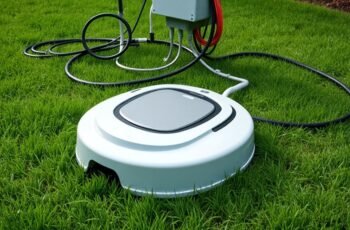
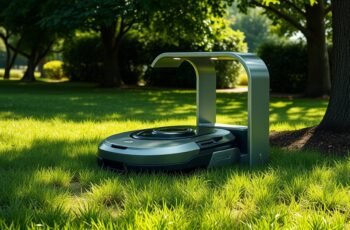
When setting up a robot mower charging station, selecting the most suitable location is critical for ensuring reliable operation and long-term durability. We need to take into account factors like terrain flatness, obstacle clearance, signal strength, and environmental protection. Proper placement impacts not only performance but also safety and maintenance efficiency. Understanding these technical considerations helps prevent operational issues and extends the lifespan of both the mower and the station—yet, determining the ideal spot requires careful analysis of your yard’s unique layout.
Key Takeaways
- Choose a flat, level, obstacle-free area with good accessibility and minimal foot traffic for optimal station placement.
- Position the station with a clear line of sight, away from metal objects and electronic interference sources.
- Ensure easy access for maintenance, near power outlets, and on a stable surface to prevent misalignment.
- Protect the station from weather elements with waterproof enclosures and elevate it to prevent water pooling.
- Regularly assess and maintain the station’s environment, keeping it clean, unobstructed, and properly aligned for efficiency.
How to Choose the Best Location for Your Robot Mower Charging Station
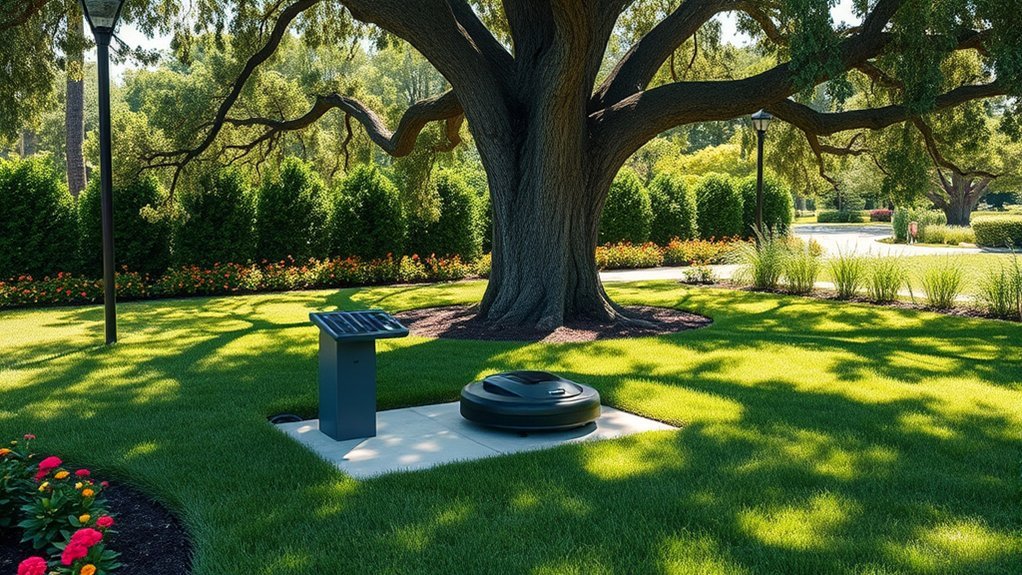
Choosing the most suitable location for your robot mower’s charging station is critical to guaranteeing efficient operation and minimal maintenance. When selecting a spot, consider how garden design influences mower navigation, assuring a clear, obstacle-free path for seamless docking. Position the station in an area that promotes consistent mowing coverage while avoiding shaded or damp zones that can hinder performance. Proper placement also contributes to pest control by reducing debris accumulation and hiding spots for pests near the station. A well-planned location minimizes the need for frequent adjustments, prevents damage to garden features, and supports overall lawn health. Precise positioning aligned with the garden’s layout ensures ideal mower function, reduces downtime, and maintains a tidy, pest-resistant landscape.
Key Factors to Consider: Accessibility, Safety, and Convenience
Ensuring the charging station is accessible through designated entry points minimizes robot travel time and enhances operational efficiency. Positioning the station in a safe, secure area reduces the risk of damage or interference from external factors. Prioritizing convenience in location selection supports consistent maintenance and ideal robot performance.
Easy Access Points
When selecting an access point for the robot mower charging station, it’s essential to prioritize factors such as accessibility, safety, and convenience. An ideal access point minimizes obstacles, ensuring smooth robot mower operation during routine maintenance and lawn irrigation integration. Proper placement facilitates efficient robot mower maintenance, reducing downtime and increasing lifespan. Accessibility should consider clear pathways for manual servicing without obstructions. Safety involves avoiding high-traffic zones or uneven terrain that could cause mishaps. Convenience entails positioning near power sources and within easy reach for adjustments or troubleshooting.
- Clear, unobstructed pathways for easy navigation during maintenance
- Proximity to power outlets for reliable charging
- Minimal interference with lawn irrigation systems
- Level surface to prevent tipping or misalignment during docking
Safe and Secure Location
To optimize the safety and security of the robot mower’s charging station, it’s essential to select a location that balances accessibility, safety, and convenience. Prioritize a spot that minimizes risk of damage or theft, ensuring maximum robot safety. Clear pathways prevent obstructions, reducing the chance of collisions or operational hazards. The station’s placement should also consider charging station aesthetics, blending seamlessly into the landscape while maintaining visibility for monitoring. Adequate lighting enhances security during low-light hours, deterring vandalism. Avoid areas prone to flooding or excessive debris, which compromise safety and equipment longevity. Properly securing the station with sturdy mounting and protective enclosures enhances overall security, ensuring reliable operation and safeguarding the investment.
Ensuring Signal Strength and Connectivity for Your Charging Dock
Maintaining a strong signal connection between your mower and its charging station is essential for reliable operation and efficient charging cycles. Wireless connectivity can be compromised by obstacles or signal interference, leading to missed dockings or incomplete charges. To optimize signal strength, select a location with minimal interference sources such as metal objects, thick foliage, or electronic devices. Position the station so that the antenna has a clear line of sight to the mower’s receiver. Avoid placing the dock near dense trees or structures that can disrupt signals. Regularly check signal quality, and consider using a Wi-Fi extender or signal booster if needed. Ensuring stable wireless connectivity reduces operational disruptions and prolongs the lifespan of your mower’s communication system.
Ensure clear line of sight and minimal interference for reliable mower connectivity and charging.
- Clear line of sight with minimal obstructions
- Keep away from metal objects and electronic interference
- Use signal boosters if necessary
- Regularly test and monitor signal quality
Protecting Your Charging Station From Weather and Lawn Debris
Protecting your charging station from weather and debris requires a combination of weatherproof enclosures and debris barriers that withstand local climate conditions. Proper sealing of electrical components and strategic placement can prevent water ingress and minimize exposure to lawn waste. Implementing these measures guarantees reliable operation and prolongs the lifespan of your charging station.
Weatherproof Enclosure Strategies
Ensuring your robot mower’s charging station remains functional requires a well-designed weatherproof enclosure that shields it from rain, snow, and lawn debris. Proper enclosure strategies protect critical components, preserving automated navigation systems and extending battery longevity. To achieve this, consider these key features:
- Sealed, waterproof enclosures with IP ratings suitable for outdoor exposure
- Elevated mounting to prevent pooling and water ingress
- Ventilation that balances moisture control with temperature regulation
- Use of corrosion-resistant materials for long-term durability
A robust weatherproof design minimizes exposure to moisture and debris, reducing maintenance needs and ensuring reliable operation. It also stabilizes electrical connections, which is essential for consistent automated navigation and preserving battery health over time. Proper enclosure strategies are crucial for maximizing the lifespan and efficiency of your robotic lawn system.
Debris Prevention Tips
To safeguard your robot mower’s charging station from weather-related and lawn debris hazards, implementing effective debris prevention measures is essential. Regular robot mower maintenance includes clearing leaves, grass clippings, and dirt buildup around the station to prevent blockages and corrosion. Installing a well-designed canopy or weather-resistant cover can deter debris accumulation and shield the station from wind-blown debris, preserving its charging station aesthetics. Positioning the station on a flat, stable surface reduces the risk of debris trapping or flooding. Incorporating a debris guard or barrier prevents larger objects from entering the charging area, ensuring smooth operation. These strategies not only protect the station from environmental damage but also optimize its longevity and functional integrity.
How to Assess Your Yard’s Layout for Optimal Placement
Evaluating your yard’s layout is a critical first step in determining the ideal placement for your robot mower’s charging station. It requires analyzing existing landscape design elements and garden aesthetics to guarantee functional and visual harmony. Consider the terrain’s slope, as steep inclines can hinder navigation and charging efficiency. Identify flat, accessible locations with minimal obstructions—such as trees, shrubs, or garden beds—that could interfere with mower movement. Proximity to power sources is essential, but avoid placing the station in overly shaded or damp areas that could affect durability. Finally, assess the overall yard flow to facilitate smooth mower passages across different zones. These detailed considerations optimize performance and maintain your yard’s aesthetic integrity.
Common Mistakes to Avoid When Positioning Your Charging Station
One common mistake is placing the charging station too close to high-traffic areas or frequently used pathways, which can disrupt mower operation and lead to accidental collisions. This is especially problematic for robot mower brands that rely on precise navigation, as obstructions can cause delays or misalignment. Additionally, selecting an inappropriate site may hinder the mower’s ability to return to the station efficiently, reducing battery life and operational consistency. Avoid placing the station near objects that obstruct visibility or airflow, as poor ventilation can cause overheating. When considering alternative charging options, confirm they are compatible with your mower model and positioned in low-traffic zones. Proper placement minimizes interference, optimizes charging efficiency, and maintains smooth, uninterrupted mowing cycles.
Tips for Maintaining and Adjusting the Location Over Time
Over time, maintaining and adjusting the charging station’s location guarantees ideal mower performance and longevity. Regular assessment ensures perfect robot maintenance, preventing issues like poor connectivity or misalignment. Adjust the station if debris or vegetation encroach upon the area, which can impede docking. Pay attention to charging station aesthetics; a clean, unobstructed setup reduces wear and maintains safety. Periodically verify the station’s stability and ground contact, ensuring it remains level. Consider changing the location if landscape changes affect accessibility or if shading impacts charging efficiency. Monitoring these factors helps sustain efficient operation, prolongs equipment lifespan, and minimizes downtime. Consistent upkeep ensures the station remains a reliable, unobtrusive fixture in your yard’s maintenance routine.
What to Do If Your Chosen Spot Isn’t Working as Expected
When your chosen charging station spot isn’t performing as expected, the first step is to systematically troubleshoot potential issues disrupting ideal operation. Check for obstructions or debris that may interfere with robot mower compatibility or charging station maintenance. Verify the station’s alignment with the mower’s charging contacts, ensuring proper connection. Examine the power source and wiring for any faults or inconsistent voltage. If the station still underperforms, consider relocating it to a more sheltered, level surface with minimal interference. Use the following table to guide troubleshooting:
| Issue | Potential Cause | Solution |
|---|---|---|
| Charging failure | Dirt or debris on contacts | Clean contacts with a soft cloth |
| Poor connection | Misalignment or obstruction | Realign station and clear surrounding area |
| Inconsistent power supply | Faulty wiring or power source | Inspect wiring and test power source |
Frequently Asked Questions
Can I Place the Charging Station Indoors or Only Outside?
We recommend indoor placement only if the area is well-ventilated and protected from moisture, with aesthetic concealment options considered; outdoor placement is generally preferred for peak charging efficiency and environmental exposure.
How Close Should the Station Be to the Power Source?
We recommend placing the charging station within three feet of a dedicated power outlet, ensuring ideal battery maintenance and minimizing voltage drops, like a well-placed lighthouse guiding your mower safely to shore for reliable charging.
Will Tree Roots Affect the Station’s Placement?
Tree root interference and underground obstacles can disrupt your station’s placement, so we recommend selecting a location with clear soil and minimal root activity. Proper assessment prevents potential damage and guarantees reliable robot mower operation.
How Do I Hide the Charging Station From View?
We hide the charging station using landscaping tips like planting shrubs or installing decorative screens for aesthetic integration, ensuring it’s discreet yet accessible. Proper placement minimizes visibility while maintaining functionality, blending seamlessly with your yard’s design.
Is It Necessary to Anchor the Station to the Ground?
Yes, anchoring the station is necessary for ground stability. We recommend using specific anchoring methods like stakes or screws, ensuring the station remains secure against wind and uneven terrain, which maintains ideal functionality and prevents dislocation.
Conclusion
In perfecting your placement, prioritize practical positioning, precise planning, and proactive maintenance. By paying close attention to accessibility, safety, and signal strength, we guarantee seamless, sustainable service from your robotic mower. Regularly reassessing and adjusting the station’s site prevents potential problems, prolongs equipment lifespan, and promotes peak performance. Precision in placement and proactive upkeep are paramount, ensuring your mower operates efficiently, safely, and reliably—safeguarding your yard’s lush, landscaped legacy.