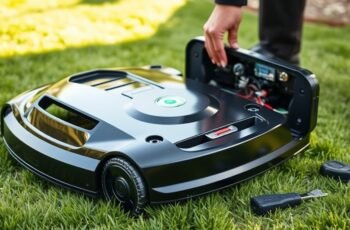
Did you know that a robotic mower’s charging station isn’t just a power source but a critical component influencing overall efficiency and longevity? Its design, placement, and connectivity directly impact operational reliability and maintenance costs. Properly optimized, it can support autonomous, eco-friendly lawn care with minimal intervention. Understanding these factors is essential for maximizing your mower’s performance—something that becomes even more relevant as technology advances and expectations for sustainability grow.
Key Takeaways
- Reliable charging stations ensure optimal mower autonomy, efficiency, and battery longevity through proper alignment and stable contact.
- Features like weather resistance, automatic docking, and solar integration enhance durability and sustainability of robotic mower stations.
- Proper installation involves selecting accessible, level locations with minimal shade and obstacles for seamless operation.
- Wired and wireless options offer different setup complexities, with wireless providing easier installation and greater flexibility.
- Upgrading stations with faster charging, smart controls, and solar power improves system resilience and reduces operational downtime.
Why a Reliable Charging Station Matters for Robotic Mowers
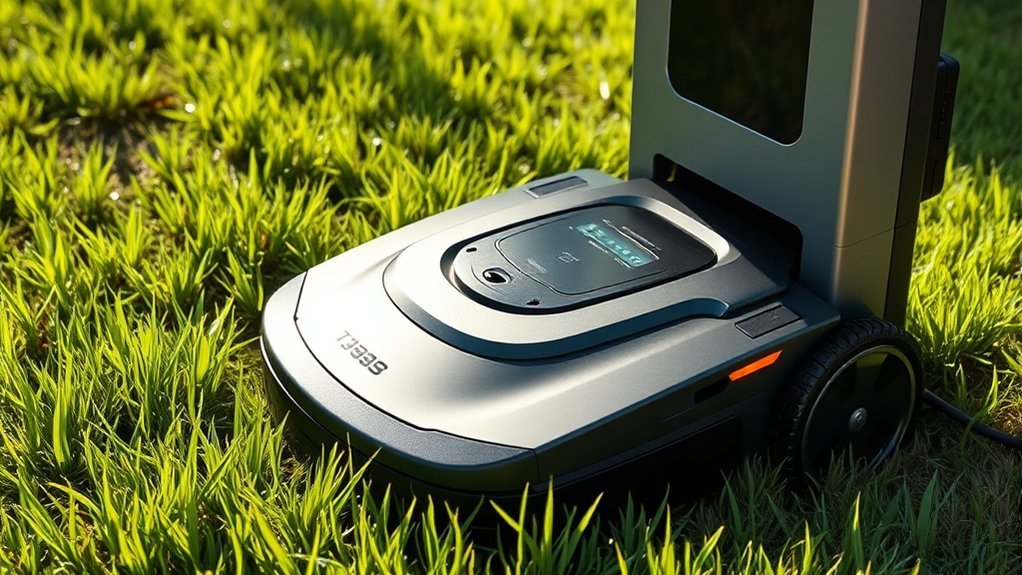
A reliable charging station is essential for the ideal operation of robotic mowers because it directly influences their autonomy and efficiency. An efficient station ensures consistent power delivery, minimizing power consumption during charging cycles and preventing unnecessary energy loss. Proper alignment and stable contact reduce stress on the battery, ultimately extending battery longevity. When the station maintains peak charging parameters, it prevents overcharging and thermal stress, which can degrade battery health over time. Additionally, a well-designed station supports faster charging, reducing downtime and conserving energy. By maximizing power management, the station not only enhances operational efficiency but also prolongs the lifespan of the mower’s battery, ensuring sustained performance and reducing long-term maintenance costs.
Key Features to Look for in a Robotic Mower Charging Station
When choosing a robotic mower charging station, automatic docking capabilities are essential for seamless operation and minimal user intervention. Weather resistance features guarantee the station maintains functionality in various environmental conditions, reducing downtime and maintenance. Prioritizing these key features can considerably enhance the reliability and efficiency of your robotic mowing system.
Automatic Docking Capabilities
Have you ever wondered how robotic mowers efficiently locate their charging stations without human intervention? Automatic docking capabilities are vital for maintaining battery longevity and maximizing power efficiency. Advanced systems use precision sensors and visual recognition algorithms to identify the station’s location quickly, reducing unnecessary movement and conserving energy. This minimizes wear on mechanical parts and decreases power consumption during docking, ultimately extending the mower’s operational lifespan. Effective docking algorithms also guarantee a seamless connection, preventing misalignment that could drain the battery or disrupt charging. By prioritizing intelligent navigation and stable connections, these features enhance overall system reliability, guaranteeing the mower remains ideally charged with minimal user oversight. This focus on automation directly contributes to the mower’s efficiency and long-term operational costs.
Weather Resistance Features
Robotic mower charging stations must withstand diverse weather conditions to guarantee consistent operation and reliable charging. Weather resistance is critical, assuring the station can endure rain, snow, and temperature fluctuations without malfunction. Durable enclosures made from weatherproof materials prevent moisture ingress and corrosion, maintaining structural integrity over time. Incorporating solar energy capabilities enhances sustainability, allowing the station to harness sunlight for power, especially during overcast days. Solar panels should be protected with weather-resistant coatings to optimize energy collection and longevity. Proper sealing, drainage systems, and UV-resistant components further improve weather resistance, reducing maintenance needs and downtime. Ultimately, a well-designed, weather-resistant charging station ensures uninterrupted service, maximizing the robotic mower’s efficiency regardless of environmental conditions.
How to Properly Install Your Charging Station for Optimal Performance
Proper installation of your charging station is critical for peak performance, starting with selecting the most accessible and unobstructed location. Ensuring correct wiring connections minimizes electrical issues and enhances reliability, while maintaining a clear path prevents operational interruptions. By addressing these points systematically, we can maximize the station’s functionality and longevity.
Choose Optimal Location
How can we guarantee that the charging station is positioned for maximum efficiency? Proper placement hinges on strategic landscape design and solar integration considerations. To optimize performance, we focus on:
- Shade Minimization: Avoid shaded areas to ensure solar panels receive maximum sunlight, enhancing energy transfer.
- Accessibility: Place the station within easy reach for maintenance while minimizing obstructions that can interfere with robotic mower navigation.
- Terrain Stability: Select a flat, stable surface to prevent shifting or tilting, which could impair docking accuracy.
- Proximity to Power Sources: Position near reliable power supplies, factoring in solar integration potential for sustainable operation.
Ensure Proper Wiring
Effective wiring is fundamental to guaranteeing the charging station functions reliably and efficiently. Proper wiring guarantees consistent power delivery, which directly impacts battery maintenance and overall system longevity. We must use appropriately rated cables to minimize voltage drops that can impair power efficiency. Secure, corrosion-resistant connections are vital to prevent signal loss and ensure stable communication between the mower and charging station. Proper grounding reduces electrical noise that could interfere with operation, enhancing reliability. Additionally, wiring should adhere to local electrical codes to prevent hazards and guarantee safety. Correct wiring practices support ideal power flow, reducing energy waste and extending battery life. Ultimately, meticulous attention to wiring details is essential for maximizing the robotic mower’s performance and minimizing maintenance needs.
Maintain Clear Path
Have you considered how obstructions and layout can impact the robotic mower’s ability to navigate efficiently? Ensuring a clear path is essential for maintaining ideal performance and preserving both garden and lawn aesthetics. Proper installation involves strategic placement of the charging station to minimize obstacles that could hinder navigation.
Key considerations include:
- Positioning the station in an open, level area with minimal foot traffic.
- Ensuring a straight, obstacle-free route from the station to the lawn.
- Avoiding tight corners or narrow passages that restrict movement.
- Maintaining consistent surface conditions to prevent slippage or misalignment.
Implementing these measures helps sustain efficient mowing cycles, prevents unnecessary wear, and preserves the visual harmony of your outdoor space.
Smart Connectivity Options for Modern Charging Stations
As smart connectivity continues to shape the evolution of robotic mower charging stations, integrating advanced communication protocols is essential for seamless operation and remote management. AI integration enables these stations to analyze usage patterns, optimize charging schedules, and predict maintenance needs, enhancing efficiency. Additionally, robust connectivity options like Wi-Fi, Bluetooth, or cellular modules facilitate real-time monitoring and control from anywhere. User customization features allow operators to tailor settings such as charging cycles, notifications, and system alerts to their preferences, improving usability. These smart connectivity options empower users with greater control, reduce downtime, and streamline maintenance, ultimately elevating the overall performance and reliability of robotic mower systems. Such technological advancements are indispensable for modern, intelligent lawn care solutions.
Tips for Maintaining Your Charging Station and Extending Its Lifespan
Maintaining your robotic mower’s charging station is essential for ensuring consistent performance and prolonging its operational lifespan. Proper upkeep directly impacts battery life and user safety by preventing malfunctions.
- Regularly clean contact points to prevent corrosion, ensuring ideal electrical connection and efficient charging cycles.
- Inspect and replace worn or damaged power cords to minimize safety hazards and avoid voltage inconsistencies.
- Monitor environmental conditions; keep the station in a sheltered, dry location to prevent moisture damage and electrical faults.
- Schedule periodic system diagnostics to identify potential issues early, safeguarding both battery health and user safety.
Consistent maintenance reduces wear on components, extends battery life, and minimizes safety risks, ultimately maximizing the station’s longevity and performance.
Troubleshooting Common Charging Station Issues
When a robotic mower’s charging station encounters issues, systematic troubleshooting becomes essential to quickly identify and resolve faults. Power fluctuations can disrupt the charging process, leading to incomplete or unreliable connections, which may accelerate battery lifespan deterioration. First, verify power supply stability—use a multimeter to check for voltage irregularities, as inconsistent power can cause charging faults. Inspect the charging contacts for dirt, corrosion, or misalignment, since poor contact impairs efficiency. If the station still malfunctions, examine the station’s internal circuitry for damaged components or loose wiring. Addressing these issues promptly prevents further damage and helps maintain maximum battery lifespan. Regular diagnostics and cleaning are vital for troubleshooting and ensuring consistent performance of the charging station.
Comparing Wired vs. Wireless Charging Stations: Which Is Better?
When comparing wired and wireless charging stations, installation complexity, mobility, and connectivity reliability are key factors to contemplate. Wired systems typically require more extensive setup but offer stable connections, while wireless options provide greater flexibility and ease of repositioning. Analyzing these aspects helps determine which charging method best aligns with operational needs and environmental constraints.
Installation Complexity Differences
Have you ever considered how the installation process differs between wired and wireless charging stations for robotic mowers? Wired setups require extensive groundwork, precise cable routing, and adherence to safety protocols, which can impact initial installation time and long-term maintenance. Conversely, wireless stations simplify installation by eliminating physical connections, reducing complexity, and decreasing the risk of damage to wiring, which benefits battery longevity.
Key differences include:
- Wired stations demand detailed site preparation, affecting overall setup time.
- Wireless stations minimize infrastructure, easing scaling and adjustments.
- Safety protocols are more intensive for wired systems due to exposed cables.
- Both setups influence ease of maintenance, with wireless stations offering quicker troubleshooting.
Understanding these distinctions helps optimize installation efficiency and ongoing system reliability.
Mobility and Flexibility
Wireless charging stations offer a distinct advantage in mobility and flexibility over their wired counterparts, primarily due to their lack of physical connection constraints. This flexibility allows robotic mowers to operate across larger areas without the need for fixed charging points, optimizing mowing schedules and managing battery capacity more efficiently. Wireless systems enable seamless repositioning and reduce setup time, accommodating dynamic terrain and obstacles. However, the effectiveness depends on the charging technology’s power transfer efficiency—critical for maintaining consistent mowing routines. The table below summarizes key differences:
| Feature | Wired Charging | Wireless Charging |
|---|---|---|
| Mobility | Limited to fixed stations | High, adaptable placement |
| Flexibility | Constrained by cables | Unconstrained, versatile |
| Setup time | Longer, installation needed | Quicker, minimal setup |
| Impact on schedules | Fixed, less adaptable | Dynamic, responsive |
| Battery management | Dependent on station location | Optimized through mobility |
Connectivity and Reliability
How does the connectivity and reliability of wired versus wireless charging stations compare in ensuring consistent robotic mower operation? Wired stations generally provide a more stable connection, minimizing disruptions that could compromise battery longevity or power efficiency. Conversely, wireless stations offer greater flexibility but may face interference issues, impacting reliability. To evaluate, consider:
- Wired stations eliminate connection failure risks, supporting consistent charging cycles.
- Wireless systems, susceptible to interference, can cause inconsistent charging, affecting battery health.
- Power efficiency is typically higher with wired connections due to direct transfer, extending mower runtime.
- Reliability directly influences overall system uptime, with wired setups offering predictable performance essential for professional applications.
Choosing between these options depends on balancing flexibility with the need for dependable, efficient operation.
Best Practices for Positioning Your Charging Station in Your Lawn
Positioning your charging station correctly is essential to guarantee efficient operation and minimize downtime for your robotic mower. Ideal placement reduces travel time, conserves battery life, and maintains lawn aesthetics. Consider factors such as accessibility, shade, and terrain stability. Landscaping tips include selecting a flat, well-drained area away from obstacles and tall grass, which ensures smooth navigation. Placing the station near the lawn’s edge minimizes mowing interruptions and enhances overall efficiency. Additionally, avoid shading that can impair solar charging or sensor performance. Proper placement balances functional requirements with landscaping aesthetics, creating a seamless integration into your lawn.
| Placement Criteria | Rationale |
|---|---|
| Flat, well-drained area | Prevents navigation issues and station instability |
| Near lawn edge | Reduces travel time and maximizes coverage |
| Avoid shading | Ensures ideal charging and sensor accuracy |
How to Upgrade Your Charging Station for Enhanced Efficiency
Upgrading your charging station can considerably improve your robotic mower’s efficiency by reducing charging times and ensuring reliable operation. To achieve this, focus on four key enhancements:
- Optimize Power Supply: Use high-quality, stable power sources to maintain consistent voltage, which extends battery longevity and minimizes degradation.
- Implement Solar Integration: Incorporate solar panels to supplement power, reduce energy costs, and promote eco-friendly operation.
- Upgrade Charging Components: Install fast-charging circuitry and temperature regulation features to decrease downtime and protect battery health.
- Enhance Connectivity: Use smart controls for real-time monitoring, enabling predictive maintenance and ensuring consistent performance.
These improvements streamline charging processes while protecting battery longevity, ultimately maximizing your mower’s operational efficiency.
Future Trends in Robotic Mower Charging Technology
Advancements in charging technology are poised to considerably shape the future of robotic mower systems, emphasizing increased automation and energy efficiency. Future trends focus on enhancing battery capacity to extend operational endurance without increasing downtime, enabling larger lawns to be maintained more autonomously. Additionally, solar integration is expected to become a critical component, allowing robotic mowers to harness renewable energy directly at the charging station. This integration not only reduces reliance on grid power but also promotes sustainability. We anticipate smarter charging algorithms that optimize power consumption based on usage patterns and energy availability. These developments will result in more resilient, self-sufficient systems capable of longer operation cycles, ultimately improving efficiency and reducing environmental impact in robotic lawn care.
Frequently Asked Questions
Can the Charging Station Withstand Extreme Weather Conditions?
Our charging stations are designed with weather resistance and durability factors in mind, enabling them to withstand extreme weather conditions effectively. We guarantee they meet rigorous standards, providing reliable performance regardless of temperature fluctuations, rain, or snow.
Is There a Recommended Cleaning Routine for the Charging Station?
We recommend regular cleaning maintenance of the charging station using a soft, damp cloth to remove debris and dirt, which helps preserve station durability. Avoid harsh chemicals to guarantee long-term functionality and prevent material degradation.
How Does the Charging Station Affect Mower Battery Life?
Think of the charging station as a guardian that preserves our mower’s battery health. Proper battery maintenance and optimized charging efficiency minimize degradation, ensuring longevity and consistent performance by preventing unnecessary stress on the battery lifecycle.
Are There Safety Features to Prevent Accidents at the Charging Station?
We incorporate safety sensors and an emergency shutoff at the charging station, ensuring the robotic mower halts operation instantly if obstacles or malfunctions are detected, effectively preventing accidents and enhancing operational safety.
What Is the Average Lifespan of a Robotic Mower Charging Station?
The average lifespan of a robotic mower charging station, considering durability and compatibility with mower models, is typically 3-5 years. We find that quality materials and proper maintenance considerably extend the station’s operational life.
Conclusion
Ultimately, a well-chosen and maintained charging station isn’t just about efficiency—it reflects our commitment to sustainable, autonomous lawn care. As technology evolves, integrating smart features and renewable energy sources becomes inevitable, aligning our landscape management with broader ecological goals. By investing in reliable infrastructure today, we set the foundation for smarter, greener outdoor environments tomorrow, proving that even small components like charging stations hold the power to shape a more sustainable future.