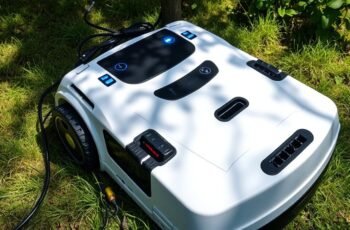
The complexity of wiring your robot lawn mower’s base station can seem overwhelming, but neglecting proper setup risks system failure and safety hazards. Precise connections, correct grounding, and interference prevention are indispensable for reliable operation and long-term durability. Understanding these key elements is important, yet many overlook key details that could compromise performance. To guarantee your system functions flawlessly and safely, it’s essential to follow a thorough, step-by-step approach—so let’s explore the fundamental wiring practices together.
Key Takeaways
- Use proper wiring techniques, ensuring correct polarity, secure connections, and shielding to prevent interference.
- Select an optimal, central location away from metal objects and obstacles for reliable communication and coverage.
- Verify voltage, wiring continuity, and grounding with a multimeter before powering the base station.
- Employ waterproof connectors, secure terminations, and surge protectors for safety and durability.
- Conduct regular inspections and updates to maintain system integrity, prevent corrosion, and ensure stable operation.
Understanding the Basics of Robot Lawn Mower Base Stations
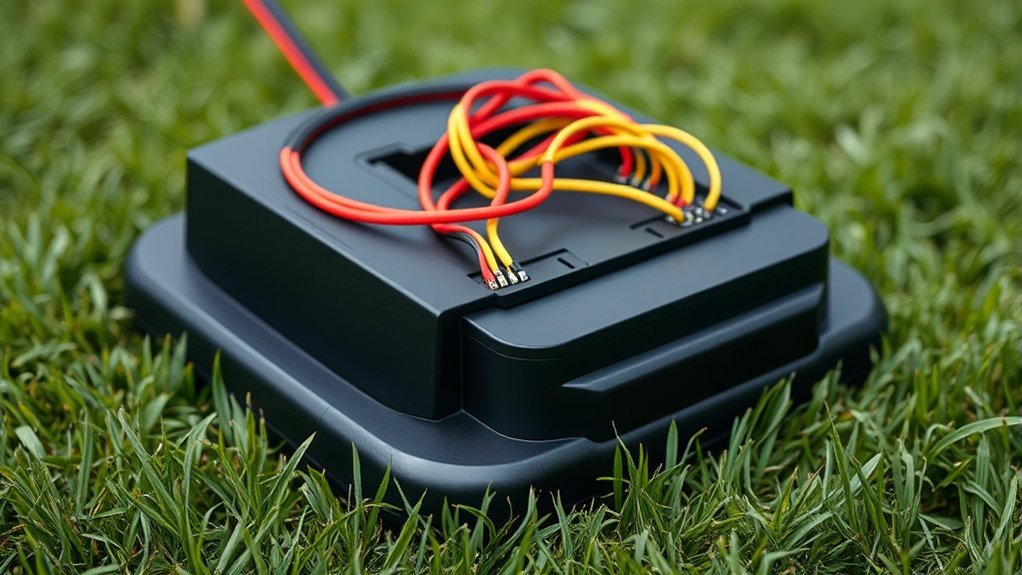
Understanding the basics of robot lawn mower base stations is essential for guaranteeing proper installation and reliable operation. These stations facilitate wireless connectivity, enabling seamless communication between the mower and the base. This connectivity is vital for transmitting commands, updates, and status reports. Additionally, effective battery management within the base station guarantees optimal charging cycles, preventing overcharge or deep discharge, which can extend battery lifespan. The station’s power supply must be stable and properly grounded to avoid communication disruptions. Proper wiring and grounding are essential for maintaining consistent wireless signals and efficient energy transfer. By grasping these core elements—wireless connectivity and battery management—we lay the foundation for a dependable, efficient mowing system that minimizes downtime and maximizes performance.
Choosing the Right Location for Your Base Station
Selecting an ideal location for your base station is crucial to guarantee reliable communication and efficient operation of your robot lawn mower. We recommend positioning it within a central area of your garden landscaping to minimize the mower’s travel distance and optimize signal strength. Avoid placing the station near metal objects, dense shrubbery, or large obstacles that could interfere with wireless connectivity. Elevating the station slightly can improve signal clarity, but make sure it remains accessible for maintenance. Proper placement directly impacts lawn care tips, as it affects mowing coverage and consistency. Consistent, well-considered positioning ensures your robot mower functions seamlessly, reducing downtime and enhancing overall lawn management. Precision in location selection is essential for maximizing the mower’s performance and longevity.
Proper Wiring Components Needed for Installation
To guarantee reliable operation, we must select the appropriate power supply that meets the base station’s voltage and current specifications. Proper wiring connection types, such as waterproof connectors and secure terminations, are essential for safety and durability. Additionally, grounding and safety components are critical to prevent electrical faults and ensure compliance with electrical standards.
Power Supply Requirements
What are the essential wiring components required to guarantee a safe and reliable connection for the robot lawn mower’s base station? Critical components include a stable power supply, proper grounding, and secure wiring for consistent operation. First, a dedicated power source with appropriate voltage and current ratings ensures reliable power delivery. Second, surge protectors are necessary to safeguard against power fluctuations. Third, wiring for wireless connectivity must be robust, minimizing interference and ensuring stable communication. Fourth, battery management components, such as charge controllers, are essential for maintaining peak battery health and preventing overcharging. Proper wiring of these elements guarantees seamless integration, reliable operation, and safety during both normal use and maintenance. This foundation supports prime functionality of the base station’s wireless connectivity and battery management systems.
Wiring Connection Types
When installing the wiring for a robot lawn mower’s base station, it’s essential to use the correct connection types to guarantee safety and reliability. Proper wiring connection types include wired connections like Ethernet or dedicated control cables, which assure stable communication with the mower. For wireless connectivity, secure Wi-Fi modules can be integrated, providing flexibility and reducing physical clutter. The choice of connection impacts not only functionality but also the aesthetic design of the installation; neat, concealed wiring maintains a clean look while minimizing exposure to damage. Using high-quality connectors and shielded cables enhances signal integrity and longevity. Ultimately, selecting the right wiring connection types ensures robust operation, seamless communication, and a visually unobtrusive setup.
Grounding and Safety
Ensuring proper grounding and safety in the wiring components is critical for the reliable operation and protection of the robot lawn mower base station. Proper grounding prevents electrical faults and enhances safety, especially where wireless connectivity is involved. To achieve this, consider these key components:
- Grounding wire: Use a dedicated copper wire connected to the station’s chassis and earth ground.
- Circuit breakers: Install appropriately rated circuit breakers to prevent overloads and short circuits.
- Insulation: Ensure all wiring has high-quality insulation to avoid accidental contact and maintain aesthetic design.
- Surge protectors: Incorporate surge protectors to safeguard against voltage spikes that could damage internal electronics or disrupt wireless connectivity.
These elements ensure safety, maintain aesthetic integrity, and support stable wireless communication.
Step-by-Step Guide to Wiring Your Base Station Safely
Before beginning the wiring process, we must guarantee all power sources are disconnected to prevent electrical hazards. First, verify that the base station’s power supply is fully isolated. Carefully follow the wiring diagram, ensuring correct polarity and secure connections. Use insulated tools to prevent accidental shorts. During installation, prioritize proper grounding to avoid electrical interference, which can affect battery maintenance and software updates. Confirm that all wiring adheres to manufacturer specifications to maintain system integrity. Once wired, double-check connections and test the power supply before powering up. Proper wiring ensures reliable communication between the base station and robot, facilitating seamless software updates and efficient battery maintenance. Always adhere to safety standards to minimize risks during setup.
Common Wiring Mistakes to Avoid During Setup
Despite careful planning, wiring errors can still occur if we’re not vigilant. Common mistakes include:
- Incorrect wiring of wireless connectivity components, which can lead to signal disruptions or loss of control. Ensuring correct terminal connections prevents communication failures.
- Overlooking proper grounding, risking interference with wireless signals and compromised system stability.
- Misconnecting battery management wiring, risking short circuits or insufficient power delivery, which impacts operation and safety.
- Using incompatible wiring gauges, causing voltage drops that impair overall performance and battery efficiency.
Attention to detail in wiring connections, verifying proper polarity, and adherence to manufacturer specifications are essential to prevent these errors, ensuring seamless wireless connectivity and reliable battery management.
Connecting Power Supply and Ensuring Proper Voltage
How do we confirm that the power supply is correctly connected and providing the appropriate voltage? First, we use a multimeter to measure voltage at the connection points, ensuring it matches the manufacturer’s specifications. For systems utilizing wireless charging, verify the alignment of the transmitter and receiver coils to prevent voltage drops. When integrating solar power, check that solar panels generate consistent voltage output under ideal sunlight, then confirm that regulators deliver stable voltage levels to the base station. Proper wiring connections must be secure and free of corrosion. Always test voltage before powering the mower. Ensuring the correct voltage prevents damage and guarantees reliable operation, whether powering via traditional AC, solar panels, or wireless charging systems.
Integrating the Base Station With Your Robot Mower
To guarantee seamless operation, we focus on proper wiring techniques that establish reliable electrical connections between the base station and the mower. Synchronizing the mower and station requires precise configuration of signals and communication protocols. Addressing these points guarantees peak functionality and minimizes potential issues during integration.
Proper Wiring Techniques
Proper wiring of the base station is essential for reliable operation and safe integration with your robot mower. Guaranteeing correct connections optimizes wireless communication and battery management. First, verify power supply connections, maintaining polarity and voltage specifications to prevent damage. Second, connect data lines securely, minimizing interference that can impair wireless communication. Third, use shielded cables where necessary to reduce electromagnetic interference affecting signals. Fourth, implement proper grounding to prevent static buildup and ensure safety. Additionally, confirm that all wiring adheres to manufacturer guidelines, avoiding loose or exposed connections. Proper wiring techniques facilitate stable communication between the base station and mower, optimize battery performance, and enhance overall system reliability. Precision in wiring ensures safety, efficiency, and longevity of your robotic lawn system.
Synchronizing Mower and Station
Have you confirmed that your robot mower and base station are correctly synchronized? Proper synchronization guarantees peak operation, conserving battery life and maintaining accurate navigation. Begin by verifying the communication protocol between the mower and station, ensuring firmware and software updates are current. Updated software enhances compatibility, reduces errors, and improves battery efficiency during charging cycles. Confirm that the mower recognizes the base station’s docking points and that the communication signals are stable. Any discrepancy can lead to misalignment, affecting mowing coverage and battery performance. Regularly check for updates to both devices, as firmware improvements may refine synchronization processes. Precise integration minimizes downtime, extends battery life, and guarantees your mower functions seamlessly within the station’s parameters.
Testing and Troubleshooting Your Wiring Setup
Before conducting any tests, make certain all power sources are disconnected to prevent electrical hazards. To verify your wiring setup, follow these steps:
- Reconnect power and confirm continuity with a multimeter, ensuring proper wiring connections.
- Test wireless communication signals between the base station and mower; weak signals may indicate faulty wiring or interference.
- Check software configuration to ensure correct input/output port settings aligning with wired connections.
- Use diagnostic tools to identify potential shorts or open circuits, verifying that the wiring matches the manufacturer’s specifications.
Accurate testing ensures reliable communication and proper operation. Troubleshoot any inconsistencies by inspecting wiring runs, connectors, and grounding. Properly functioning wiring setup is essential for seamless wireless communication and efficient software configuration.
Maintenance Tips for Long-Term Wiring Reliability
Regular maintenance of your wiring setup is vital to guarantee long-term reliability and peak performance of the robot lawn mower system. Consistently inspect connections for corrosion, looseness, or damage, making certain secure and stable electrical contacts. To preserve wireless communication integrity, verify antenna positioning and shield cables from interference sources. Regularly perform software updates to optimize system stability and enhance communication protocols, reducing the risk of signal disruptions. Keep wiring pathways clear of debris and moisture to prevent corrosion and shorts. Routine calibration of sensors and communication modules also maintains system accuracy. By adhering to these maintenance practices, you extend wiring lifespan and ensure seamless operation, minimizing downtime and safeguarding your investment in the automated lawn care system.
Frequently Asked Questions
Can I Use an Extension Cord for My Base Station Wiring?
We don’t recommend using an extension cord for your base station wiring, as it can interfere with wireless connectivity and affect battery compatibility. Proper direct wiring ensures reliable operation and maintains ideal communication between the mower and its station.
What Safety Precautions Should I Follow During Installation?
We guarantee electrical grounding and use weatherproof connectors during installation, following safety precautions meticulously. This prevents electrical hazards, water damage, and ensures reliable operation. Always verify grounding connections and secure weatherproofing before powering up the system.
How Do I Upgrade or Modify My Existing Wiring Setup?
We upgrade our wiring by inspecting for power surge protection and ensuring proper cable management, replacing outdated components, and reinforcing connections to optimize safety and performance while minimizing electrical risks in the base station setup.
Is Professional Installation Recommended for Complex Wiring?
We believe professional installation enhances wireless connectivity and battery backup reliability for complex wiring, ensuring ideal system performance. It’s a precise, technical process best handled by experts to prevent issues and guarantee seamless operation.
How Often Should I Inspect the Wiring for Wear and Damage?
We recommend inspecting the wiring every three to six months to guarantee optimal damage prevention. Regular wiring inspection helps identify wear early, minimizing risks of electrical failure and maintaining the safety and efficiency of your robot lawn mower system.
Conclusion
Mastering the wiring of your robot lawn mower base station is essential—it’s the backbone of flawless, unstoppable lawn care. When done correctly, it guarantees your mower’s performance is as reliable as the sunrise, immune to interference and breakdowns. Neglect it, and your yard could become a jungle of chaos! Follow these steps meticulously, and you’ll achieve a setup so robust, it’ll outlast generations of robotic mowing. Precision and care now mean pristine lawns forever.