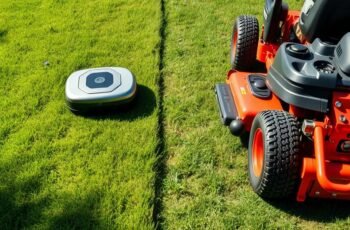
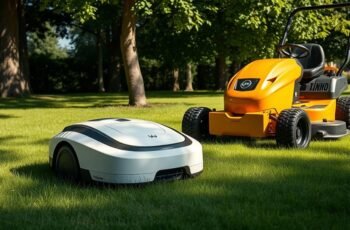
It’s no coincidence that many homeowners find themselves weighing the choice between robot mowers and cordless lawn mowers as they seek efficient yard care solutions. Both options offer distinct advantages and limitations, from automation capabilities to manual control and maintenance demands. Understanding the technical differences in performance, cost, and terrain handling can markedly impact long-term satisfaction, prompting us to analyze which model aligns best with specific yard requirements and personal preferences.
Key Takeaways
- Robot mowers are autonomous, suitable for large or irregular terrains, while cordless mowers require manual operation and are ideal for small, flat yards.
- Robot mowers offer minimal maintenance and operate quietly but have higher initial costs compared to more affordable cordless models.
- Cordless mowers deliver higher cutting power and longer battery life, making them better for dense grass and demanding conditions.
- Robot mowers handle uneven terrains and large areas efficiently with smart navigation; cordless mowers excel on flat, predictable landscapes.
- Choice depends on yard size, terrain complexity, desired automation, budget, and personal preferences for aesthetics and maintenance.
What Are the Main Differences Between Robot Mowers and Cordless Lawn Mowers?
While both robot mowers and cordless lawn mowers serve the purpose of maintaining lawns, their core differences lie in their design, operation, and level of automation. Robot mowers excel in seasonal adaptability, autonomously managing mowing schedules year-round with minimal user intervention. Their ability to operate consistently across varying weather conditions ensures a uniform, well-maintained appearance, enhancing aesthetic appeal. In contrast, cordless mowers require manual operation and are less adaptable to seasonal changes, necessitating user input for adjustments. The autonomous nature of robot mowers offers a seamless, unobtrusive mowing process that sustains visual appeal over time. Conversely, cordless mowers demand ongoing effort but provide precise control for specific tasks. These fundamental differences shape their suitability for different lawn maintenance needs and desired aesthetics.
Evaluating Performance: Cutting Power, Battery Life, and Terrain Handling
Evaluating the performance of robot mowers and cordless lawn mowers involves examining their cutting power, battery longevity, and ability to handle various terrains. Robot mowers leverage smart technology for precise, automated operation, but may struggle with uneven terrain. Cordless mowers generally provide more raw power, suitable for thick grass, with longer battery life. Noise levels are also a key factor; robot mowers tend to operate quieter, ideal for noise-sensitive environments. Terrain handling varies: robot mowers excel on flat surfaces, while cordless models can often manage steeper inclines. Here’s a comparison:
| Feature | Robot Mower | Cordless Lawn Mower |
|---|---|---|
| Cutting Power | Moderate, optimized via smart tech | Higher, suitable for dense grass |
| Battery Life | Shorter, recharge frequently | Longer, extended mowing sessions |
| Terrain Handling | Flat, predictable terrains | Steep, uneven terrains possible |
| Noise Levels | Lower noise, quieter operation | Higher noise, louder operation |
Ease of Use and Maintenance for Each Mowing Solution
We recognize that ease of use and maintenance considerably influence overall satisfaction with each mowing option. While robot mowers typically require minimal setup and routine calibration, cordless lawn mowers often demand more hands-on upkeep and troubleshooting. Analyzing these factors helps determine which solution offers the best balance of convenience and reliability.
Setup and Installation
Setting up a robot mower typically involves installing boundary wires and configuring software, which can be more complex initially but offers automation benefits once completed. The process guarantees safety features are integrated, preventing accidents, and allows precise control over mowing areas. Noise levels are generally lower compared to cordless lawn mowers, but initial setup may require technical adjustments. In contrast, cordless mowers demand minimal setup—primarily charging the battery and attaching blades—making them immediately ready to use. The table below illustrates these differences:
| Aspect | Robot Mower | Cordless Lawn Mower | Emotional Impact |
|---|---|---|---|
| Setup Complexity | Moderate; boundary wire installation | Minimal; charge and attach blades | Confidence in automation |
| Safety Features | Advanced sensors and controls | Basic safety switches | Peace of mind |
| Noise Levels | Lower, quieter operation | Higher, traditional noise | Comfort during use |
| Software Configuration | Required for ideal performance | Not applicable | Satisfaction from customization |
| Long-term Maintenance | Initial setup critical for safety | Less setup, easier to maintain | Assurance of reliability |
Routine Upkeep Needs
Routine upkeep for robotic and cordless mowers differs considerably in terms of ease of use and maintenance demands. Robotic mowers generally require minimal daily attention, with routine tasks limited to cleaning sensors, blades, and occasional software updates. Their automated operation helps maintain garden aesthetics consistently, but regular blade sharpening ensures ideal performance. Cordless mowers demand more hands-on maintenance: blade replacement, battery care, and periodic cleaning, which can be time-consuming. In terms of wildlife impact, robotic mowers promote a more natural habitat by reducing noise and disturbance, supporting local biodiversity. Conversely, cordless mowers, being more manual, may cause less disruption if used thoughtfully. Overall, robotic mowers excel in ease of upkeep, while cordless options demand more active involvement but offer more control over maintenance activities.
Troubleshooting and Repairs
Troubleshooting and repairs for robotic and cordless mowers vary considerably in complexity and accessibility. Robotic mowers rely heavily on smart technology, which can streamline diagnosis through integrated sensors and remote diagnostics but also introduces potential points of failure. Repairs may involve software updates or component replacements, often requiring specialized knowledge. Cordless lawn mowers, on the other hand, tend to have more straightforward mechanical systems but depend on battery health and motor function, which can be checked and maintained with basic tools. From an environmental impact perspective, ease of troubleshooting influences repair longevity and sustainability, with robotic models potentially producing more electronic waste if not properly serviced. Overall, robotic mowers demand more technical expertise, while cordless mowers offer simpler, more accessible repair options.
Cost Considerations: Initial Investment and Long-Term Expenses
When evaluating the cost implications of robot versus cordless mowers, we must consider upfront purchase prices, ongoing maintenance, and energy expenses. Initial investments tend to be higher for robot mowers, but long-term costs can vary based on repair frequency and power consumption. Analyzing these factors helps determine the most economical choice over the equipment’s lifespan.
Upfront Purchase Costs
The upfront purchase costs of robot mowers and cordless lawn mowers differ considerably, primarily due to their distinct technological components and manufacturing complexities. Robot mowers typically involve advanced sensors, embedded AI, and precise navigation systems, which elevate their initial price point. Conversely, cordless lawn mowers rely on simpler motor technology and battery systems, making them more affordable upfront. When considering lawn aesthetics, robot mowers often provide a more uniform cut, but their higher cost can be a barrier. Noise levels also influence expenditure; robot mowers generally operate quieter, justifying their premium, while cordless models vary depending on motor design. Ultimately, the initial investment reflects these technological differences, shaping long-term value based on aesthetic preferences and noise considerations.
Maintenance and Repairs
How do maintenance and repair costs compare between robot mowers and cordless lawn mowers over time? Robot mowers, equipped with smart technology, generally require less manual intervention, but their repair costs can be higher due to complex sensors and motors. Maintenance often involves software updates and component replacements, which can be costly but are typically infrequent. In contrast, cordless lawn mowers have simpler mechanical parts, leading to lower repair expenses, though routine maintenance like blade sharpening and battery replacement is necessary. Noise levels also influence maintenance needs; quieter robot mowers tend to have sealed components that reduce wear, potentially lowering repair frequency. Overall, robot mowers may incur higher initial repair costs, but their automated features can reduce long-term maintenance efforts, whereas cordless mowers offer straightforward repairs but require consistent upkeep.
Energy and Charging Expenses
Are energy and charging expenses a significant factor when choosing between robot mowers and cordless lawn mowers? We find that they are, especially considering long-term costs. Robot mowers typically rely on integrated batteries and can benefit from solar integration, reducing dependency on grid power and decreasing operational expenses. Cordless mowers, while requiring less initial investment, depend on rechargeable batteries that may need replacement over time, adding to long-term costs. Noise levels also impact energy use; quieter models tend to operate more efficiently and with lower energy consumption. Overall, robot mowers with solar integration present a compelling option for minimizing ongoing expenses, whereas cordless mowers may incur higher battery replacement costs, influencing the total cost of ownership over time.
Which Mower Is Better for Different Yard Sizes and Types?
Choosing the right mower depends heavily on yard size and terrain complexity, as each type offers distinct advantages tailored to specific conditions. For small, flat yards, cordless lawn mowers excel due to their maneuverability and quick charging. Conversely, robot mowers suit larger or irregular terrains, providing consistent coverage without manual effort. The terrain type influences mower selection; uneven or hilly terrain favors robot mowers with adaptive navigation, while flat, open areas are ideal for cordless models. Here’s a comparative overview:
| Yard Size / Terrain | Cordless Lawn Mower | Robot Mower |
|---|---|---|
| Small, flat yard | Ideal | Less efficient |
| Large, flat yard | Less practical | Highly efficient |
| Small, hilly yard | Challenging | Suitable |
| Large, hilly yard | Limited | Excellent |
| Irregular terrain | Limited | Adaptive navigation |
Deciding Factors: How to Choose the Right Mowing Tool for Your Lawn
Determining the ideal mowing tool for your lawn hinges on evaluating several key factors, including yard size, terrain complexity, and maintenance preferences. Beyond these, design aesthetics play a vital role, especially if visual harmony with your landscape matters. A sleek, modern robot mower may enhance your yard’s aesthetic, while traditional cordless mowers often emphasize durability and practicality. Brand reputation also influences decision-making; reputable brands typically offer reliable performance, advanced features, and better support. When selecting, consider how each mower aligns with your aesthetic expectations and the manufacturer’s track record for quality and innovation. Ultimately, the right choice balances functional requirements with design preferences, ensuring you select a tool that integrates seamlessly into your outdoor environment while delivering maximum performance.
Frequently Asked Questions
Can Robot Mowers Handle Complex Landscape Features?
Robot mowers handle complex landscapes through advanced terrain adaptability and precise sensors, allowing for landscape customization. They navigate varied terrain efficiently, but may struggle with highly intricate features requiring manual intervention or specialized equipment.
Are Cordless Mowers Suitable for Wet Grass Conditions?
Cordless mowers struggle with wet grass, especially thick or dense, as moisture hampers cutting efficiency and battery longevity declines. We recommend avoiding mowing in wet conditions to prevent damage and guarantee ideal performance.
How Do Maintenance Requirements Differ Over Time?
Maintenance is like tending a garden—battery longevity declines gradually, requiring replacement, while blade maintenance involves regular sharpening and cleaning. Over time, cordless mowers demand more attentive upkeep than robot mowers, which are more automated and self-sufficient.
What Safety Features Do Each Mower Type Include?
Both mower types prioritize safety, featuring emergency stop buttons, obstacle sensors, and user controls; robot mowers often include battery life indicators for remote monitoring, while cordless models emphasize secure blade guards and automatic shut-offs for enhanced safety.
Can These Mowers Be Integrated With Smart Home Systems?
By the way, these mowers can indeed be integrated with smart home systems, offering app control for seamless scheduling and operation. We analyze their compatibility, ensuring we choose models supporting smart home integration for modern convenience.
Conclusion
Ultimately, choosing between a robot mower and a cordless lawn mower depends on your yard’s unique needs. Think of the decision as selecting the right tool for your landscape’s symphony—each has its tempo and tone. By weighing performance, cost, and maintenance, you can align your choice with your lawn’s demands. Our analysis aims to illuminate the path, ensuring your yard remains a well-orchestrated masterpiece with minimal effort.