As we explore the options for selecting the ideal robot lawn mower, it’s clear that understanding key features and how they align with your specific yard is essential. From lawn size to terrain complexity, each factor influences the right model choice. We’ll examine practical considerations like battery life, navigation systems, and safety features, helping you make an informed decision. By considering these details carefully, you’ll be better equipped to choose a mower that delivers consistent, efficient results—if you’re willing to get into the specifics.
Key Takeaways
- Assess lawn size, shape, and terrain to choose the appropriate mower features and navigation capabilities.
- Consider battery life, cutting width, and height adjustments for optimal lawn coverage and efficiency.
- Prioritize safety features like obstacle detection and perimeter sensors to ensure reliable operation.
- Evaluate smart integration options such as app control, irrigation, and lighting for enhanced convenience.
- Match your budget with model durability, advanced features, and brand reputation for long-term satisfaction.
What Are Robot Lawn Mowers and How Do They Work?
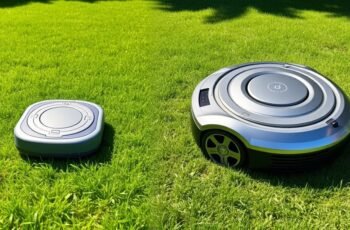
Robot lawn mowers are autonomous devices designed to maintain grass health and appearance without human intervention. Their operation relies on advanced robot lawn mower technology, which integrates sensors, boundary wires, and navigational algorithms to map and efficiently cover the lawn. These devices cut grass in a methodical pattern, often using multiple blades that rotate at high speeds for a clean cut. Safety features play a vital role, including obstacle detection, automatic shutoff when lifted, and perimeter sensors that prevent the mower from leaving designated areas. These lawn mower safety features guarantee user protection and prevent damage to property. Overall, the combination of sophisticated technology and safety mechanisms allows robot lawn mowers to perform reliable, consistent maintenance while minimizing risks.
Key Features to Consider When Choosing a Robot Lawn Mower
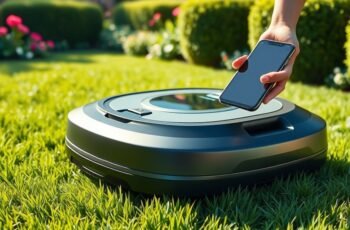
When selecting a robot lawn mower, understanding the key features that influence performance and usability is crucial to making an informed decision. Critical factors include cutting width and height adjustments, battery life, and navigation systems, as these directly impact lawn care automation efficiency. A mower with advanced sensors and boundary detection guarantees thorough coverage and minimizes obstacles, maximizing robot mower advantages. Additionally, considering user-friendly controls and app integration enhances overall convenience. Durability and weather resistance are essential for consistent operation, especially in varied climates. By evaluating these features, we can identify models that deliver reliable, efficient lawn care automation. This focused approach helps ensure the mower’s capabilities align with specific yard requirements, optimizing performance and long-term satisfaction.
How to Determine the Right Size and Power for Your Lawn
To choose the suitable size and power, we start by analyzing your lawn’s dimensions and shape, which directly influence the mower’s cutting area and maneuverability. Next, we consider the mower’s power requirements to handle grass density and terrain complexity efficiently. By systematically evaluating these factors, we guarantee ideal performance and coverage for your specific lawn.
Lawn Size and Shape
Determining the appropriate size and power of a robot lawn mower begins with accurately evaluating your lawn’s dimensions and shape. Analyzing your garden layout helps identify areas requiring coverage, whether open fields or irregular boundaries. For large or complex lawns, select a mower with sufficient cutting width and battery capacity to reduce mowing time and guarantee efficient coverage. Weather considerations also influence your choice; regions with frequent rain or high humidity may require a mower with better traction and rust-resistant components. Additionally, irregularly shaped lawns with numerous obstacles demand a model with advanced navigation features. By carefully assessing these factors, you can ensure your mower’s size and power align with your lawn’s specific requirements, promoting consistent, effective mowing regardless of garden layout or weather conditions.
Mower Power Requirements
Evaluating the appropriate power level for your robot lawn mower involves a careful analysis of your lawn’s size, terrain, and grass density. Larger, uneven terrains or dense grass require more powerful motors, often linked to the robot blade design. For example, a mower with a robust blade design can handle thicker grass efficiently without strain. Additionally, mower noise levels tend to increase with power, so consider quieter options if noise is a concern in your neighborhood.
| Lawn Size | Terrain Complexity | Grass Density |
|---|---|---|
| Small | Flat | Light |
| Medium | Slightly uneven | Moderate |
| Large | Hilly or rugged | Dense |
| Very Large | Complex landscape | Very dense |
Comparing Top Brands and Models: Pros and Cons
When comparing top brands and models of robot lawn mowers, it becomes clear that each offers distinct advantages and potential drawbacks that can substantially influence your purchasing decision. For instance, some brands excel in robot mower safety features, integrating advanced sensors and obstacle detection to prevent accidents, while others prioritize battery life, offering longer run times for larger lawns. Certain models have robust safety measures but may compromise on battery longevity, requiring more frequent recharging. Conversely, models with extended battery life might lack the same level of safety features. Evaluating these aspects carefully helps identify which mower best suits your yard’s size and safety requirements, ensuring you select a reliable, efficient model that balances safety with operational endurance.
Setting a Budget: How Much Should You Expect to Spend?
When setting a budget for a robot lawn mower, it’s important to take into account the range of options available and their associated costs. We find that models with advanced features tend to fall into higher price brackets, but cost-effective options can still deliver reliable performance. Analyzing these factors helps us determine the most practical investment based on your lawn size and desired functionalities.
Budget Range Options
Setting a realistic budget for a robot lawn mower depends largely on the size of your yard, desired features, and long-term maintenance costs. Entry-level models typically range from $300 to $600, offering basic robot mower technology suitable for small to medium lawns. Mid-range options, priced between $600 and $1,200, often include advanced navigation systems, customizable lawn mowing schedules, and better durability. High-end models exceeding $1,200 feature sophisticated sensors, multi-zone mowing, and integration with smart home systems. Understanding these budget ranges helps you align your expectations with your yard’s demands and the complexity of lawn mowing schedules. While lower-priced models may suffice for simple tasks, investing in higher-tier options guarantees efficiency, reliability, and longevity for larger or more intricate lawns.
Cost-Effective Features
Understanding which features deliver the best value is key to making an informed investment in a robot lawn mower. Cost-effective features often balance advanced functionality with affordability, ensuring safe and efficient operation. Prioritizing robot mower safety is essential; look for models with obstacle detection, secure wiring, and safety cut-off systems. Features like adaptive lawn mowing patterns can improve coverage and reduce mowing time, maximizing your investment. While higher-end models may include GPS navigation or app control, these can often be found in mid-range options without considerably raising costs. By focusing on essential safety features and efficient mowing capabilities, we can select a mower that offers reliable performance within a reasonable budget, avoiding unnecessary expenses while maintaining effective lawn care.
Installation Tips and Maintenance for Your Robot Mower
Proper installation and ongoing maintenance are critical to guaranteeing your robot mower operates efficiently and reliably over time. When setting up, carefully plan your garden landscaping to create clear boundaries and obstacle zones, preventing turf damage. Properly calibrate the boundary wire to ensure accurate navigation, especially in areas requiring lawn aeration or detailed lawn care. Regularly inspect and clean the mower’s blades and sensors to maintain cutting precision and avoid buildup that hampers performance. Keep the charging station in a sheltered, stable location to prevent weather-related issues. Conduct periodic checks on the boundary wire and control software to ensure consistent operation. Thoughtful installation paired with diligent maintenance maximizes the mower’s lifespan and preserves the health of your lawn.
Troubleshooting Common Issues and When to Call an Expert
Even with careful installation and consistent maintenance, robot mowers can encounter issues that disrupt their performance or lifespan. Common problems include connectivity errors, uneven cutting, or motor malfunctions. Recognizing these signs is essential for effective troubleshooting, especially for robot mower safety and battery replacement. If the mower repeatedly stalls, shows error codes, or the battery no longer holds charge, professional intervention is necessary.
| Issue | Recommended Action |
|---|---|
| Connectivity or navigation | Reset the system, check boundary wires |
| Uneven cutting | Inspect blades, calibrate sensors |
| Battery failure | Seek expert diagnosis for battery replacement |
When in doubt, consulting a professional guarantees safety and peak operation.
Enhancing Your Lawn Care With Additional Smart Garden Devices
Integrating additional smart garden devices can substantially optimize and streamline your lawn care routine by providing real-time data, remote control capabilities, and automation features. Smart irrigation systems adjust watering schedules based on weather forecasts and soil moisture levels, conserving water and promoting healthier grass. Garden lighting enhances both aesthetics and security, customizable via apps to create ambiance or illuminate pathways automatically at dusk. These devices work together, offering precise control and reducing manual effort. By syncing smart irrigation with weather patterns, you prevent overwatering, while smart lighting adds safety and visual appeal without increasing energy consumption. Overall, these tools help maintain a lush, well-lit lawn efficiently, making your outdoor space both smarter and more enjoyable.
Making the Final Decision: Tips for Choosing the Best Robot Lawn Mower
Choosing the right robot lawn mower requires careful consideration of several key factors to guarantee it meets your specific lawn care needs. Beyond cutting efficiency, focus on features like integration with garden fertilization systems or pest control options, which can enhance overall lawn health. Think about mower size and battery life to assure consistent performance across your property. Assess the terrain—slopes or uneven patches might require specialized models. Connectivity features, like app control, provide convenience and precision.
- Is the mower compatible with your existing garden fertilization setup?
- Does it include pest control functionalities for a healthier lawn?
- Can it handle the size and terrain of your yard?
- Will it integrate smoothly with other smart garden devices?
Making these thoughtful considerations guarantees your investment delivers lush, pest-free, and well-fed grass.
Frequently Asked Questions
How Long Does a Typical Robot Lawn Mower Battery Last per Charge?
A typical robot lawn mower’s battery lasts about 60 to 90 minutes per charge, depending on battery lifespan and grass density. Charging time varies from 60 to 120 minutes, influencing overall efficiency and mowing schedules.
Are Robot Lawn Mowers Suitable for Uneven or Hilly Terrains?
Think of robot lawn mowers as skilled mountain climbers—some excel at terrain adaptability and incline handling. They generally manage uneven, hilly terrains well, but checking each model’s specifications guarantees ideal performance on your specific landscape.
Can Robot Lawn Mowers Operate in Rainy or Wet Conditions?
We find that robot lawn mowers with rain sensor technology and waterproof design can operate in wet conditions, but it’s best to avoid prolonged exposure, as excessive moisture may impact their performance and longevity despite these features.
What Safety Features Are Included to Prevent Accidents With Pets or Children?
Research shows 85% of robot mowers feature child safety sensors and pet protection systems, actively stopping blades when detecting movement. These safety features are vital for preventing accidents, ensuring secure operation around children and pets.
How Often Should I Replace Blades or Perform Maintenance on My Mower?
We recommend following a regular maintenance schedule, sharpening blades every 4-6 weeks, and replacing them when dull or damaged. Consistent maintenance guarantees peak performance, prolongs mower lifespan, and maintains a clean cut for your lawn.
Conclusion
As we navigate the landscape of robot lawn mowers, we find ourselves crafting a symphony of technology and nature. By analyzing lawn size, terrain, and features, we discover the perfect harmony for effortless maintenance. Selecting the right model isn’t just about cutting grass; it’s about cultivating a seamless, smart garden ecosystem. With careful planning and attentive upkeep, we transform our yards into lush, vibrant retreats—an artful blend of innovation and greenery, flourishing with minimal effort.