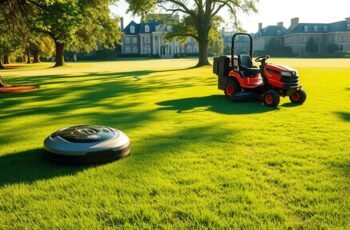
Many people are unaware that modern robot mowers utilize advanced sensors, boundary wires, and GPS technology to navigate complex terrains with minimal human input. Unlike traditional ride-on mowers, these devices offer precise, autonomous operation that can adapt to changing lawn conditions. Understanding how they work and their potential advantages could notably impact your approach to lawn maintenance, prompting questions about whether they might be a more efficient, cost-effective alternative for your yard.
Key Takeaways
- Robot mowers provide automated, consistent lawn care with minimal human intervention, serving as an efficient alternative to ride-on mowers.
- They require less space and maintenance, making them suitable for smaller or irregularly shaped yards.
- Advanced models use GPS and sensor technology for precise navigation and obstacle avoidance.
- Typically more affordable over time due to lower operational and maintenance costs.
- They promote healthier lawns through frequent, even mowing and natural grass mulching.
What Are Robot Mowers and How Do They Work?
Although robot mowers are increasingly popular, understanding their core functionality is essential to evaluating their effectiveness as lawn maintenance tools. Many robot mower myths circulate, often overstating capabilities or underestimating limitations. These devices operate through a combination of embedded sensors, boundary wires, and programmed algorithms. They navigate the lawn by detecting obstacles and boundary markers, ensuring even coverage. The cutting system uses rotating blades that trim grass to a consistent height, promoting uniform lawn aesthetics. Advanced models feature GPS mapping, allowing for precise area coverage and efficient mowing patterns. Despite misconceptions, robot mowers are designed for regular, maintenance-level use rather than heavy-duty cutting. Their automation supports a consistently manicured appearance, but understanding their technical operations is key to evaluating whether they meet specific lawn care needs.
Benefits of Using a Robot Mower Instead of a Ride-On
Using a robot mower instead of a ride-on offers several tangible benefits, primarily related to efficiency, cost, and maintenance. Robot mowers enable consistent, precise cutting patterns that enhance garden landscaping by maintaining an even, healthy lawn without manual effort. Their autonomous operation supports more frequent mowing, reducing strain on grass and promoting better lawn health. Additionally, many models incorporate smart navigation, optimizing coverage and minimizing energy consumption. When it comes to lawn fertilization, regular mowing by a robot mower ensures clippings are evenly distributed, acting as natural mulch that improves soil quality. Over time, this reduces the need for additional fertilization and chemical treatments. Cost-wise, robot mowers have lower operational expenses, fewer moving parts, and less downtime, making them a sustainable, long-term alternative to ride-on equipment.
Key Features to Consider When Choosing a Robot Mower
When selecting a robot mower, we prioritize cutting width and height to guarantee efficient coverage and precise grass height control. Battery life and runtime are critical for maintaining consistent operation, especially on larger or complex terrains. Understanding these technical specifications helps us match the mower’s capabilities to specific yard requirements.
Cutting Width and Height
A key consideration when selecting a robot mower is its cutting width and height, as these directly impact mowing efficiency and the quality of the finished lawn. Cutting width determines how much area the mower covers per pass, affecting overall mowing time and suitability for different lawn sizes. Larger cutting widths reduce the number of passes needed, but may limit maneuverability in tight spaces. Cutting height is adjustable, allowing for precise control over grass length; it’s vital to match the mower’s height range to your preferred lawn height for peak health. Accurate adjustment of cutting height ensures an even cut and prevents scalping. Both features are fundamental for achieving a well-maintained, aesthetically pleasing lawn while maximizing mowing performance and reducing operational time.
Battery Life and Runtime
Ever wondered how long a robot mower can operate before needing a recharge? Battery longevity directly influences overall runtime, impacting efficiency and mowing schedules. Modern robot mowers employ lithium-ion batteries, which provide high energy density and fast recharge cycles. Runtime optimization depends on battery capacity, measured in ampere-hours (Ah) or watt-hours (Wh), and the mower’s power consumption. To maximize operational time, select models with larger batteries and energy-efficient motors. Some advanced units feature intelligent power management systems that dynamically adjust mowing activity to conserve battery life. Additionally, many mowers return automatically to their charging stations when batteries are low, minimizing downtime. When choosing a robot mower, consider not just initial battery capacity but also the potential for battery longevity and sustained runtime over repeated charge cycles for consistent performance.
How to Prepare Your Yard for a Robot Mower
To optimize your yard for a robot mower, we emphasize the removal of clutter and obstacles to prevent entanglement or damage. Clearly marking boundary lines guarantees the mower stays within designated areas and avoids unintended terrain. Additionally, adjusting the cutting height to match your grass type promotes even trimming and maintains lawn health.
Clear Clutter and Obstacles
Before deploying a robot mower, it’s crucial to thoroughly clear your yard of clutter and obstacles to guarantee safe and efficient operation. Remove all objects such as garden tools, toys, and debris that could impede the mower’s navigation. Inspect the terrain for rocks, sticks, or uneven patches that may cause jams or damage, especially around flower beds or garden aesthetics. Trim overgrown shrubs and low-hanging branches to prevent obstruction. Clear pathways for lawn fertilization and aeration to ensure unobstructed access. Maintain a clean, obstacle-free zone to reduce the risk of damage to the mower’s blades or sensors. Properly prepared terrain not only enhances safety but also guarantees a consistent, uniform cut, promoting healthy grass growth and a well-maintained appearance.
Mark Boundaries Clearly
Marking boundaries clearly is essential to guarantee your robot mower operates within designated areas and avoids unintended zones. Proper fence installation creates a physical barrier that prevents the mower from crossing into restricted zones. For best results, use durable fencing materials compatible with your yard’s layout and terrain. Additionally, understanding grass types helps determine suitable boundary markers; some grass varieties, like Bermuda or Kentucky bluegrass, can grow through or around fencing if not properly contained. Precise boundary marking also involves using visual cues such as boundary wires or boundary flags that are detected by the mower’s sensors. Ensuring these markers are correctly installed and maintained guarantees the mower’s efficient and safe operation, reducing the risk of damage and ensuring complete coverage of your lawn.
Adjust Cutting Height
Adjusting the cutting height is a critical step in preparing your yard for a robot mower, as it directly influences mowing efficiency, grass health, and overall lawn appearance. For ideal results, we recommend setting the cutting height to a level that accommodates your grass thickness—generally around 2.5 to 3 inches for most turf types. Thicker grass benefits from slightly higher cuts to prevent stress and promote root development. Adjusting the height appropriately also aligns with mowing frequency; more frequent mowing allows for lower cuts, which keeps the lawn tidy and healthy. Confirm your mower’s cutting height is consistent across all zones, and avoid setting it too low, as this can lead to scalping and damage. Proper height adjustment enhances mower performance and sustains a lush, vibrant lawn.
Setting Up and Programming Your Autonomous Lawn Mower
How do we guarantee our autonomous lawn mower operates efficiently and safely from the outset? Proper setup and programming are essential, especially to maximize garden design and lawn aesthetics. Begin by configuring boundary wires or virtual fences to define mowing zones precisely, preventing overlap or missed spots. Use the mower’s app or control panel to input specific parameters like mowing schedule, height, and zone priorities. For peak performance, calibrate sensors for obstacle detection and adjust cutting patterns to match your terrain. Here’s a quick reference:
| Step | Action | Result |
|---|---|---|
| Boundary Setup | Install boundary wires or virtual fences | Defines mowing area accurately |
| Elevation Calibration | Adjust sensors for terrain variations | Ensures safe operation on slopes |
| Scheduling | Set mowing times and zones | Maintains lawn aesthetics consistently |
| Cutting Height | Program ideal height for grass | Promotes healthy growth |
| Obstacle Detection | Fine-tune obstacle sensors | Prevents accidents and damage |
Comparing Popular Robot Mower Models and Brands
When selecting a robot mower, understanding the differences among popular models and brands is essential for making an informed investment. High-quality brands like Husqvarna, Worx, and Gardena offer varied features such as distinct cutting algorithms, sensor systems, and terrain adaptability. These models differ in robot mower maintenance requirements; some have easily accessible components, simplifying tasks like battery replacement, which is vital for longevity. Battery life varies considerably—some models boast extended runtime, reducing charging frequency, while others may require more frequent recharges. Cost, build quality, and software updates also influence brand choice. Comparing these factors helps determine which model aligns with your lawn size and terrain complexity. Ultimately, understanding each brand’s strengths enables peak performance and minimizes unforeseen maintenance issues.
Common Challenges and Troubleshooting Tips for Robot Mowers
While comparing popular robot mower models helps identify suitable options, understanding common challenges users face can prevent frustration and downtime. Common troubleshooting involves diagnosing issues like connectivity failures, blade jams, or navigation errors. Regular maintenance tips are essential to guarantee peak performance:
Understanding common robot mower challenges helps prevent downtime and ensures optimal performance.
- Inspect and clean blades and wheels frequently to prevent clogging and uneven cutting.
- Update firmware regularly to resolve software glitches and improve navigation.
- Check boundary wires for damage or misalignment to avoid navigation errors.
- Clear debris and obstacles from the mowing area to prevent jams and maintain smooth operation.
Being proactive with these maintenance tips and troubleshooting methods minimizes malfunction risks and prolongs the mower’s lifespan. Understanding these challenges helps maintain efficiency and reduces unexpected breakdowns.
Cost Analysis: Is a Robot Mower More Affordable Than a Ride-On?
Evaluating the cost-effectiveness of robot mowers compared to traditional ride-on lawnmowers requires a thorough analysis of initial investments, ongoing maintenance, and operational expenses. Robot mowers typically have a higher upfront cost, often ranging from $1,000 to $3,000, whereas ride-on mowers can be markedly more expensive initially—up to $4,000 or more. However, robot mowers excel in maintaining consistent lawn aesthetics through precise, scheduled mowing, reducing the need for manual intervention. Additionally, their quieter operation results in lower noise levels, making them suitable for noise-sensitive environments. Maintenance costs for robot mowers tend to be lower over time due to fewer moving parts and simpler mechanisms. Overall, while the initial investment is substantial, the long-term savings and consistent lawn quality can make robot mowers a more affordable option over their lifespan.
Tips to Maximize Efficiency and Maintain Your Robot Mower
To maximize the efficiency and lifespan of your robot mower, it’s essential to implement a regular maintenance routine and optimize its operational settings. Proper calibration guarantees accurate navigation through your garden landscaping, reducing missed patches and overgrown areas. Regularly inspect and clean the blades to maintain sharpness, which improves cut quality and reduces energy consumption. Adjust mowing schedules based on lawn growth and seasonality, aligning with lawn fertilization schedules to promote healthy grass. Additionally, update software firmware to benefit from performance enhancements.
Key tips include:
- Schedule weekly blade checks and sharpening to ensure clean cuts and prevent grass damage.
- Set mowing patterns that adapt to your garden landscaping, avoiding obstacles and optimizing coverage.
- Implement seasonal lawn fertilization routines to encourage strong, resilient grass growth.
- Regularly review and update operational settings for efficiency and coverage accuracy.
Frequently Asked Questions
How Long Does a Robot Mower Typically Run on a Single Charge?
A robot mower typically runs 60 to 90 minutes on a single charge, depending on battery life and terrain. Charging time varies from 1 to 3 hours, ensuring efficient operation and minimal downtime during mowing cycles.
Can Robot Mowers Handle Steep or Uneven Terrain Effectively?
Think of a robot mower as a skilled mountain climber—slope navigation and terrain adaptability are impressive, but steep or uneven terrain can challenge its capabilities. Modern models handle moderate inclines effectively, yet extreme slopes need specialized equipment.
Are Robot Mowers Suitable for Large Lawns Over an Acre?
We believe robot mowers can handle large lawns over an acre if they have sufficient battery capacity and optimized mowing patterns. Properly programmed, they efficiently manage extensive areas, maintaining consistent cutting without needing manual intervention.
What Safety Features Are Included in Modern Robot Mowers?
Modern robot mowers include safety sensors that detect obstacles and humans, preventing accidents, while extended battery life guarantees efficient operation; these features collectively enhance safety and reliability for users operating on large or complex lawns.
How Often Do Robot Mowers Require Blade Replacement or Maintenance?
Coincidentally, our robot mowers’ blade durability varies with grass type, but generally, we follow a maintenance schedule of every 2-4 weeks, inspecting blades for wear and replacing them as needed to guarantee peak performance.
Conclusion
Embracing a robot mower is like planting a seed of innovation in your yard—once it takes root, it transforms your lawn care routine into a symphony of precision and efficiency. Just as a well-tuned machine relies on harmony between components, your mower’s performance depends on careful setup and maintenance. By choosing the right model and understanding its intricacies, we guarantee our yard’s future is a meticulously cultivated landscape—an enduring proof to technological harmony.