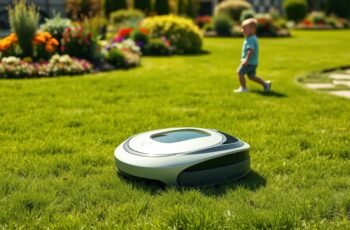
It’s a coincidence that many people assume robot mowers are inherently safe, yet safety features vary widely among models. We need to take into account how boundary detection, obstacle sensors, and certification standards influence overall security during operation. Understanding these differences is vital for protecting children, pets, and property. As we explore the specific technologies and vulnerabilities, you’ll see why selecting a model with thorough safety measures is essential. Let’s examine what makes some robot mowers safer than others.
Key Takeaways
- Compare safety features like obstacle detection, boundary sensors, and automatic shutoff systems across different robot mower models.
- Assess the effectiveness of pet and child safety technologies, such as motion detection and restricted zones.
- Evaluate compliance with industry standards and safety certifications like UL, CE, or ISO standards.
- Consider vulnerabilities like remote control interference or battery safety issues in safety performance.
- Review user manuals and safety protocols to understand operational safety measures and potential weak points.
How Do Robotic Lawn Mowers Ensure Safety During Operation?
Robotic lawn mowers incorporate a range of safety features designed to prevent accidents during operation. They utilize advanced sensors and boundary detection systems to identify obstacles, ensuring the mower stops or redirects to avoid collisions. Battery longevity is optimized through energy-efficient components, allowing sustained operation without frequent interruptions, which reduces the risk of malfunction-related accidents. Noise reduction technology minimizes operational sound levels, decreasing disturbance and alerting users to ongoing activity, thereby enhancing safety awareness. These mowers also include automatic shutoff functions triggered by lift or tilt sensors, preventing unintended movement if the mower is lifted or tipped. Together, these safety mechanisms create a secure environment, minimizing risks for users, pets, and bystanders during mowing tasks.
Comparing Safety Features of Popular Robot Mower Models
While safety features vary among popular robot mower models, each incorporates core mechanisms to prevent accidents and guarantee secure operation. Key safety-related specifications include battery life and cutting height adjustments, which influence operational safety. Longer battery life allows for extended, reliable mowing sessions, reducing the need for manual intervention that could pose safety risks. Cutting height controls are designed with precision, preventing the mower from operating at unsafe heights that could lead to blade exposure or debris ejection. These models often include automatic shutoff systems triggered by abnormal behaviors, such as obstacles or tilt detection. Collectively, these features enhance safety by ensuring consistent, controlled operation and minimizing hazards associated with mechanical failures or improper use.
What Sensors and Technology Keep Pets and Children Safe?
To guarantee the safety of pets and children during robot mower operation, manufacturers incorporate advanced sensors and technology that detect and respond to nearby living beings. Pet friendly sensors utilize infrared, ultrasonic, or boundary detection systems to identify motion or presence of animals, prompting the mower to pause or reroute. Child safety zones are pre-programmed areas that restrict mower access, activated via GPS or virtual boundary setups. These systems work in tandem to prevent accidental contact, ensuring the mower halts when sensors detect movement within these zones. The integration of these sensors and safety zones enhances operational safety, minimizing risks associated with pets or children entering the mowing area. Such technology exemplifies a proactive approach to safeguarding household members during automated lawn maintenance.
Are There Any Common Weak Points in Robot Mower Safety?
Despite the advanced safety features integrated into robot mowers, several common weak points can still compromise overall safety. One notable issue is the reliance on remote control systems, which may be vulnerable to interference or hacking, potentially allowing unauthorized operation or accidental activation. Additionally, battery safety remains a concern; lithium-ion batteries used in many models pose risks of overheating, short-circuiting, or fire if damaged or improperly handled. These vulnerabilities can lead to safety hazards despite built-in sensors and obstacle detection. While technological safeguards have improved, these weak points highlight the importance of secure remote operation protocols and robust battery management systems. Addressing these issues is essential to enhance the overall safety profile of robotic mower systems.
How Can You Maximize Safety When Using a Robotic Lawn Mower?
To maximize safety with a robotic lawn mower, maintaining a clear workspace is essential to prevent obstructions that could interfere with its operation. Properly activating and utilizing safety features, such as obstacle sensors and automatic shutoff, guarantees the mower responds appropriately to potential hazards. Consistent adherence to these practices minimizes risk and enhances overall operational safety.
Keep the Workspace Clear
Ensuring the workspace remains clear is essential for safe robotic mower operation, as obstacles or debris can interfere with its sensors or cause mechanical damage. Effective workspace organization minimizes hazards by removing or securing objects that could obstruct the mower’s path. Regular hazard identification involves inspecting the lawn for debris, sticks, and other potential impediments before starting the mower. Maintaining a clear, well-organized area ensures the sensors operate optimally, reducing the risk of collisions or damage. Clear boundaries, such as physical barriers or boundary wires, further delineate the mowing area, preventing the mower from entering unsafe zones. Prioritizing workspace organization and hazard identification enhances overall safety, minimizes operational disruptions, and prolongs the lifespan of the mower.
Use Safety Features Properly
Maximizing safety when using a robotic lawn mower requires a thorough understanding and proper utilization of its built-in safety features. These include emergency shutoff mechanisms and adherence to the user manual instructions. Properly engaging the emergency shutoff allows immediate power cut in hazardous situations, minimizing injury risk. Regularly reviewing the user manual ensures familiarity with safety protocols and device-specific features.
| Safety Feature | Purpose |
|---|---|
| Emergency shutoff | Instantly halts mower operation during emergencies |
| User manual | Guides correct setup and safety procedures |
| Safety sensors | Detect obstacles and prevent collisions |
Consistent use of these features guarantees maximum safety during operation.
Which Safety Standards and Certifications Should You Look For?
When evaluating robot mowers, it’s crucial to take into account international safety certifications that verify compliance with global standards. UL certification, in particular, indicates rigorous testing for electrical safety and reliability. Ensuring the mower meets relevant industry standards confirms it adheres to established safety requirements, reducing potential risks during operation.
International Safety Certifications
International safety certifications serve as essential indicators of a robot mower’s adherence to rigorous safety standards, guaranteeing reliable protection for users and bystanders alike. These certifications verify that the mower complies with international benchmarks for automated navigation, reducing the risk of collision or unintended operation. They also emphasize battery safety, confirming that energy storage and power management meet strict safety protocols to prevent overheating, leaks, or fires. Certifications such as IEC or ISO standards ensure the device has undergone thorough testing for electrical safety, mechanical robustness, and operational reliability. By prioritizing models with recognized international safety certifications, consumers can trust that the mower maintains consistent safety performance across different environments and usage scenarios, ultimately providing peace of mind during operation.
UL Certification Importance
UL certification plays a critical role in guaranteeing robot mower safety by verifying compliance with specific safety standards recognized in North America. This certification confirms that the product has undergone rigorous testing for electrical safety, fire resistance, and mechanical integrity. When evaluating robot mowers, look for UL certification to ensure adherence to established safety standards such as UL 2740, which addresses outdoor power equipment safety. UL’s independent testing process helps identify potential hazards, reducing risks associated with electrical faults, mechanical failures, or unsafe components. Manufacturers with UL certification demonstrate a commitment to safety, providing consumers with confidence in product reliability. Ultimately, choosing a robot mower with UL certification ensures compliance with high safety standards, minimizing hazards and promoting safe operation in residential environments.
Compliance With Industry Standards
To guarantee a robot mower meets essential safety criteria, it’s crucial to verify that it complies with recognized industry standards and certifications. Regulatory compliance ensures the mower adheres to safety protocols, reducing operational risks. Key standards include:
- ISO 13482 – Specifies safety requirements for personal care robots, including lawn mowers.
- EN 60335-2-106 – Covers safety for battery-powered garden equipment.
- UL 2019 – Ensures electrical safety in outdoor power tools.
- CE Marking – Demonstrates conformity with European safety and environmental standards.
Compliance with these standards often involves safety training for users and proper certification processes. These measures help manufacturers ensure their products meet rigorous safety and regulatory benchmarks, safeguarding users and promoting regulatory compliance.
Frequently Asked Questions
How Often Should Robot Mowers Be Inspected for Safety Issues?
We inspect robot mowers weekly, focusing on sensor calibration and blade sharpness, to guarantee safety issues are promptly addressed. Regular checks help maintain peak performance and prevent accidents caused by faulty sensors or dull blades.
Are There Specific Weather Conditions That Compromise Robot Mower Safety?
Weather hazards like rain, snow, or high winds can compromise robot mower safety, so we follow strict safety protocols, including halting operation during adverse conditions, to prevent accidents and guarantee ideal functioning under specific weather circumstances.
Can Robot Mowers Accidentally Damage Delicate Garden Plants?
Like a cautious guardian, we find robot mowers generally protect plants, but accidental garden damage can occur if delicate plants aren’t clearly marked or if mower sensors fail, making plant protection a key safety focus.
What Maintenance Is Required to Keep Safety Features Functioning Properly?
We regularly calibrate sensors and monitor battery health to guarantee safety features work effectively. Proper maintenance involves cleaning sensors, updating firmware, and replacing batteries when needed, which keeps the robot mower operating safely and reliably.
How Do User Errors Impact the Safety of Robotic Lawn Mowers?
User errors, like distraction, can impair robotic mower safety, reducing alertness to obstacles or hazards. This increases risks, but emergency shutdown features activate automatically, mitigating potential accidents caused by user distraction or improper operation.
Conclusion
In conclusion, selecting a robot mower with advanced sensors, robust safety features, and proper certifications is like choosing a dependable vehicle—it guarantees safety and efficiency. While no system is infallible, understanding vulnerabilities helps us make informed decisions. By prioritizing models with all-encompassing safety tech, we can navigate potential risks confidently. Ultimately, a well-chosen mower acts as a vigilant guardian, protecting loved ones and property just as a sturdy shield safeguards its bearer.