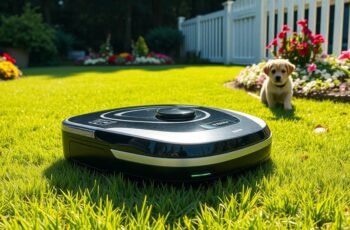
Much like the steady hum of a well-tuned engine, the safety of robot lawn mowers hinges on a complex interplay of technology and user practices. While these devices incorporate advanced sensors and safety features, questions persist about their reliability—especially around children and pets. To truly understand whether they are safe, we need to analyze their design, performance, and potential risks. The key details could influence how we view their place in modern lawn care.
Key Takeaways
- Robot lawn mowers feature obstacle detection and emergency shutoff systems to prevent collisions and injuries.
- Proper boundary settings and user training help minimize risks to children and pets during operation.
- Regular maintenance and software updates enhance safety features and address potential vulnerabilities.
- Security measures like locking mechanisms and GPS tracking protect against theft and unauthorized access.
- Following safety guidelines, such as scheduling mowing during daylight and keeping children and pets away, ensures safe use.
How Do Robot Lawn Mowers Ensure User Safety?
Although robot lawn mowers are designed to operate autonomously, they incorporate multiple safety features to protect users. Key measures include sensors that detect obstacles, preventing collisions and ensuring safe navigation. They also feature automatic shutoff mechanisms triggered by lifting the mower or encountering unexpected obstructions. Battery longevity is optimized through efficient power management, reducing the risk of overheating or electrical faults, which could compromise safety. Additionally, noise levels are engineered to minimize disturbance, decreasing the likelihood of startling users or animals. These technical safeguards, combined with precise control systems, create a reliable safety framework. By addressing operational risks through sensor technology, power management, and noise regulation, robot mowers maintain a high safety standard, making them suitable for various environments while prioritizing user protection.
What Are the Common Risks of Using Robot Mowers Around Children and Pets?
While robot lawn mowers are equipped with advanced safety features, their operation around children and pets introduces specific risks that merit careful consideration. Child safety concerns include accidental activation, potential for injuries from moving blades, and the possibility of children approaching the mower during operation. For pet protection, risks involve pets triggering the mower’s sensors, which could lead to abrupt stops or unpredictable behavior, and the danger of pets being caught or injured by the blades. These risks highlight the importance of implementing extensive safety protocols, such as secure boundary settings and monitoring during mowing sessions. Understanding these common risks enables better planning to minimize hazards, ensuring safer environments for both children and pets during robotic lawn mowers’ operation.
Key Safety Features to Look for in Robot Lawn Mowers
When evaluating robot lawn mower safety, it’s crucial to take into account specific technical features that enhance protection. Obstacle detection technology, emergency stop mechanisms, and boundary sensors work together to prevent accidents and ensure safe operation. Analyzing these safety features helps determine how effectively a mower can respond to its environment and avoid hazards.
Obstacle Detection Technology
Obstacle detection technology is a critical safety feature that enhances the reliability of robot lawn mowers by preventing collisions and potential damage. Advanced sensors, such as ultrasonic, infrared, or vision-based systems, enable the mower to identify obstacles in real-time, adjusting its path accordingly. Proper robot mower maintenance guarantees sensors function accurately, reducing false positives or missed detections. Equally important is user training, which helps operators understand sensor limitations and proper setup, such as clearing debris that could obstruct sensors. Analyzing the effectiveness of these systems involves evaluating their response times and detection accuracy. By integrating robust obstacle detection technology, manufacturers can mitigate risks associated with collision, thereby improving overall safety and prolonging device lifespan.
Emergency Stop Mechanisms
Emergency stop mechanisms are essential safety features that enable immediate deactivation of robot lawn mowers in critical situations. They are integral to effective emergency procedures, allowing quick response to hazards or malfunctions. A robust emergency stop system should be easily accessible and operable under various conditions, ensuring rapid shutdown when needed. These mechanisms are often evaluated during safety certifications to confirm compliance with industry standards. Proper implementation minimizes risks to users, pets, and bystanders, by preventing injury or damage. Advanced models may include multiple emergency stop points or remote activation features for added safety. Overall, reliable emergency stop mechanisms are a key indicator of a mower’s safety design, providing peace of mind through swift, effective response during unforeseen incidents.
Boundary and Area Sensors
Boundary and area sensors serve as the primary safety features that define a robot lawn mower’s operational limits, preventing it from entering restricted zones or hazards. These sensors create virtual boundaries, ensuring the mower stays within designated areas, therefore maintaining garden aesthetics and avoiding damage to delicate plants or structures. They also contribute to energy efficiency by reducing unnecessary movement outside the planned mowing zone, conserving battery life. Advanced sensors detect obstacles or drop-offs, stopping the mower before hazards occur, thereby enhancing safety and protecting users. Precise boundary sensing minimizes the risk of over-mowing or neglecting certain areas, supporting consistent, professional results. Overall, the integration of boundary and area sensors is essential for safe operation, preserving both the integrity of the landscape and the mower’s performance.
Practical Tips for Safe Operation of Robot Mowing Devices
To guarantee the safe operation of robot mowing devices, it’s essential to implement practical safety protocols that minimize risks to users and bystanders. Proper garden design plays a critical role by establishing clear boundaries and obstacle zones, reducing the chance of unintended contact. Confirming lawn aesthetics align with the robot’s navigation capabilities helps prevent misrouting or collisions. Regularly reviewing sensor calibration and boundary settings ensures the mower responds accurately to its environment. Additionally, scheduling mowing during daylight hours minimizes risks associated with low visibility. Protective measures, such as keeping children and pets away during operation, further enhance safety. These strategies collectively promote safe, efficient operation while maintaining the desired landscape appearance without compromising lawn aesthetics.
How to Properly Maintain and Troubleshoot Your Robot Mower for Safety
Maintaining and troubleshooting your robot mower regularly is essential to guaranteeing its safe operation and preventing potential malfunctions. Proper upkeep supports ideal lawn maintenance and aligns with your garden design goals. Routine checks include blade sharpness, wheel function, and sensor calibration. Troubleshooting common issues, such as uneven cutting or motor errors, involves diagnostics like software updates and component inspection. The following table summarizes key maintenance tasks:
| Task | Frequency | Purpose |
|---|---|---|
| Blade sharpening | Monthly | Ensures clean cuts, reduces strain |
| Sensor cleaning | Weekly | Maintains obstacle detection accuracy |
| Battery check | Quarterly | Prevents power failures |
| Software updates | As released | Fixes bugs, improves safety features |
Consistent maintenance integrates lawn care with safety considerations, supporting effective garden design and reliable lawn maintenance.
Are There Any Security Concerns With Robot Lawn Mowers?
We recognize that robot lawn mowers present potential security vulnerabilities, such as risks of unauthorized access to control systems. Additionally, concerns around data privacy arise from their connectivity features and data collection practices. Implementing robust physical security measures and encryption protocols is essential to mitigate these threats effectively.
Unauthorized Access Risks
Are robot lawn mowers vulnerable to unauthorized access? Yes, they can be, primarily due to cybersecurity threats stemming from software vulnerabilities. Many models rely on Wi-Fi or Bluetooth connections, which can be exploited if security measures are insufficient. Hackers may attempt to gain control remotely, potentially disabling the mower or redirecting it. These vulnerabilities often result from outdated firmware or weak default passwords. Manufacturers may not always implement robust encryption protocols, leaving devices open to intrusion. Consequently, unauthorized access risks are real, requiring users to regularly update software and strengthen network security. While manufacturers are improving security features, users must remain vigilant to mitigate potential threats from cybercriminals targeting these connected devices.
Data Privacy Concerns
Although robot lawn mowers offer convenience, they also raise significant data privacy concerns due to the collection and transmission of user information. Critical security measures, such as data encryption and user authentication, are indispensable to mitigate these risks. Without robust encryption, transmitted data—like location and operational commands—can be vulnerable to interception. Similarly, strong user authentication prevents unauthorized access to the device’s network, safeguarding sensitive information. Key points include:
- Implementing end-to-end data encryption to ensure confidentiality.
- Enforcing multi-factor user authentication for device access.
- Regularly updating firmware to address security vulnerabilities.
These measures are essential to protect user privacy and maintain trust in robotic lawn mower technology.
Physical Security Measures
While robot lawn mowers offer notable convenience, they also introduce specific physical security concerns that warrant careful consideration. One key issue is safeguarding aesthetic landscaping from theft or vandalism, especially since high-end models with advanced features may be targeted. Additionally, security measures like locking mechanisms or GPS tracking can help prevent unauthorized access or removal. Battery longevity also impacts security; a depleted battery may render the mower immobile, increasing the risk of theft if it’s left unattended. Furthermore, the physical design itself should minimize vulnerabilities, such as exposed blades or easily accessible charging stations. Implementing these security measures ensures the mower’s physical safety while maintaining the integrity of the landscaped area.
Comparing Safety Standards Among Top Robot Lawn Mower Brands
When evaluating the safety standards of top robot lawn mower brands, it’s essential to analyze the specific safety features and certifications each manufacturer incorporates. Key considerations include how robot mower aesthetics influence visibility and user perception, alongside safety mechanisms. Additionally, battery life considerations impact operational safety, as longer-lasting batteries reduce the need for frequent recharging and minimize interruptions during mowing.
- Certifications such as UL or CE guarantee adherence to rigorous safety standards.
- Safety sensors—like obstacle detection and drop sensors—vary among brands, affecting reliability.
- Design aspects, including casing robustness and aesthetic simplicity, influence both safety and user confidence.
These factors collectively determine how well safety is integrated into the brand’s product design and compliance.
What Should You Do in Case of an Accident or Malfunction?
In the event of an accident or malfunction with a robot lawn mower, immediate and systematic actions are essential to guarantee safety and minimize damage. Our first step involves activating emergency procedures, such as disconnecting power sources or turning off the device to prevent further injury or damage. It’s crucial to follow manufacturer instructions precisely, which are typically outlined during safety training sessions. These procedures ensure a swift response and help contain the issue effectively. Additionally, assessing the situation carefully before attempting any manual intervention reduces risk. Proper safety training equips users with the knowledge to recognize malfunctions early and respond efficiently. Regularly reviewing emergency procedures enhances preparedness, ensuring that in critical moments, actions are deliberate, safe, and effective.
Frequently Asked Questions
Can Robot Lawn Mowers Operate Safely in Rainy or Wet Conditions?
Robot lawn mowers are generally not rain resistant, so operating in wet conditions risks electrical malfunctions and safety hazards. For wet condition safety, it’s best to avoid mowing during rain and rely on models with waterproof features.
Are There Age Restrictions for Operating or Being Around Robot Mowers?
We recognize child safety concerns, so robot lawn mower manufacturers recommend adult supervision and restrict access for children, often specifying age limits, typically around 12 or older, to minimize risks during operation and guarantee safe environments.
How Do Robot Mowers Detect and Avoid Obstacles Effectively?
Robot mowers utilize advanced navigation technology and obstacle detection systems, such as sensors and cameras, to identify and navigate around objects effectively, minimizing risks and ensuring precise, safe operation in diverse lawn environments.
What Is the Lifespan of Safety Features in Robot Lawn Mowers?
We believe safety features in robot lawn mowers typically last several years, supported by battery longevity and safety certifications; ongoing maintenance, updates, and adherence to standards are vital for sustained safety and performance over time.
Do Robot Mowers Emit Any Harmful Emissions or Noise?
Robot lawn mowers emit minimal harmful emissions, mainly limited to electrical energy; however, they substantially reduce noise pollution, making them environmentally friendly and quieter options compared to traditional gas-powered mowers.
Conclusion
In summary, careful calibration and consistent compliance with safety protocols cultivate a secure setting for robot lawn mower use. By prioritizing proper maintenance, precise programming, and proactive precautions, we can prevent potential pitfalls and promote peace of mind. Ultimately, prudent planning and persistent vigilance are pivotal in ensuring a safe, sophisticated, and seamless mowing experience—empowering us to enjoy pristine lawns without peril or worry.