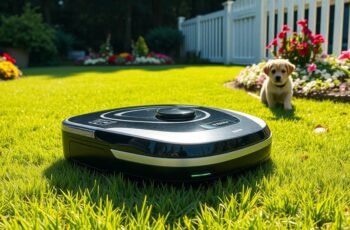
Imagine a dog suddenly darting toward a robotic mower, startling both the pet and owner. Ensuring safety around dogs involves sophisticated detection systems, thoughtful training, and secure yard setups. These measures are essential because, despite advancements, accidents can still happen if precautions aren’t in place. To truly understand how to protect your furry friends while using a mower, we need to explore the latest safety features and best practices that keep everyone secure.
Key Takeaways
- Use advanced sensors like infrared and ultrasonic to detect dogs and trigger safety protocols.
- Install secure fences and barriers to prevent dogs from entering mowing areas.
- Supervise mower operation and regularly calibrate sensors for reliable detection.
- Train dogs with positive reinforcement to avoid the mower and respond to commands.
- Immediately remove dogs from the area if a safety incident occurs and monitor their well-being.
How Do Robot Mowers Detect Dogs and Their Movements
Although robot mowers are designed to operate safely around pets, their ability to detect dogs relies on a combination of advanced sensors and algorithms. Sensor technology plays a vital role, enabling the mower to recognize movement and distinguish dogs from other objects. These devices use infrared, ultrasonic, or visual sensors to monitor the environment continuously. Movement detection algorithms analyze real-time data, identifying sudden or unusual motion patterns typical of dogs. When movement is detected, the mower’s system triggers safety protocols, such as slowing down or stopping immediately. This integration of sensor technology and movement detection guarantees a compassionate response, prioritizing the safety of your pets while maintaining efficient lawn care. Our goal is to create a safe, harmonious outdoor experience for both humans and dogs.
Best Practices for Keeping Dogs Safe During Mower Operation
To guarantee dogs stay safe during mower operation, we recommend keeping them away from the mowing area entirely. Using physical barriers effectively can prevent accidental entries, while close supervision allows us to respond quickly if needed. Implementing these practices helps protect our pets without compromising the efficiency of robotic mowing.
Keep Dogs Away During Mowing
Ensuring dogs stay safely away during mower operation is essential to prevent accidents and injuries. Understanding dog breed considerations helps us identify which dogs may be more anxious or curious, prompting us to keep them separated during mowing. We also recommend mower maintenance tips, such as inspecting blades and sensors regularly, to ensure safe operation and reduce noise that could startle pets. Before starting the mower, establish a designated, secure area away from the work zone for your dogs. Keeping a close eye on their behavior and providing reassurance can reduce stress. By combining breed-specific awareness with routine mower care and strategic placement, we create a safer environment, minimizing risks and ensuring our dogs remain protected during each mowing session.
Use Physical Barriers Effectively
Have you considered how physical barriers can substantially enhance your dog’s safety during mower operation? Proper fence installation is vital for creating an effective barrier that keeps your dog secure and your yard safe. When designing barriers, focus on durability and height to prevent escapes or accidental entry onto the mowing area. Barrier design should eliminate gaps and weak points, guaranteeing the mower can’t reach your dog if they’re nearby. Using sturdy materials like welded wire, wood, or vinyl fencing provides reliable protection. Regularly inspecting and maintaining these barriers ensures they remain effective over time. Thoughtful fence installation and innovative barrier design are essential components of a thorough safety plan, giving you peace of mind while your robot mower operates efficiently without risking your dog’s wellbeing.
Supervise Mower Operation Closely
Supervising mower operation closely is essential for keeping dogs safe during automated mowing sessions. We must regularly check sensor calibration to guarantee the mower accurately detects obstacles, including dogs, preventing accidents. Adhering to consistent mowing schedules helps keep dogs away from active mowing times, reducing surprises or stress. During operation, continuous supervision allows us to intervene promptly if the mower misreads its environment or if a dog enters the area unexpectedly. Monitoring the mower’s sensors and adjusting calibration as needed ensures reliable obstacle detection. By staying vigilant during mowing sessions, we can prevent injuries, reassure our pets, and maintain a safe environment. Close supervision, combined with proper sensor calibration and carefully planned schedules, is key to safeguarding dogs around robotic mowers.
How to Train Your Dog to Avoid Robot Mowers
Training your dog to avoid robot mowers requires consistent, positive reinforcement and clear boundaries. Effective dog training involves teaching your dog to recognize and respond appropriately to the mower’s presence, which is essential for safety. Using calm, firm commands helps establish control, while rewarding quiet behavior supports barking control. When your dog remains calm and ignores the mower, praise and treats reinforce this response. Gradually expose your dog to the mower at a safe distance, ensuring they associate it with positive experiences rather than fear. Regular training sessions foster trust and understanding, reducing anxiety and excessive barking. Remember, patience and consistency are key to helping your dog develop safe habits around robot mowers, ultimately creating a safer environment for everyone.
What Features Make Robot Mowers Safer Around Dogs
Modern robot mowers are equipped with a range of safety features designed specifically to protect dogs and other pets. Central to these are advanced sensor technology systems that detect nearby objects, including animals, and immediately halt or adjust the mower’s movement. These safety features minimize accidental injuries by creating a responsive environment. For example, bump sensors detect physical contact, while proximity sensors recognize animals before contact occurs.
| Safety Feature | Functionality |
|---|---|
| Sensor Technology | Detects pets and obstacles, halts operation |
| Bump Sensors | Stops mower on contact with pets |
| Lift & Tilt Sensors | Pauses mower if lifted or tilted |
| Audible Alerts | Warns of mower operation nearby |
Together, these features make robot mowers safer and more considerate around dogs.
Steps to Secure Your Yard and Prevent Accidents
To effectively prevent accidents and guarantee your dog’s safety, we need to take proactive steps to secure your yard before operating a robot mower. A thoughtful approach to garden design can help create boundaries that keep your dog safe, such as fencing or natural barriers. Regular mower maintenance ensures the blades and sensors function correctly, reducing the risk of malfunction. Clearing the lawn of debris, toys, and obstacles minimizes hazards that could cause the mower to misoperate or harm your pet. Additionally, marking specific zones where the mower should not go, like flower beds or play areas, enhances safety. Implementing these measures assures your yard remains a secure environment, allowing the robot mower to operate efficiently while safeguarding your dog.
What to Do If Your Dog Encounters a Robot Mower
If your dog encounters a robot mower, it’s essential to stay calm and avoid sudden movements that could escalate their stress. We should immediately remove the dog from the area and observe their behavior closely for signs of distress or injury. Maintaining a composed approach helps guarantee their safety and prevents further agitation.
Stay Calm and Steady
When your dog encounters a robot mower, staying calm and steady is essential to prevent escalation or fear. A calm demeanor can reassure your dog that there’s no threat, reducing anxiety and helping them remain composed. Maintain a steady pace, avoiding abrupt movements or loud noises that could startle your pet further. Speak softly and calmly, using reassuring words to convey safety. It’s important to avoid panicked reactions, as dogs are highly perceptive to human emotions and can pick up on your anxiety. By remaining composed and controlled, you help your dog feel secure, which can prevent aggressive or fearful responses. Consistent calmness in these moments supports your dog’s emotional well-being and fosters a sense of safety around robotic equipment.
Remove Dog From Area
What’s the best course of action if your dog unexpectedly encounters a robot mower? The priority is to safely remove your dog from the area while minimizing stress or confusion. Use calm, assertive commands—rooted in animal behavior understanding—to guide your dog away. If your dog is already trained with basic commands like “come” or “leave it,” use these to redirect their attention. Avoid sudden movements or shouting, which can escalate anxiety. Once your dog is removed, assess their behavior for signs of stress or injury. Consistent dog training helps reinforce reliable responses in such situations, reducing the risk of future encounters. Remember, understanding animal behavior enables us to act compassionately and effectively, ensuring safety for both your dog and your mower.
Monitor Behavior Closely
Monitoring your dog’s behavior immediately after an encounter with a robot mower helps prevent escalation and guarantees their well-being. Observe signs of stress, fear, or aggression, which may indicate the need for additional dog training or adjustments in your fence installation. A calm, measured response reassures your dog and helps them associate the mower with safety rather than threat. If your dog shows signs of distress, consider consulting a professional for targeted dog training techniques that address specific fears. Reinforcing boundaries through secure fencing minimizes future encounters, reducing anxiety. Consistent supervision during mower operation ensures you can intervene promptly, promoting a sense of security and trust. Close monitoring fosters a safer environment where both your dog and robotic mower can coexist harmoniously.
Frequently Asked Questions
Are Robot Mowers Safe for All Dog Breeds?
Robot mowers are generally safe for all dog breeds due to dog-friendly features and mower safety mechanisms, but we recommend supervising particularly small or anxious dogs, ensuring the mower’s safety features are active, and gradually introducing your dog to the device.
Can Robot Mowers Cause Stress or Anxiety in Dogs?
Robot mowers can cause stress or anxiety in dogs, especially with unexpected noise, disrupting normal dog behavior. To mitigate this, gradual exposure and positive reinforcement help, ensuring dogs feel safe and secure around these devices.
How Loud Are Robot Mowers Around Dogs?
Robot mowers usually emit noise levels around 60-70 decibels, which can be noticeable to dogs with sound sensitivity. We recognize the importance of managing noise to prevent stress, ensuring a safe, comfortable environment for your furry friends.
Do Robot Mowers Have Emergency Shut-Off Features for Dogs?
Yes, robot mowers include emergency shut-off features prioritizing battery safety and sensor responsiveness, which detect dogs and quickly stop operation, ensuring compassionate, safe interactions and minimizing risk during lawn maintenance.
How Often Should I Supervise My Dog During Mower Operation?
We recommend supervising your dog during mower operation, especially if they’re still in training or if fence safety isn’t flawless. Ironically, even the best-trained pups benefit from attentive monitoring to prevent accidents and guarantee safety.
Conclusion
In summary, keeping our dogs safe around robot mowers requires a combination of advanced detection, proper training, and secure yard practices. While technology plays a crucial role, patience and understanding are equally important. Remember, “prevention is better than cure,” and investing in safety measures today ensures a calm, stress-free environment for both pets and homeowners. By staying informed and attentive, we can create a harmonious space where innovation and compassion go hand in hand.