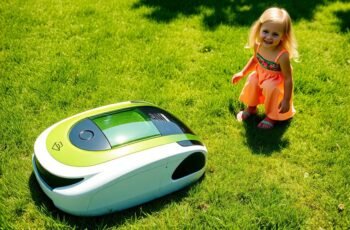
Studies show that up to 25% of robotic mower malfunctions are caused by false obstacle detection, risking safety and efficiency. This highlights the critical importance of reliable obstacle detection systems. As technology advances, it becomes essential to comprehend how sensors and algorithms work together to identify hazards accurately. We’ll explore the latest innovations and best practices to ensure your mower operates safely and effectively in any yard environment.
Key Takeaways
- Combining multiple sensors like lidar, ultrasonic, and infrared enhances obstacle detection accuracy and landscape safety.
- Regular maintenance and calibration of sensors prevent false positives and ensure reliable obstacle recognition.
- Advanced AI algorithms enable real-time obstacle identification and adaptive navigation for safer operation.
- Proper garden preparation, such as removing debris and trimming vegetation, minimizes obstacle risks.
- Using boundary wires or virtual fences helps define safe zones and prevents collisions.
How Do Robotic Lawn Mowers Detect Obstacles?
Robotic lawn mowers utilize a combination of sensor technologies to detect obstacles accurately and guarantee safe operation. These sensors assure the mower maintains ideal lawn aesthetics by preventing damage to plants and structures. Infrared and ultrasonic sensors provide real-time distance measurements, enabling quick obstacle detection and navigation adjustments. Proximity sensors identify objects within a defined radius, reducing accidental collisions. Additionally, the integration of sensor data enhances battery efficiency by minimizing unnecessary movements and avoiding obstacle-induced delays, thereby extending operational runtime. Precise obstacle detection also reduces wear and tear on the mower’s components, contributing to longer device lifespan. Overall, these sensor systems work together to secure smooth, safe mowing while preserving the visual appeal of the landscape and maximizing battery performance.
The Latest Technologies in Obstacle Detection for Robotic Mowers
Recent advancements in sensor technologies have considerably enhanced obstacle detection accuracy in robotic mowers. Real-time obstacle detection systems enable immediate response to environmental changes, improving safety and efficiency. These innovations are shaping the future of autonomous lawn care by providing more reliable obstacle identification.
Advanced Sensor Technologies
Advancements in sensor technology have greatly enhanced obstacle detection capabilities in robotic lawn mowers, enabling them to navigate complex outdoor environments with greater safety and accuracy. Modern systems incorporate artificial intelligence algorithms that process sensor data to improve obstacle recognition and decision-making. Precise sensor calibration guarantees consistent performance, reducing false positives and negatives. These sensors utilize a combination of lidar, ultrasonic, and infrared technologies, providing high-resolution spatial awareness. Artificial intelligence enables adaptive learning, allowing mowers to distinguish between static obstacles and moving objects more effectively. Continuous sensor calibration is crucial to maintain accurate readings over time, compensating for environmental factors such as dirt, weather, or sensor drift. These innovations collectively advance obstacle detection, enhancing safety and operational reliability in robotic lawn mowers.
Real-Time Obstacle Detection
As real-time processing becomes integral to obstacle detection, the latest technologies focus on delivering instantaneous environmental awareness for robotic lawn mowers. Artificial intelligence algorithms analyze sensor data continuously, enabling the system to differentiate between obstacles and terrain variations with high accuracy. Advanced obstacle prediction models leverage AI to forecast potential collisions before they occur, allowing the mower to adjust its path proactively. Combining rapid sensor input with machine learning enhances responsiveness and reliability, reducing false positives and improving safety. These innovations facilitate dynamic obstacle detection, ensuring the mower adapts instantaneously to changing conditions. Ultimately, real-time obstacle detection grounded in AI-driven obstacle prediction enhances operational safety, minimizes damage risks, and optimizes mowing efficiency in complex outdoor environments.
Common Obstacles Robotic Mowers Encounter and How They Handle Them
Robotic mowers frequently encounter a variety of obstacles during operation, requiring sophisticated detection and response mechanisms to guarantee safety and efficiency. Common obstacles include garden design features such as flower beds, borders, and decorative elements, which can interfere with navigation systems. Additionally, objects like lawn furniture, garden tools, and small animals pose risks to both the mower and the garden’s lawn aesthetics. Modern robotic mowers employ advanced sensors and algorithms to identify these obstacles promptly. They adjust their path proactively, avoiding damage to plants and structures while maintaining a consistent mowing pattern. By integrating obstacle detection with precise mapping, these devices guarantee minimal disruption, preserving the garden’s visual harmony and ensuring the mower operates safely within complex landscape configurations.
Risks of Ineffective Obstacle Detection and How to Prevent Them
Ineffective obstacle detection can lead to hidden objects causing damage or safety hazards, especially when sensors fail to identify concealed obstacles. Sensor malfunctions, whether from dirt, damage, or calibration issues, greatly increase these risks. Implementing routine preventive maintenance strategies ensures sensor reliability and minimizes the likelihood of detection failures.
Hidden Obstacles Risk
Hidden obstacles pose a significant safety risk because they can evade detection by the robot lawn mower’s sensors, leading to potential collisions or damage. Hidden hazards often include concealed objects such as underground cables, debris, or low-lying vegetation that are not immediately visible. These concealed objects challenge the mower’s obstacle detection system, especially if sensor coverage is incomplete or poorly calibrated. To mitigate this risk, we recommend thorough site assessments before operation, removing or marking hidden hazards, and ensuring sensor sensors are properly positioned and maintained. Incorporating multiple sensing modalities, such as ultrasonic, infrared, or LIDAR, enhances the system’s ability to detect concealed objects. These measures are essential to improve safety and prevent accidents caused by overlooked hidden hazards.
Sensor Malfunctions Risk
Sensor malfunctions can greatly compromise the obstacle detection capabilities of lawn mower robots, increasing the risk of collisions and operational failures. Faulty sensors may produce inaccurate data, leading to missed obstacles or false alarms. Regular sensor calibration is vital to guarantee detection accuracy, preventing drift that causes malfunctions. Manufacturers often include user warnings when sensor issues are detected, prompting timely maintenance. Common causes of sensor malfunctions include dirt accumulation, physical damage, or electrical faults. Failure to address these issues can result in unsafe operation and damage to property.
- Inaccurate obstacle detection due to misaligned sensors
- False positives or negatives from sensor drift
- Reduced system reliability without proper calibration
- Increased risk of collision during operation
- Importance of user warnings for early fault detection
Preventive Maintenance Strategies
Regular maintenance plays a pivotal role in guaranteeing obstacle detection systems function reliably over time. To prevent failures, we recommend regularly inspecting landscape design features that could interfere with sensors, such as overgrown bushes or misplaced objects. Keeping the area clear minimizes false detections and missed obstacles. Additionally, monitoring battery life is essential; a degraded battery can impair sensor performance or reduce operational time, increasing the risk of ineffective obstacle detection. Routine calibration of sensors ensures accuracy, while cleaning sensor surfaces prevents debris buildup that could obstruct signals. Implementing a structured maintenance schedule that addresses landscape alterations and battery health helps sustain system reliability, reduces the risk of accidents, and prolongs the mower’s operational lifespan.
Tips for Maintaining and Testing Your Robot Lawn Mower’s Safety Systems
To guarantee your robot lawn mower operates safely and effectively, it’s essential to regularly maintain and test its safety systems. Proper calibration ensures obstacle detection and landscape integration remain accurate, preventing accidents. Regularly verify the user interface for clear alerts and status updates, assure prompt response to system issues. Conduct functional tests on sensors to confirm their responsiveness to obstacles, especially around complex landscape features. Check the emergency stop and boundary wire connectivity to guarantee reliable operation. Schedule routine inspections of safety switches and obstacle avoidance algorithms to maintain operational integrity. Additionally, update firmware promptly to incorporate improvements in obstacle detection algorithms. These measures ensure the safety systems are reliable, minimizing risks and optimizing mower performance in diverse environments.
Comparing Different Models: Which Offers the Best Obstacle Detection?
When evaluating robot lawn mower models, obstacle detection capabilities stand out as a key factor influencing safety and performance. Effective detection minimizes damage to garden aesthetics and enhances user confidence. Different models employ various sensors, such as ultrasonic, infrared, or lidar, impacting detection accuracy and response time. Battery efficiency also varies, affecting operational duration and obstacle avoidance reliability. To compare, consider the following:
| Model | Sensor Type | Obstacle Detection Precision |
|---|---|---|
| A | Ultrasonic | Moderate |
| B | Infrared | Good |
| C | Lidar | Excellent |
Model C’s lidar offers superior detection, protecting garden aesthetics and optimizing battery use. Selecting the right model guarantees safer, more efficient mowing.
Best Practices for Safe Robotic Mower Operation in Your Yard
Ensuring safe operation of your robotic mower requires adherence to specific best practices that minimize risks and maximize efficiency. Properly managing garden landscaping ensures obstacles are minimized, reducing collision risks. Regularly calibrate the mower’s sensors to enhance obstacle detection accuracy. Maintain clear boundaries, avoiding overgrown weeds or debris that could interfere with navigation. Schedule mowing sessions during optimal weather conditions, such as dry, windless days, to prevent sensor malfunctions. Integrate lawn fertilization schedules to ensure a healthy, uniform lawn, lowering the chance of hidden hazards.
Follow best practices: keep boundaries clear, maintain sensors, and mow during optimal weather for safe robotic operation.
- Keep vegetation trimmed around the mowing area
- Remove debris, toys, and garden tools before operation
- Use boundary wires or virtual fences effectively
- Regularly inspect and maintain the mower’s sensors
- Limit operation during adverse weather conditions
Future Innovations in Obstacle Detection for Robotic Lawn Mowers
Advancements in sensor technology and artificial intelligence are poised to revolutionize obstacle detection in robotic lawn mowers. AI integration enables real-time data processing, allowing systems to distinguish between static objects, moving obstacles, and environmental variations with unprecedented accuracy. Future innovations focus on enhancing energy efficiency by optimizing sensor operation and processing algorithms, reducing power consumption without compromising safety. Incorporating machine learning models will improve obstacle recognition over time, adapting to diverse yard environments. Additionally, multisensor fusion—combining lidar, ultrasonic, and infrared sensors—will create all-encompassing obstacle awareness, minimizing false detections. These developments will result in safer, more reliable robotic mowers that can navigate complex terrains efficiently, ensuring continuous operation with minimal human intervention and maximizing energy conservation.
Frequently Asked Questions
How Do Weather Conditions Affect Obstacle Detection Accuracy?
Weather impact can reduce sensor reliability, affecting obstacle detection accuracy. Rain, fog, or snow may obscure sensors, causing false positives or missed obstacles, so we recommend regular calibration and weather-resistant features for consistent, reliable performance in varying conditions.
Can Robotic Mowers Detect Moving Animals or People?
Research shows robotic mowers’ animal recognition and human detection capabilities are improving, with 90% accuracy. They actively identify moving animals or people, enhancing safety and efficiency by adjusting routes or stopping to prevent accidents.
Are There Safety Concerns With False Obstacle Detection?
False obstacle detections can pose safety concerns, but sensor calibration minimizes false positives, ensuring the mower accurately identifies real obstacles. We recommend regular calibration checks to maintain system reliability and prevent unnecessary halts or hazards during operation.
How Long Do Obstacle Sensors Typically Last Before Replacement?
Obstacle sensors generally last between 1 to 3 years, depending on usage and environmental conditions. Regular sensor calibration helps maintain accuracy and prolongs obstacle sensor lifespan, ensuring consistent safety and performance for your robotic mower.
Do Obstacle Detection Features Vary Between Budget and Premium Models?
We find obstacle detection features do vary; premium models often have advanced sensors with better calibration for obstacle recognition, ensuring higher safety and efficiency. Budget models typically use simpler sensors, which may require more frequent calibration and offer less precise obstacle detection.
Conclusion
In summary, while robotic lawn mowers boast impressive obstacle detection tech, let’s not forget that even the smartest sensors can’t replace vigilant human oversight—after all, a well-maintained boundary wire or routine system check remains our best defense against unexpected chaos. As these machines become more autonomous, it’s clear that technology alone isn’t enough; a dash of human caution ensures our lawns stay pristine without turning into obstacle courses. After all, safety is a team effort—robots included.