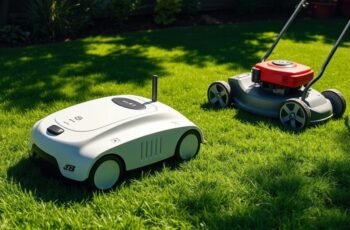
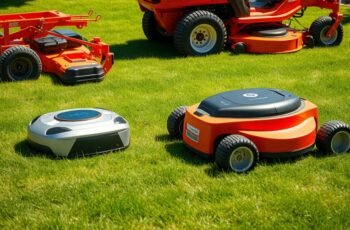
When comparing the fuel costs of robot mowers and ride-on mowers, it’s clear that efficiency and environmental impact play significant roles. While robot mowers rely on rechargeable batteries, ride-on models consume more fuel, impacting both your expenses and ecological footprint. Understanding these differences can help us make more sustainable choices, but there’s more beneath the surface—factors that could influence your decision in ways you might not expect.
Key Takeaways
- Robot mowers use batteries, resulting in minimal ongoing fuel or energy costs, unlike ride-on mowers that rely on gasoline or diesel.
- Fuel-powered ride-on mowers consume more fuel over time, leading to higher operational costs compared to the low energy expenses of robot mowers.
- Battery technology and solar options in robot mowers reduce long-term costs and environmental impact.
- Ride-on mowers incur frequent refueling and maintenance costs, increasing their overall fuel and operational expenses.
- Advancements in battery efficiency make robot mowers a more cost-effective and eco-friendly alternative to traditional fuel-powered mowers.
How Do Robot Mowers and Ride-On Mowers Use Fuel Differently?
While both robot mowers and ride-on mowers serve the same purpose of maintaining lawns, they differ considerably in how they use fuel, reflecting their distinct design and energy sources. Robot mowers utilize advanced mowing technology powered by batteries, emphasizing sustainability and reduced emissions. Their battery power allows for quiet, efficient operation that minimizes environmental impact. In contrast, ride-on mowers often rely on gasoline or diesel engines, which consume fossil fuels and emit greenhouse gases. The shift toward battery-powered robot mowers highlights a move to more eco-conscious lawn care, reducing our carbon footprint. This difference in energy use underscores the importance of adopting sustainable mowing technology, as battery-powered options promote clean energy, lower noise pollution, and support environmentally responsible landscaping practices.
Comparing Fuel Consumption: Robot Mowers vs Ride-On Mowers
When comparing fuel consumption between robot mowers and ride-on mowers, it becomes clear that their energy efficiencies differ considerably due to their distinct power sources. Robot mowers typically use rechargeable batteries, leading to minimal ongoing energy costs and reduced emissions, while ride-on mowers rely on gasoline, which consumes more fuel and produces higher carbon footprints. Over time, this impacts mower durability and environmental sustainability. User safety is also a factor; robot mowers are safer due to automated sensors, whereas ride-ons pose higher risks during operation. Here’s a quick comparison:
| Aspect | Robot Mowers | Ride-On Mowers | Emotional Impact |
|---|---|---|---|
| Fuel/Power | Electric/Battery | Gasoline | Peace of mind, safety |
| Efficiency | High (low energy use) | Moderate to low | Confidence in sustainability |
| Durability | Long-lasting, minimal wear | Subject to wear | Trust in longevity |
| Safety | High (automated sensors) | Lower safety margin | Security for families |
What Factors Influence Fuel Costs for Each Mower Type?
The fuel costs for each mower type are shaped by factors like mower size, power, and how often and long they operate. Larger, more powerful machines typically consume more fuel, especially with frequent use, impacting sustainability. By understanding these elements, we can make more eco-conscious choices that balance efficiency with environmental impact.
Mower Size and Power
Mower size and power directly influence fuel costs because larger, more powerful machines typically consume more energy to operate efficiently. A bigger mower size often means increased fuel usage, as it covers more ground but requires more effort from the engine. Similarly, higher power output enhances cutting performance but can lead to greater fuel consumption. When considering sustainability, choosing a mower with an appropriate size and power level is essential to minimize environmental impact. Smaller, efficiently powered mowers tend to use less fuel while still maintaining effective performance. Balancing mower size and power output allows us to optimize fuel efficiency and reduce our carbon footprint, making lawn maintenance more eco-conscious and sustainable.
Operating Frequency and Duration
Have you ever wondered how often and how long each mower runs can impact fuel costs? For robot mowers, operating frequency depends on battery life and the size of the area. They typically run frequently but for shorter durations, which helps reduce overall fuel and maintenance costs, supporting sustainability. Ride-on mowers, on the other hand, often operate longer per session, increasing fuel consumption and wear, leading to higher maintenance costs over time. The duration of each session influences total fuel use, so regular maintenance of the mower’s engine and battery health is essential for efficiency. By optimizing operating schedules—using a robot mower for smaller, frequent trims and a ride-on for larger areas—we can minimize environmental impact and promote a more sustainable lawn care routine.
Estimating Long-Term Fuel Expenses for Robot and Ride-On Mowers
Although both robot and ride-on mowers rely on fuel to operate, understanding their long-term costs requires analyzing their energy consumption patterns and efficiency. Robot mowers benefit from advances in battery technology, which enhances mowing precision and reduces energy waste. Their design prioritizes optimized power use, leading to lower fuel expenses over time. Conversely, ride-on mowers typically consume more fuel due to their larger engines and less precise operation, resulting in higher long-term costs. To accurately estimate expenses, consider factors like maintenance, battery lifespan, and operational hours. Emphasizing sustainable energy sources and efficient technology helps minimize environmental impact and promote eco-conscious lawn care, ensuring that long-term expenses remain manageable while supporting greener practices.
Environmental Impact and Fuel Efficiency: Which Mower Is Greener?
While both robot and ride-on mowers contribute to lawn maintenance, their environmental impacts differ considerably due to their energy sources and efficiency. Robot mowers typically use advanced battery technology, offering quiet, emission-free operation that minimizes air pollution. Improvements in battery technology, such as longer-lasting, faster-charging cells, enhance sustainability. Additionally, solar integration can further reduce environmental footprints by powering these robots with renewable energy. Ride-on mowers, often fueled by gasoline, emit greenhouse gases and rely on fossil fuels, making them less eco-friendly. Although ride-ons can be more efficient for large areas, robot mowers’ lower emissions and potential for solar-powered operation make them a greener choice overall. Prioritizing battery technology and solar options supports a sustainable, eco-conscious approach to lawn care.
Cost-Saving Tips for Minimizing Fuel Use With Both Mower Types
We can reduce fuel consumption by carefully planning our mowing schedule to avoid unnecessary runs and overlapping. Regular maintenance guarantees our mowers operate efficiently, conserving energy and lowering emissions. Together, these practices help us maintain a more sustainable yard care routine.
Optimize Mowing Schedule
Have you considered how scheduling your mower sessions strategically can markedly reduce fuel consumption? By aligning mowing times with ideal weather conditions and grass growth patterns, we can enhance overall efficiency. Modern battery technology in robot mowers allows for precise, consistent mowing, reducing overlapping passes and unnecessary energy use. For ride-on mowers, planning shorter, more frequent sessions prevents overexertion and fuel waste. Both mower types benefit from thoughtful scheduling that minimizes idle time and maximizes mowing precision. This approach not only cuts down on fuel costs but also promotes a sustainable lawn care routine. Ultimately, an eco-conscious schedule leverages technology and natural cycles, ensuring healthier lawns while reducing environmental impact.
Maintain Mower Efficiency
Maintaining mower efficiency is vital for minimizing fuel consumption and promoting sustainable lawn care. Regular battery maintenance ensures that electric or robotic mowers operate at peak performance, reducing unnecessary energy drain. Properly charged batteries last longer and require fewer replacements, which lowers environmental impact. Additionally, blade sharpening is essential; dull blades force mowers to work harder, increasing fuel or energy use. Sharp blades cut grass cleanly and efficiently, conserving power and reducing wear on the mower’s components. By keeping batteries well-maintained and blades sharp, we enhance mower efficiency, leading to less fuel consumption and a smaller ecological footprint. These proactive steps support sustainable lawn management while saving money in the long run.
Is Fuel Cost the Deciding Factor Between Robot and Ride-On Mowers?
While fuel costs are certainly a consideration when choosing a mower, they often aren’t the sole deciding factor. Battery technology has improved markedly, making robot mowers more energy-efficient and sustainable, reducing reliance on fossil fuels. This shift enhances user convenience by minimizing maintenance and refueling downtime. Conversely, ride-on mowers typically consume more fuel, which can be costly and less eco-friendly over time. However, fuel costs alone don’t account for the full environmental impact or long-term savings. For many, the decision hinges on convenience, sustainability, and technological advancements. As battery technology continues to evolve, robot mowers are becoming increasingly attractive options for eco-conscious users seeking efficient, low-maintenance landscaping solutions.
Frequently Asked Questions
How Often Do Robot Mowers Need to Be Recharged Compared to Refueling?
We find robot mowers typically need recharging every few days, depending on battery lifespan and lawn size, while they return to the charging station automatically. This sustainable cycle minimizes fuel use and promotes eco-conscious lawn maintenance.
Do Robot Mowers Have Any Hidden Energy Costs?
Robot mowers have minimal hidden energy costs thanks to efficient battery longevity and smart power management, making them eco-friendly and sustainable. We find they use less energy overall, reducing environmental impact compared to traditional ride-on mowers.
How Does Mower Size Affect Fuel or Energy Consumption?
Like a tree spreading its branches, larger mower dimensions often consume more energy, reducing efficiency. Smaller, eco-friendly models optimize energy use, helping us sustain our environment while maintaining lawn health, making size a crucial factor in eco-conscious choices.
Are There Maintenance Costs Linked to Fuel Efficiency?
Fuel savings often reduce overall maintenance expenses since less fuel usage means less engine wear and tear. We find that eco-conscious choices, like efficient mowers, help minimize maintenance costs and promote sustainable lawn care practices.
Can Solar Power Reduce Overall Mowing Energy Expenses?
Solar power considerably reduces our overall mowing energy expenses by harnessing solar savings, boosting energy efficiency while minimizing environmental impact. We believe adopting sustainable energy solutions aligns with eco-conscious practices, ensuring long-term cost savings and a healthier planet.
Conclusion
As we imagine our lawns thriving under gentle, silent care, it’s clear that choosing a robot mower not only reduces fuel costs but also nurtures our planet. With each quiet, eco-friendly pass, we’re fostering sustainable beauty and safeguarding future green spaces. Embracing these innovative, energy-efficient solutions helps us create a harmonious, greener world—one lawn at a time—where our commitment to the environment blooms as beautifully as our well-kept yard.