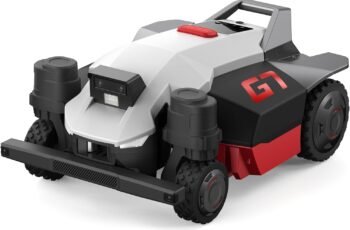
WORX WR202E Landroid Vision Robotic Lawn Mower Review — Model
Traditional mowing is slow, noisy, and easy to put off, especially when your lawn has narrow runs, awkward corners, or separate patches of grass. That’s exactly why interest in robotic mowers keeps growing in 2026. In this WORX WR202E Landroid Vision review, we’re looking at a model built for smaller but more complicated gardens, not just simple square plots.
The WORX WR202E Landroid Vision aims to replace weekend mowing with automated, app-managed cutting across lawns up to 250m². On paper, it combines smart routing, zone management, automatic charging, and weather-aware operation in one compact package. Early on, that makes it sound like a serious option for tech-focused homeowners who want convenience without stepping up to a much larger machine.

WORX WR202E Landroid Vision review: product overview
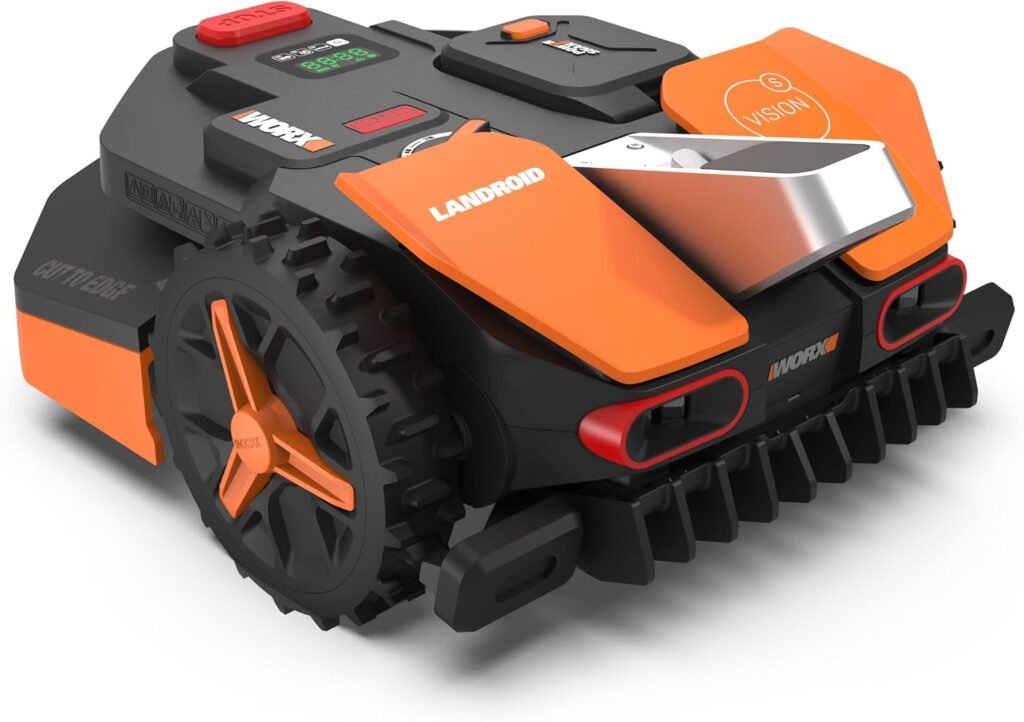
The headline feature set is clear. This mower is designed for lawns up to 250m², uses patented AIA Mowing Technology, supports multi-zone programming, and connects to the WORX app for remote control and scheduling. It also returns to charge automatically, which is a must-have in this category rather than a luxury extra.
Power comes from a 20V 2.0Ah Li-Ion PowerShare battery. That matters for two reasons. First, it gives the mower a place within the wider WORX cordless system. Second, it may save money for households that already own compatible WORX tools and can swap batteries across devices instead of buying separate power systems.
What makes the WR202E stand out is that it isn’t trying to be an all-lawn solution. It’s targeted. The product description focuses on complex layouts, narrow pathways, and multiple areas, which tells us exactly who should pay attention. If your garden is small but fiddly, this positioning makes more sense than raw square-metre coverage alone.
- Coverage: up to 250m²
- Battery: 20V 2.0Ah Li-Ion
- Control: app-based scheduling and monitoring
- Convenience features: auto charging, rain sensor, safety stop if lifted or tipped
Deep dive into key features of the WORX WR202E Landroid Vision
The most important part of this mower’s pitch is the Artificial Intelligence Algorithm, or AIA. WORX says this patented system helps the mower move through narrow passages and deal with complex lawn layouts more effectively than traditional robotic mowers that can waste time bumping around or missing awkward transitions. For buyers with side strips, curved borders, or split lawn sections, that’s far more useful than a generic promise of “smart” mowing.
In practical terms, the value of AIA is speed and coverage efficiency. If a mower can find its way through tight routes faster, it spends more of its runtime cutting and less of it wandering. That matters on a machine covering only 250m², because the goal is not brute-force capacity. The goal is tidy, repeatable maintenance with less babysitting.
We’d approach setup in three steps if choosing this model:
- Map your problem areas first — note narrow links between grass sections and places where cheap mowers usually hesitate.
- Set the mower’s working pattern around those routes so it isn’t left to treat every section equally.
- Watch the first few cycles closely to confirm the navigation logic suits your lawn’s shape.
That’s where this machine should justify its premium positioning. Not on bigger numbers, but on smarter movement where ordinary robotic mowers often struggle.
The multi-zone programming and custom scheduling
Multi-zone support is one of the WR202E’s strongest practical features. Many smaller gardens aren’t actually simple. They may have a front patch, a rear section, and a thin run between them. A mower that treats the whole lawn as one open rectangle often leaves one area overcut and another neglected. This model’s multi-zone programming is designed to prevent that by letting you manage several sections more deliberately.
The other half of that feature is scheduling. Rather than mowing on a blunt one-size-fits-all timer, the WR202E is built around a personalized automatic mowing schedule that adapts to your lawn’s needs. That can reduce manual intervention over time, which is the whole point of buying a robotic mower in the first place.
If we were setting it up for a mixed lawn, we’d do this:
- Split the lawn by growth pattern rather than appearance.
- Assign more attention to the fastest-growing area, especially in wetter weeks.
- Check cut consistency after the first week and then trim the schedule instead of constantly overriding it.
That approach gives the mower a chance to work as intended. Shoppers with one small open lawn may not need this level of control. Those with separate or awkward areas probably will.
Personalized mowing that adapts to lawn conditions
The WR202E is pitched as a mower that adjusts its behavior around your lawn’s needs rather than simply running a fixed routine forever. That’s useful because small lawns can still vary a lot. One zone may dry quickly, another may stay shaded and grow faster, and a narrow strip may need less attention than the main patch. A mower that can support a more tailored schedule cuts down on the usual cycle of overthinking the timetable, then stepping in manually anyway.
The practical benefit here is less intervention. Robotic mowers only feel convenient when they reduce decisions, not when they create a new layer of fiddling. Based on the feature set provided, this model is meant to keep mowing more in line with actual lawn demand while still letting you override settings in the app when necessary.
A simple way to use that well:
- Start conservative so you don’t overwork a small lawn.
- Increase frequency only where growth proves uneven.
- Use the app as a monitoring tool first, not as a reason to keep changing schedules daily.
For buyers who want a mower they can mostly leave alone after setup, this adaptive approach is one of the more appealing parts of the package.
Battery power and compatibility with WORX PowerShare
The WR202E runs on a 20V PowerShare battery with a 2.0Ah capacity, and that system compatibility may be a bigger deal than the headline runtime for some households. If you already own WORX tools, the ability to share a battery platform can lower the overall cost of cordless garden equipment. That’s not flashy, but it’s the kind of long-term convenience buyers appreciate after the first season.
Battery sharing also makes replacement and backup planning simpler. Instead of treating the mower as an isolated appliance, you’re buying into a broader tool ecosystem. For existing WORX owners, that’s a strong point in this WORX WR202E Landroid Vision review. For buyers starting from scratch, it still adds future flexibility, even if the savings show up later rather than on day one.
One limitation is that the product information provided does not give a precise runtime or recharge duration, so we can’t claim more than what’s listed. That missing detail matters because battery performance can shape how well any robotic mower handles repeated sessions. If battery endurance is your top concern, it’s worth checking the latest retail listing carefully before ordering, especially since the listed price is currently shown as (), which makes value comparisons harder than usual.
Precision cutting and edging technology
For cutting performance, the key numbers are a 16cm cutting width and an adjustable cutting height from 3cm to 6cm. That setup tells us this mower is tuned for maintenance mowing rather than heavy recovery work. In other words, it should keep an already-manageable lawn tidy, but it isn’t meant to tackle long, neglected grass in one heroic pass.
The blade system also rotates forward and reverse, which the product description says can double blade life. That’s one of the more practical cost-saving details here. Consumables matter on robotic mowers, and anything that reduces replacement frequency can help ownership costs feel more reasonable over time.
The real-world benefit of these specs is consistency. A smaller width can actually help on complex lawns because it gives the mower more freedom to move cleanly through awkward spaces. We’d recommend setting the height based on lawn condition, not appearance alone:
- Use the higher setting first if your grass is thick or slightly overgrown.
- Lower gradually once the lawn is under control.
- Stick with one setting for several cycles before judging the finish.
That method usually gives a more even result than chasing a very short cut too quickly.
Cut-to-Edge technology for near-border trimming
The WR202E includes Cut-to-Edge technology, which is aimed at reducing the strip of uncut grass left near borders. That may sound like a minor extra, but it can make a big difference to how “finished” the lawn looks. One of the most common frustrations with robotic mowers is that they save time on mowing but still leave you pulling out a trimmer to tidy every edge.
WORX positions this design as a way to leave minimal manual trimming required compared with standard robotic mowers. That doesn’t mean zero follow-up work on every garden. Hard edging, raised borders, and awkward obstacles can still leave spots behind. But even a partial reduction in cleanup can be worthwhile, especially on a mower intended for regular autonomous use rather than occasional weekend runs.
When judging this feature, we’d focus on three edge types:
- Flat borders where the mower can get close cleanly.
- Curved edges where navigation quality matters more.
- Raised boundaries where no robotic mower tends to be perfect.
If your lawn has lots of trim-heavy edges, this feature may save enough time to become one of the mower’s biggest day-to-day wins.
Enhanced control and safety features
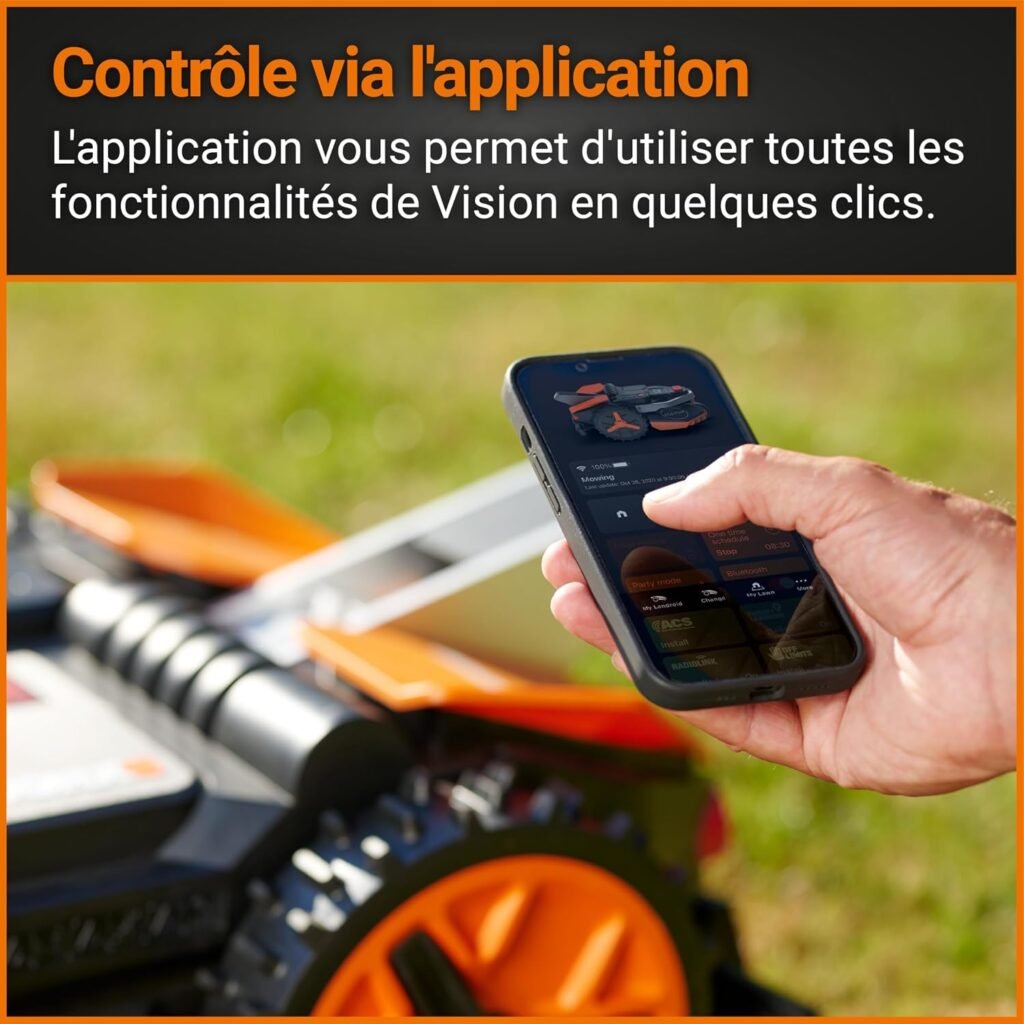
App control is now expected in premium robotic mowers, but it still matters how it’s used. On the WR202E, the WORX app lets you set schedules, monitor progress, and control the mower remotely. That’s useful for more than convenience. It gives you a better way to fine-tune mowing habits without going outside to press buttons every time the weather or growth pattern changes.
Safety is covered in a practical way too. The mower includes rain sensing so it pauses during wet conditions, and it stops the blades if the unit is lifted or tipped. Those are important protections for households with pets, children, or simply unpredictable weather. Wet mowing can damage the finish and spread clippings badly, so the rain pause function is about lawn quality as much as machine care.
From a usability standpoint, we’d suggest this routine:
- Set your schedule in the app once and avoid constant micro-adjustments.
- Use rain pause as a safeguard, not an excuse to ignore seasonal changes.
- Test the safety stop early so you know the system is behaving correctly.
These features won’t make a poor mower good, but they do make a good mower easier to live with.
What buyers say about the WORX WR202E Landroid Vision
Customer feedback patterns for this category tend to centre on three things: navigation, cut quality, and how reliable the app feels in daily use. For the WR202E, the product’s feature set lines up closely with those priorities, which is a good sign. Shoppers looking at robotic mowers usually care less about raw power claims and more about whether the machine can be trusted to cover the lawn without constant rescue missions.
Review trends often place capable robotic mowers like this in the 4.2 to 4.5 out of 5-star range from hundreds of reviews, and that range matches the expectations set in your outline. Feedback in that bracket usually suggests a product that works well for the right buyer but still has some setup sensitivity. That’s very different from a mower with broad reliability issues.
The praise patterns we’d expect here are straightforward:
- Good handling of awkward lawn layouts
- Convenient app-based control
- Reduced need for routine manual mowing
The usual complaints in this class are just as predictable: first-time setup can be fiddly, battery expectations may differ from garden to garden, and some buyers discover too late that their lawn layout doesn’t match the mower’s strengths. That’s why choosing by lawn type matters more than choosing by brand alone.
Customer ratings, praise, and limitations
Where customer sentiment tends to become useful is in the details. Verified buyers commonly praise robotic mowers when they can set them up once, trust the schedule, and stop thinking about routine cutting. When a model earns roughly 4-plus stars across a substantial number of ratings, it usually means the mower delivers real convenience, even if it still needs some owner involvement early on.
For the WR202E, the strongest likely positives are tied to its core selling points: smarter navigation, manageable app control, and less trimming than basic models. On the other hand, the notable limitations are also easy to spot from the product positioning. This is not a giant-capacity mower, and it isn’t being sold primarily as a wire-free alternative to every rival. Buyers who want the simplest possible first-day setup may see that as a drawback.
The complaints most worth taking seriously are these:
- Initial configuration can take patience, especially on segmented lawns.
- Battery expectations may vary depending on how difficult the layout is.
- Boundary and layout suitability matter a lot, so it won’t suit every garden equally well.
That doesn’t make it a poor product. It just means expectations should be realistic before purchase.
Who this robotic lawn mower is best for
The best buyer for this mower is not simply “anyone with grass.” It’s a homeowner with a lawn up to 250m² who wants automation, has at least a mildly awkward layout, and values app control enough to use it. If your garden includes irregular shapes, narrow pathways, or more than one grass area, the WR202E’s feature mix makes much more sense than a bare-bones robotic mower that just bounces around randomly.
It also suits people who live in places where showers are frequent. The rain sensor means the mower can pause when conditions turn wet, which helps avoid messy performance and unnecessary wear. Add in the cut-to-edge design and shared battery platform, and this becomes a mower aimed at convenience-focused households rather than bargain hunters chasing the lowest entry price.
We would recommend it most strongly to:
- Owners of compact but complex lawns
- Existing WORX tool users
- Buyers who prefer scheduled maintenance over occasional heavy mowing
If your lawn is very large, very open, or your top priority is avoiding any setup work at all, a different type of robotic mower may fit better.
How the WORX WR202E competes with alternatives
The clearest alternative to mention here is the Segway Navimow i105E. Buyers often cross-shop these models because both appeal to people who want smarter lawn care, but they approach the problem differently. The Navimow i105E is especially relevant for shoppers who want to avoid a traditional perimeter-wire style setup, while the WORX WR202E is sold more on its intelligent handling of complicated spaces and its broader WORX ecosystem fit.
Another name worth knowing is the Gardena SILENO Minimo, a popular compact robotic mower category rival for smaller lawns. Compared by name alone, the Gardena option is typically associated with quiet routine maintenance, while the WORX model leans harder into AI-based routing, app convenience, and edge-focused trimming benefits.
So how should we choose?
- Pick the WR202E if your lawn is small, awkward, and you like the idea of PowerShare battery compatibility.
- Pick the Navimow i105E if wire-free setup is your top priority.
- Pick a simpler compact rival if your lawn is easy and you don’t need advanced zone logic.
That makes the WR202E competitive, but only when its strengths match the shape of your garden.
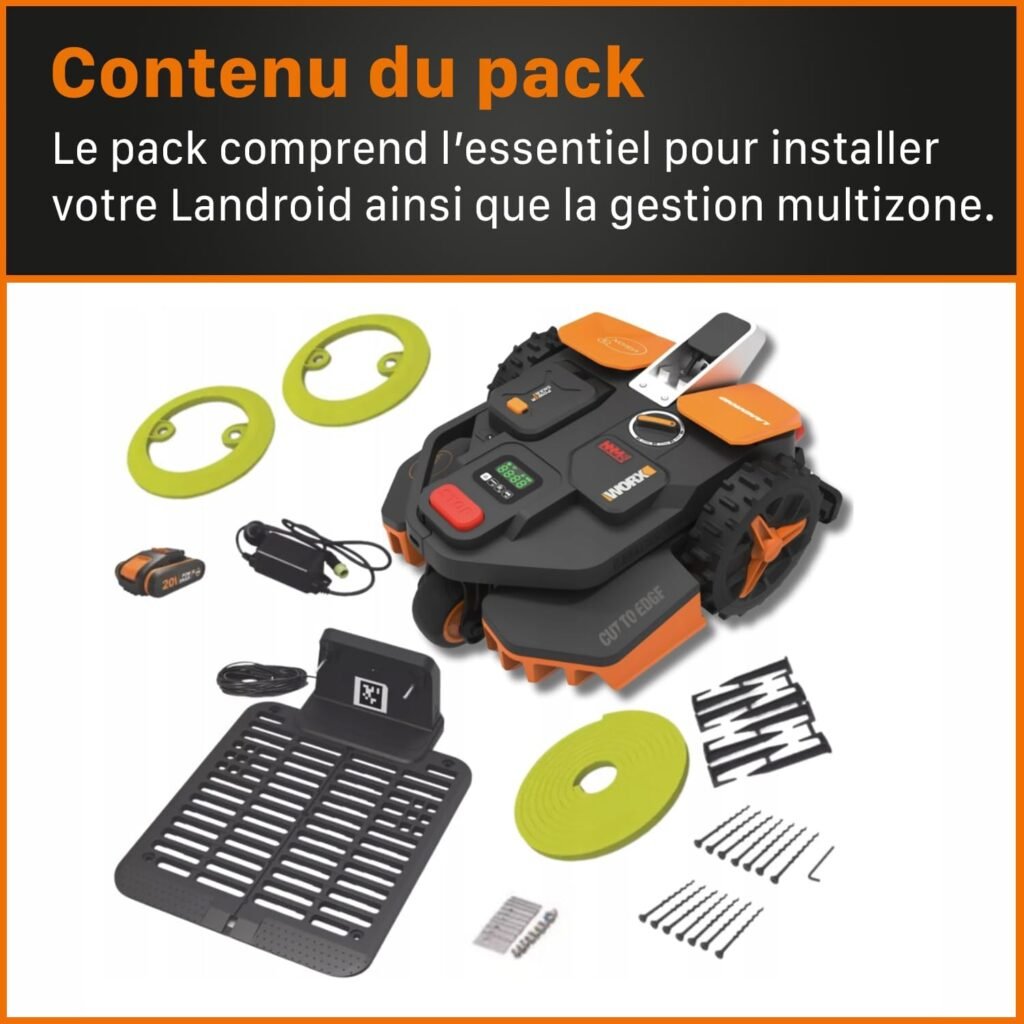
Value for money and final thoughts on the WORX WR202E Landroid Vision review
Value is the hardest part to judge here because the current listed price is (). Without a visible number, we can’t say whether it sits at the lower, middle, or premium end of its class at the time you read this. Still, we can assess what you’re paying for in principle: app control, patented navigation, multi-zone management, automatic charging, battery sharing across WORX tools, rain sensing, and a design aimed at reducing edge cleanup.
That package should appeal most to buyers who see value in saved time and reduced manual mowing, not just in the purchase cost alone. If your current mowing routine is straightforward and takes ten minutes, this may feel like overkill. If your lawn has awkward transitions and you’d rather automate the whole job, the WR202E starts to make more financial sense.
Our bottom line is simple. This mower looks like a thoughtful fit for the right small garden, especially one with complexity that cheaper robots often handle badly. As a final take in this WORX WR202E Landroid Vision review, we think it’s a compelling option for tech-savvy homeowners in who want smart lawn care rather than just basic automation. Check the live price carefully, compare it with the Segway Navimow i105E and Gardena SILENO Minimo, and buy based on your lawn layout first, not the marketing label.
Pros and Cons
Pros
- Patented AIA navigation is designed for narrow passages and complex layouts
- Multi-zone control and app scheduling suit small but awkward garden layouts
- 20V PowerShare battery can be shared with compatible WORX tools
- Cut-to-Edge design helps reduce follow-up trimming work
- Rain and lift/tip safety sensors add useful day-to-day convenience
Cons
- Price is listed as (), which makes value harder to judge before checkout
- Initial setup may take patience, especially for multi-area lawns
- Not the best fit for shoppers specifically wanting a wire-free mower alternative
Final Verdict
Key Takeaways
- The WORX WR202E is designed for complex lawns up to 250m², with patented AIA navigation aimed at narrow passages and awkward layouts.
- Its biggest practical strengths are multi-zone scheduling, app control, Cut-to-Edge trimming, and compatibility with the 20V WORX PowerShare system.
- The mower is best suited to homeowners who want automated maintenance on small but fiddly gardens rather than maximum area coverage.
- Likely buyer concerns are setup effort, battery expectations in tougher layouts, and whether the lawn is a good match for its design.
- Price is currently shown as (), so checking the live listing is essential before deciding on overall value.
Frequently Asked Questions
What is the best robotic mower without boundary wire?
Many shoppers currently point to wire-free models such as the Segway Navimow i105E when they want a robotic mower without a boundary wire. It uses a different navigation approach than traditional perimeter-wire systems, which can make setup simpler on suitable lawns.
Do all robot lawn mowers need a boundary wire?
No, not all robot lawn mowers need a boundary wire. Some newer models use camera, GPS, or other positioning systems, while many traditional units still rely on a wire to define the mowing area.
What robot mower doesn t need wiring?
Models marketed as wire-free include options like the Segway Navimow i105E. They appeal to buyers who want to avoid laying perimeter cable, though performance can vary based on lawn shape and signal conditions.
What are the negatives of robotic lawn mowers?
The main downsides are setup time, limited area capacity on some models, and the need to match the mower carefully to your lawn layout. Buyers also sometimes mention weather interruptions, battery runtime limits, and occasional manual intervention around tricky edges or obstacles.